
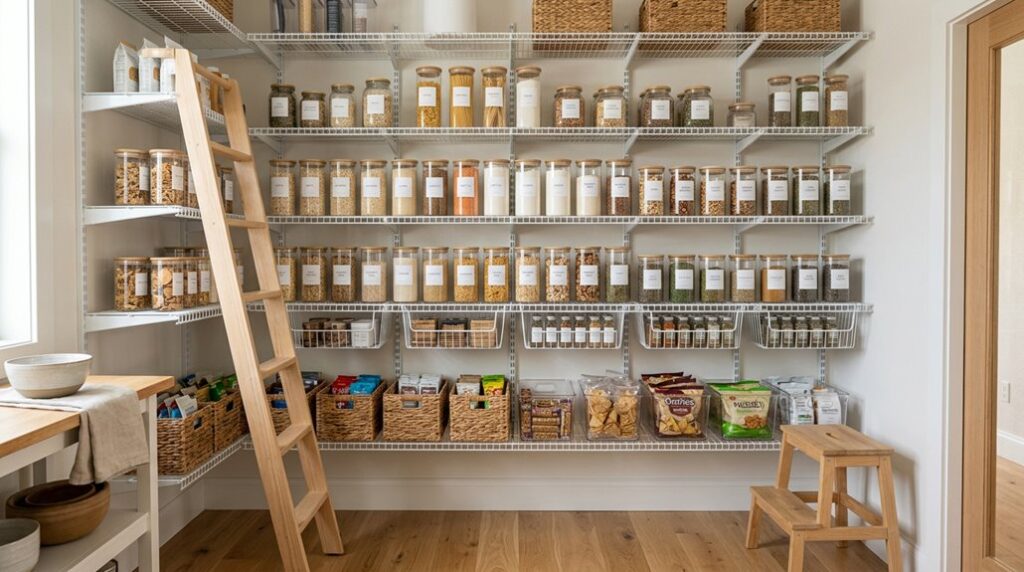
I know the frustration of hunting through cluttered shelves for that one ingredient you need. Your pantry doesn’t have to be this way.
With some strategic planning, starting with a complete purge and moving items into clear containers with visible labels, you can create an organized, functional system. The best part? You’ll actually know what you have and where it is.
Let’s explore how to build a pantry that works harder for you.
Start With a Complete Pantry Purge
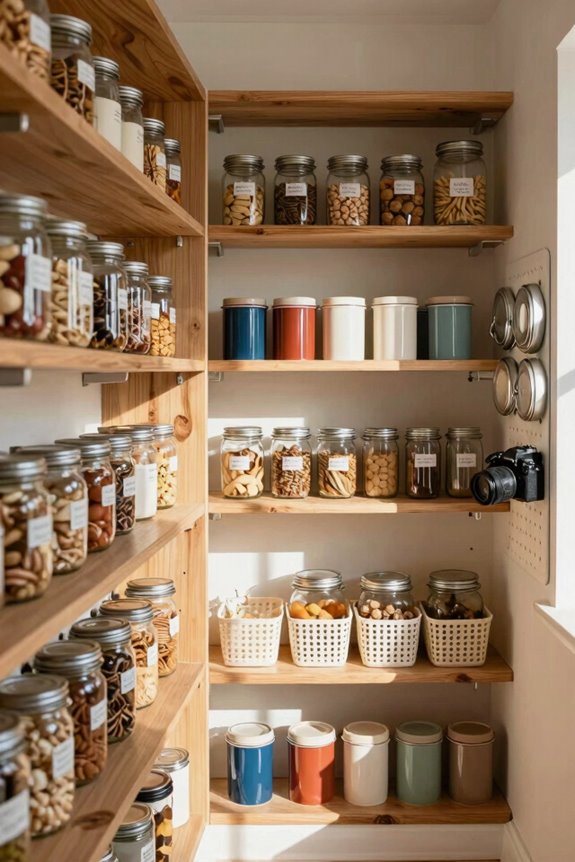
Before you arrange a single can or box, you’ll want to empty your pantry completely, and I mean everything. Pull out every item, check those expiration dates, and be honest about what you’ve actually used. That jar of specialty spice from last year? The pasta sauce you bought for one recipe? These don’t deserve your pantry’s valuable real estate.
During this pantry purge, you’re decluttering ruthlessly. Toss expired products and items gathering dust. Wipe your shelves clean, vacuum the floor, and create a blank slate for reorganization.
This emptying shelves process gives you clarity. You’ll identify what truly matters and assign each keeper a designated home. When you reduce excess first, organizing becomes simpler and more elegant. You’re not just tidying, you’re building a pantry that actually works for you.
Organize by Category Like a Grocery Store
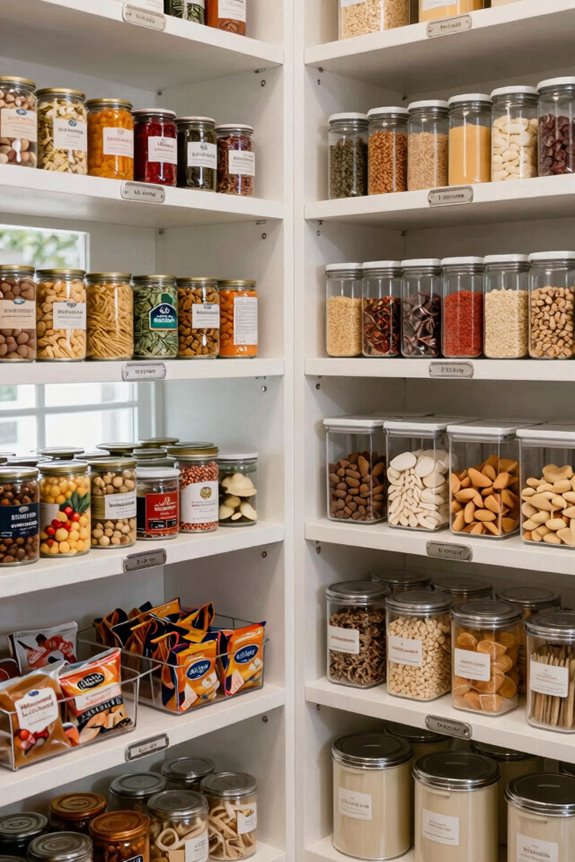
Now that your pantry is clean and empty, it’s time to arrange everything like a grocery store organizes its aisles. I’m creating distinct zones for different food types, which makes pantry organization feel intuitive and practical. By grouping similar items together, I’m optimizing storage and making sure nothing gets lost in the back.
| Zone | Items | Container Type |
|---|---|---|
| Breakfast | Cereals, oats, granola | Clear bins, labeled |
| Baking | Flour, sugar, baking powder | Airtight containers |
| Grains & Pasta | Rice, pasta, quinoa | Glass jars, labeled |
| Canned Goods | Vegetables, beans, soups | Tiered shelving |
I’m placing everyday staples at eye-level shelving where they’re easiest to grab. Less-used items go higher or lower.
Using clear bins keeps everything visible, preventing that frustrating moment when I can’t find what I need. This approach creates a well-organized, functional pantry space that works with my family’s actual eating habits.
Choose Clear Containers and Labels for Visibility
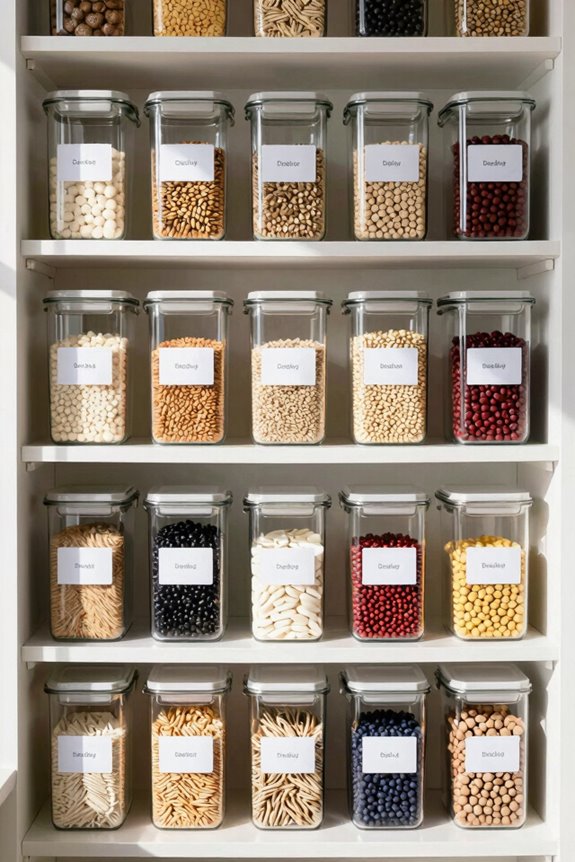
Transparent containers are your pantry’s best friend because they let you see exactly what you have without opening a single lid. I’ve found that swapping original packaging for clear jars creates an organized space that actually works for me.
A solid labeling system is important. I label everything—spices, flour, sugar, nuts, oats, granola—with clear, consistent tags that include expiration dates. This prevents mystery items and keeps my inventory management simple.
Pairing these clear containers with organized zones creates visibility that saves time. When items face forward like grocery store displays, I grab what I need instantly. The result is a pantry that’s both functional and beautiful, helping me stay connected to what I’m cooking with daily.
Stack Smart: Maximize Vertical Pantry Space
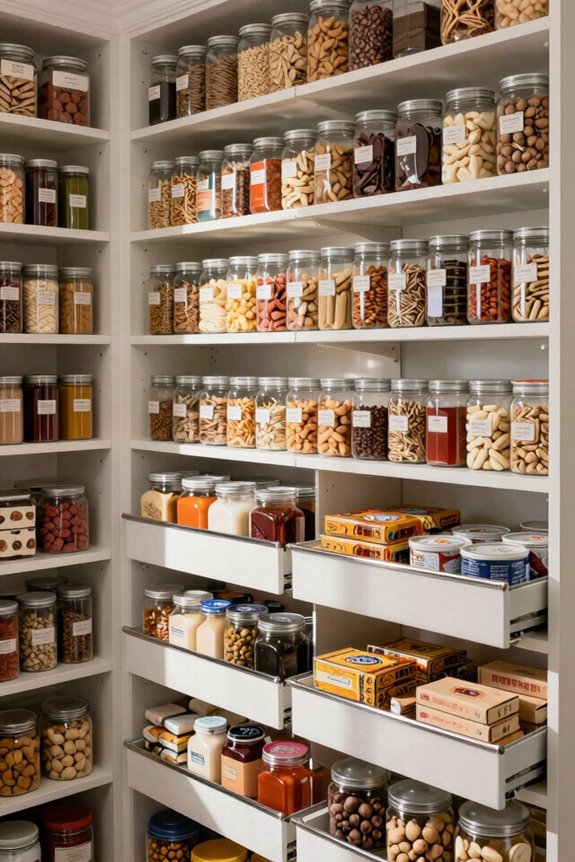
When you stack smart with vertical storage solutions, you’ll create an organized pantry zone that feels both luxurious and functional. I recommend installing tall shelves, risers, and rollout drawers that let you layer items efficiently, creating multiple tiers without eating up your floor space.
Vertical Storage Solutions
Why do we let our pantries sprawl horizontally when we can build upward? I’ve discovered that tall pantry shelves make excellent use of vertical space and provide ample storage. Rollout solutions and clear bins make everything visible and accessible without cramming items into dark corners.
Here’s how I maximize my pantry’s height:
- Install tall shelves from floor to ceiling for neat, efficient storage
- Use rollout solutions to access items hiding in the back
- Stack clear bins vertically to see contents instantly
- Place a lazy Susan on shelves to organize spices and small jars
- Add under-shelf baskets to double your capacity
Layered Shelf Organization
Once you’ve installed those tall shelves, it’s time to get strategic about what goes where; that’s where risers become your strategic edge. Layered shelf organization uses risers to double your capacity, letting you store plates, canned goods, and pantry staples in two elegant tiers without eating up floor space. I pair risers with clear bins to keep categories visible and accessible, no more rummaging through mystery containers.
Under-shelf baskets tuck wraps, bread, and pasta underneath, maximizing every inch. By positioning everyday items at eye level and heavier goods lower for stability, I create a system that works with how I actually cook. Labeled containers and front-facing items make rotation effortless, turning my pantry into an organized, functional space where everything has its place.
Claim Your Door and Walls for Storage
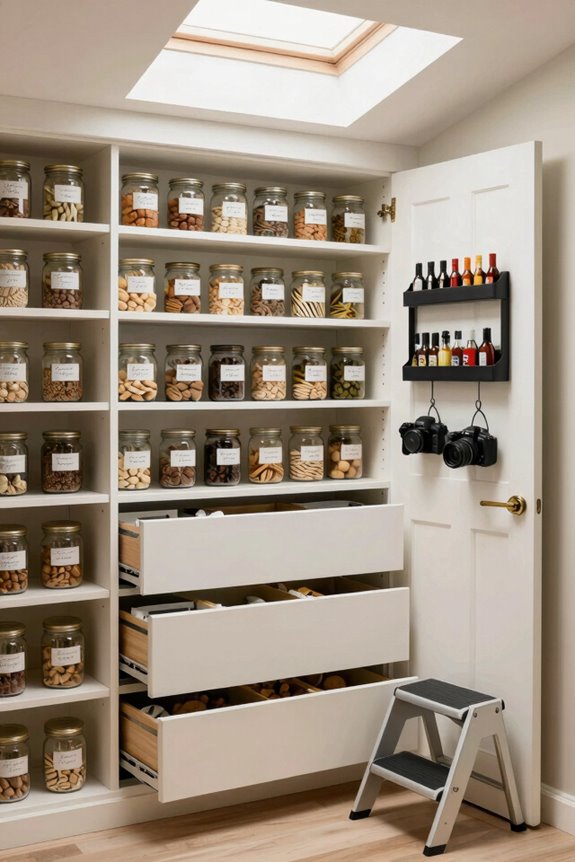
I’ve realized that my pantry’s door and walls are prime real estate I’d been overlooking, and I want to share how you can take advantage of this hidden storage potential too. Over-the-door organizers, whether cloth pockets or metal racks, hold seasonings, snacks, and drinks without eating into your shelf space.
Wall-mounted baskets and hooks create attractive homes for potatoes, onions, produce, and lunch items. By combining these two storage solutions, you’ll significantly expand your pantry’s capacity without spending money on renovations or reorganizing what’s already working.
Over-The-Door Solutions
How much unused space are you walking past every time you open your pantry door? That door’s surface is prime real estate for over-the-door storage solutions that’ll improve your pantry without any remodeling.
I’ve discovered that door-mounted racks and clear bins create an elegant system that works beautifully. Here’s what makes this approach so effective:
- Maximizes vertical space efficiently without consuming shelf room
- Brings frequently used items to eye-level accessibility
- Keeps contents visible through transparent materials
- Requires minimal installation tools and budget investment
- Lets you customize by category: snacks, spices, or bottles
These solutions free up valuable shelf and floor space while reducing clutter. When I pair my over-the-door storage with simple labels, finding items becomes instantaneous. You’ll appreciate how accessible everything becomes, creating a pantry system that supports your daily routine and helps you feel well-organized.
Wall-Mounted Storage Options
Your pantry walls represent untapped real estate that can help you store everything from spices to small appliances. Wall-mounted storage options give you an elegant solution for reclaiming precious floor and shelf space. I’ve found that hanging baskets, magnetic strips, and hooks create vertical storage that keeps items visible and accessible. Wall organizers let me customize zones for breakfast items, canned goods, and snacks, which honestly makes meal prep faster.
Door-mounted solutions expand capacity without requiring renovation. Natural woven hanging baskets add visual interest while storing produce and snacks. When you strategically place wall-mounted storage throughout your pantry, you’ll notice less rummaging, improved visibility, and a sense of control over your space. This approach turns disorganized chaos into a functional, welcoming area where everything has its place.
Position Everyday Items at Eye Level
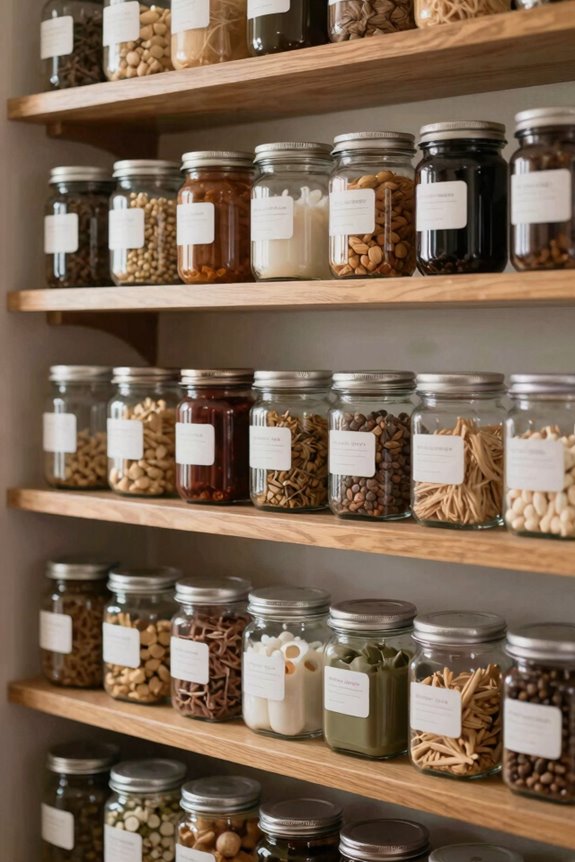
When you open your pantry door, what catches your eye first?
I’ve learned that positioning everyday items at eye level improves my pantry organization and daily routine. By placing frequently used goods on middle shelves, I’ve dramatically improved accessibility and quick access to what I need most. This strategic approach means I’m not rummaging through cluttered spaces or stretching awkwardly.
Here’s why eye-level placement matters:
- Reduces time spent searching for breakfast items and snacks
- Supports quick identification during busy mornings
- Keeps your most-used beverages within arm’s reach
- Creates an organized appearance that feels nice
- Reflects your family’s actual needs and usage patterns
I regularly review which items deserve prime real estate on my shelves. When my family’s preferences shift, I adjust accordingly. This flexible pantry organization system means I’m always working with intention, not against my space. Eye-level placement isn’t just practical; it’s how I maintain a system that actually works for us.
Store Seasonal and Occasional Items Separately
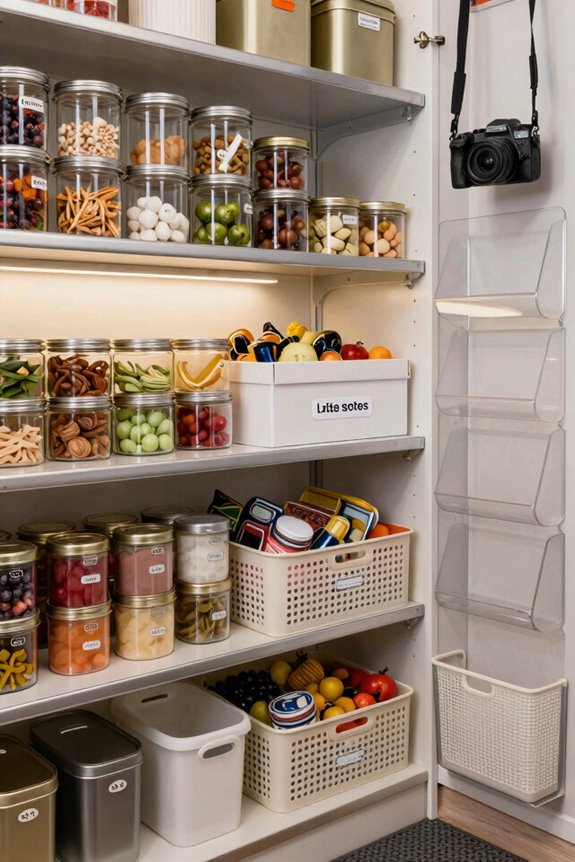
Do you find yourself digging through Halloween decorations to reach your everyday pasta? I’ve learned that separating seasonal items creates an organized, functional pantry. I use clear storage bins and labeled baskets to organize holiday baking supplies, party decorations, and occasion-specific ingredients by season.
This approach keeps my frequently used staples easily accessible while protecting off-season storage items from clutter. I implement a rotation system that moves seasonal goods to higher shelves or back areas when not needed. When spring arrives, I simply rotate items forward again, no searching required.
Decanting bulk seasonal staples into uniform containers maximizes visibility and saves space. This method turns pantry organization from frustrating to satisfying, giving everything its place. You’ll appreciate the peace of mind knowing exactly where holiday essentials live until you need them.
Create Zones Based on Your Family’s Eating Habits
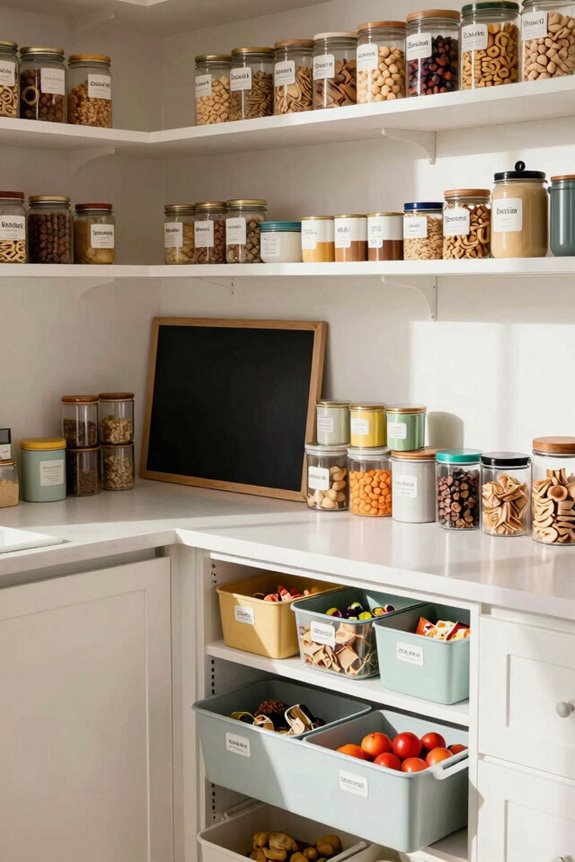
How many times have you searched for cereal while standing in front of a shelf packed with baking supplies?
Creating pantry zones based on your family’s eating habits brings order to disorganization. I organize my pantry by mirroring a grocery store layout, grouping similar items together. This approach means you’re not wasting time hunting for everyday essentials.
Here’s what works:
- Assign eye-level shelves to breakfast foods you grab daily
- Place baking supplies together in one dedicated zone
- Use clear bins to prevent items from disappearing in the back
- Group snacks your family actually eats, not what you think they should
- Keep a rotation system so older items get used first
When your pantry zones match your eating habits, meal planning becomes simpler. You’ll notice what you genuinely use versus what just takes up space. This creates a pantry that works for your lifestyle, not against it.
Protect Your System With Weekly Shopping Boundaries
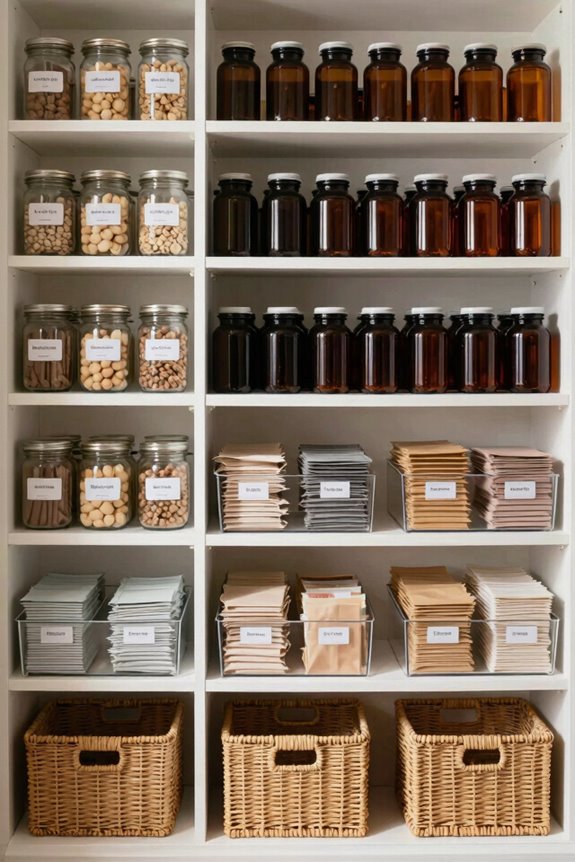
Your pantry’s organization can crumble fast if you don’t set shopping limits, so I’ll walk you through why this step matters. Weekly shopping boundaries protect your space by preventing overstock and clutter. Before you shop, I review my current pantry contents and buy only what I’ll actually use that week.
This approach keeps my designated zones and containers functional, avoiding that frustrating back-row loss where items disappear and expire forgotten. I prioritize front-loaded items; frequently used basics positioned at eye level ensure easy access and consistent organization. During each shop, I reassess for duplicates and unused products, maintaining my system’s integrity.
I also track rotation and expiration dates carefully, using older items first so nothing spoils. These simple weekly practices help maximize your pantry space, creating a system that actually works.