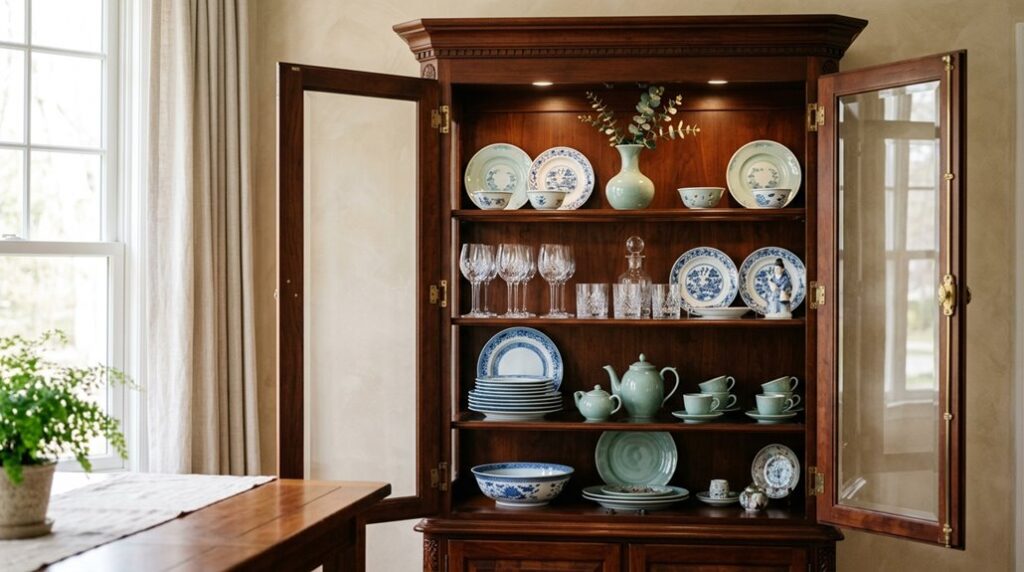
Your china cabinet’s potential goes far beyond dusty dishes and forgotten keepsakes. I’m here to show you how deliberate curation, from selecting anchor pieces to layering thoughtful lighting, creates an elegant display on glass shelves that reflects your style.
Whether you’re starting from scratch or refreshing what’s already there, these ten strategic ideas will help you create a display that feels well-planned, balanced, and undeniably polished. Let’s explore how to make your cabinet truly shine.
Empty Your Cabinet and Start Fresh
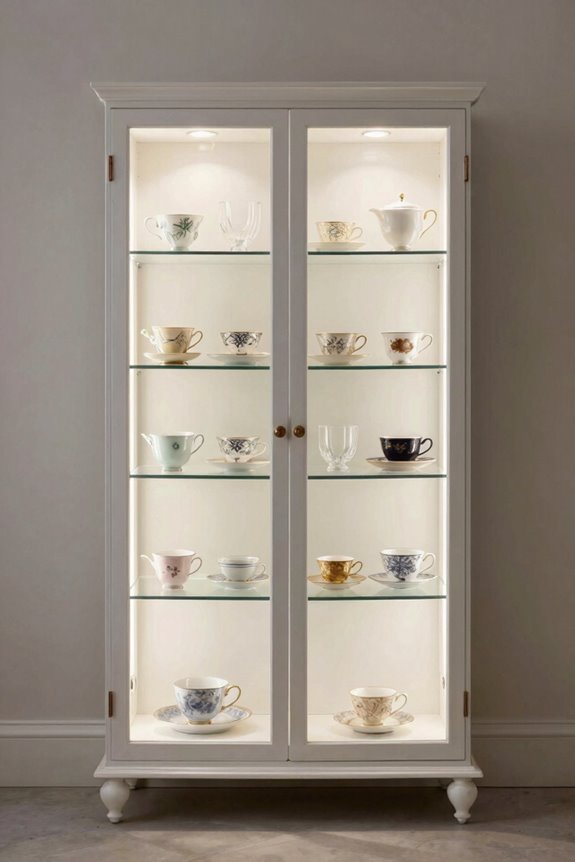
Why not start your china cabinet redesign by clearing everything out? Emptying your cabinet creates a blank slate; a valuable opportunity to reimagine your display. Remove all items, shelves, and glass doors if possible. This declutter process feels liberating and lets you thoroughly clean every surface, eliminating dust and grime.
Next, establish your foundation by defining a cohesive theme. Will you embrace light and airy elegance, or prefer timeless neutral tones? Your chosen color palette becomes your guide for every decision ahead.
With a clean, empty cabinet and clear vision, you’re ready to curate intentionally. You’ll keep only pieces with genuine sentimental or visual impact, preventing clutter from creeping back. This thoughtful beginning changes your cabinet from storage into a meaningful, elegant focal point reflecting your personal style and belonging.
Choose a Theme and Color Palette to Guide Curation
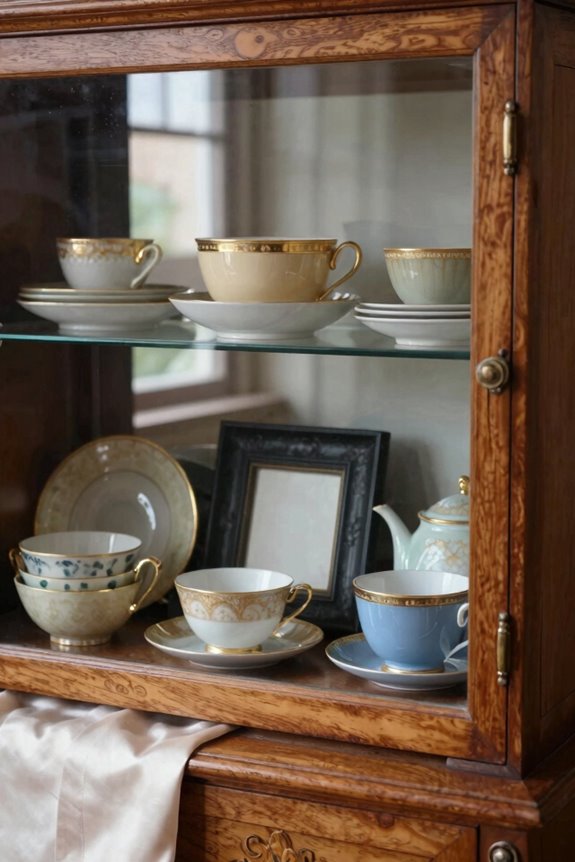
How do you bring together a collection of random dishes and figurines into a unified display? I start by choosing a theme and color palette that’ll guide everything I do next.
I pick a mood first, maybe light and airy, cozy autumn, or timeless neutral. This theme shapes my curation decisions and creates consistency across all pieces. Then I select my color palette, using a neutral base with muted accent tones. This approach keeps my cabinet flexible and integrated with my living room’s existing décor.
With my theme and colors established, I choose my “rockstar” pieces: treasured items like grandmother’s platters or favorite pitchers. These anchor my display. I gather more items than I’ll actually show, allowing me to swap pieces seasonally while maintaining that polished, deliberate feeling throughout.
Select Anchor Pieces That Ground Your Display
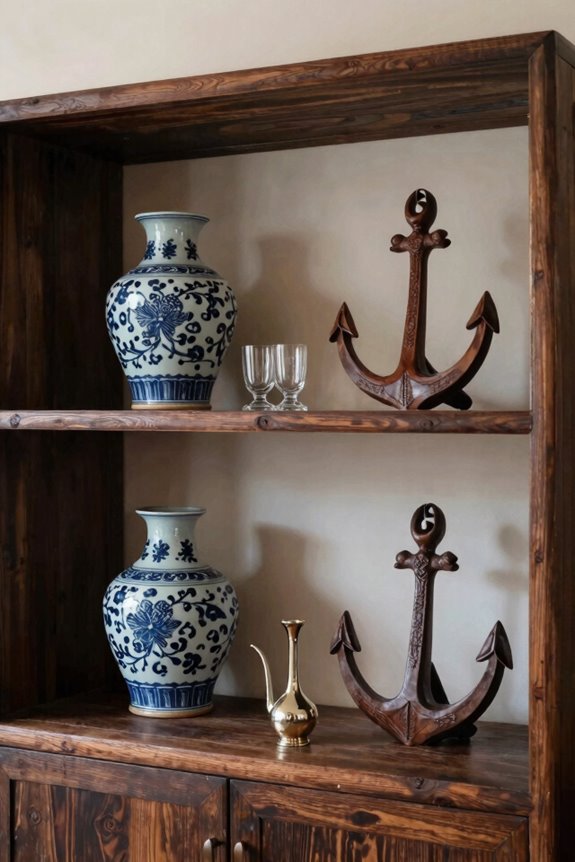
Once you’ve established your theme and color palette, it’s time to build your display from the ground up, starting with anchor pieces. These are the items that truly matter to you, perhaps your grandmother’s platter, a beloved pitcher, or treasured patterned plates that spark joy.
Anchor pieces create visual weight, preventing your cabinet from feeling scattered or unbalanced. I recommend choosing two or three substantial items and distributing them across different shelves. This establishes your main point of interest before you add supporting players like smaller vases, plants, and books.
Position your anchors where they’re visible from the front, even when doors are closed. They’re the foundation of your display, the elements that draw the eye and make your cabinet feel thoughtful and distinctly yours.
Add Height With Stands, Props, and Vertical Plates
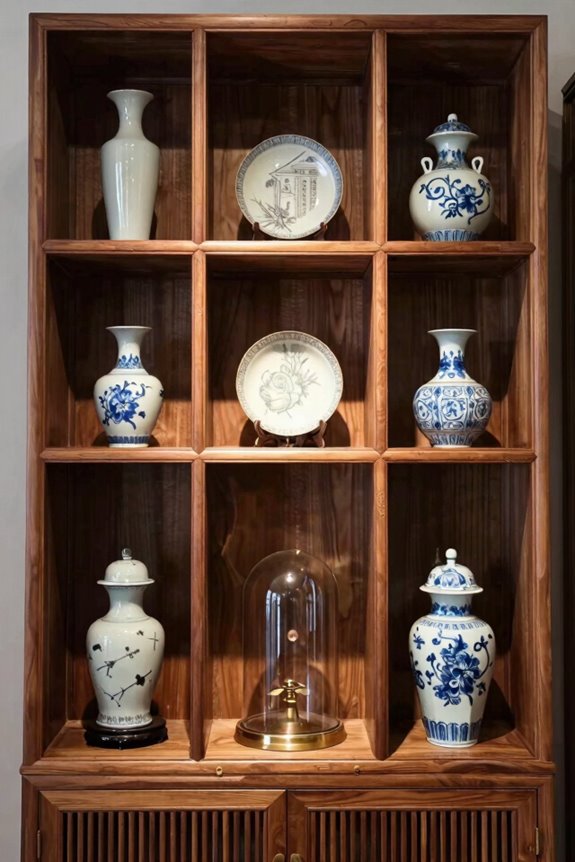
Now that your anchor pieces are in place, it’s time to add dimension and visual interest by playing with height and layering. I recommend using plate stands to elevate items at the back, creating an elegant backdrop. Positioning vertical plates on back shelves adds sophistication and prevents your display from looking flat. This technique builds display depth naturally.
Think of each shelf as having three zones: background for tall items, midground for everyday pieces, and foreground for delicate treasures. Pairing tall items with shorter ones creates balance. A layered display softens hard edges and draws viewers through your collection.
Follow the “peek-a-boo” rule: keep background pieces visible while letting foreground items shine. This approach creates a china cabinet that feels both inviting and purposeful, reflecting your personal style.
Arrange in Three Zones: Back, Middle, Front
Why does a well-organized china cabinet feel so satisfying to look at? I’ve discovered that creating a three-zone display makes your cabinet an elegant showcase. I arrange my tallest pieces—plates, vases, or artwork—in the back zone to establish visual depth. The middle zone holds my workhorse pieces: shorter bowls, cups, and decorative objects that bridge the back and front. Finally, I position my smallest, most delicate treasures in the foreground, letting them partially frame what’s behind them through the peek-a-boo effect.
I distribute my heaviest anchors across multiple shelves to achieve balanced weight. I leave negative space around each group, allowing items to breathe. This three-zone approach creates visual rhythm, preventing clutter while showcasing every piece with luxurious restraint.
Mix Smooth Porcelain With Rough Ceramics and Metal
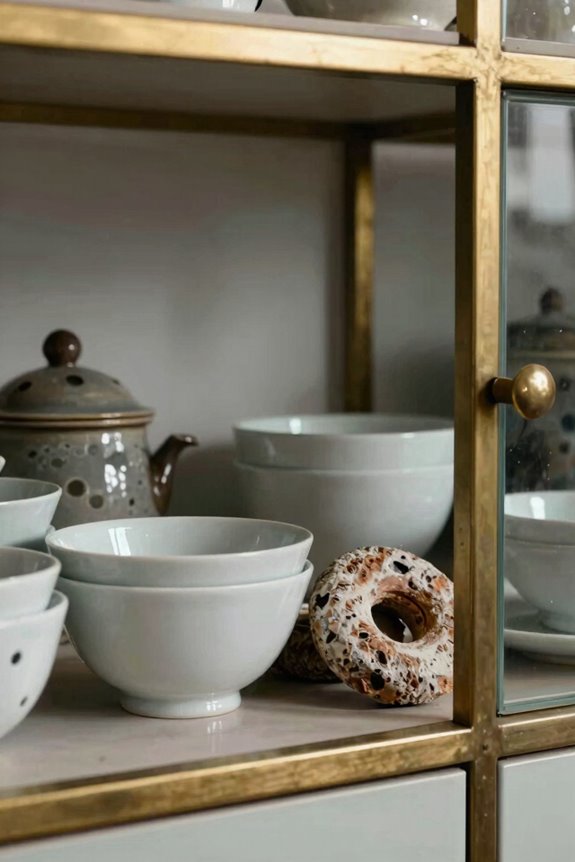
While the three-zone arrangement gives your cabinet structure, mixing different textures elevates it from organized to genuinely engaging. I’ve found that combining smooth porcelain with rough ceramics creates texture contrast that catches light beautifully. Pair your refined, glazed porcelain pieces with unglazed or textured ceramics; this dimensional interplay keeps viewers’ eyes moving and engaged.
Add metallic accents like brass or gold trays to amplify the visual interest without overwhelming your display. Distribute smooth and rough items across shelves rather than clustering similar textures together. Include wood and glass elements nearby to anchor the shine variation and unify everything cohesively.
This thoughtful mix creates a cabinet that feels both sophisticated and inviting. You’re creating a display that reflects your refined taste while welcoming guests into your carefully chosen collection.
Stack Dishes Like You Mean It: Vignettes, Not Piles
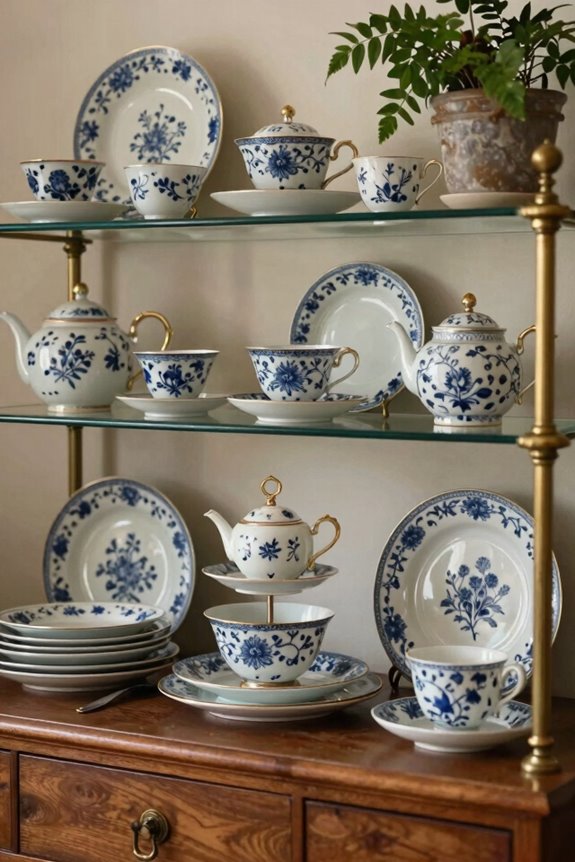
The difference between a beautiful display and a chaotic pile comes down to intentional grouping, which designers call creating vignettes: small, carefully arranged scenes on each shelf. I treat each shelf as its own stage, using the rule of odds by arranging three or five pieces together rather than scattering everything randomly.
Depth layering matters tremendously; I place taller items toward the back and shorter pieces in front to guide your eye naturally through the space. I’m careful to leave breathing room around each grouping, as negative space prevents that cluttered feeling. By mixing china with decorative books, plants, and vases, your china cabinet display becomes an elegant arrangement that reflects who you are.
Extend Your Display Beyond Dishes: Plants, Books, Botanicals
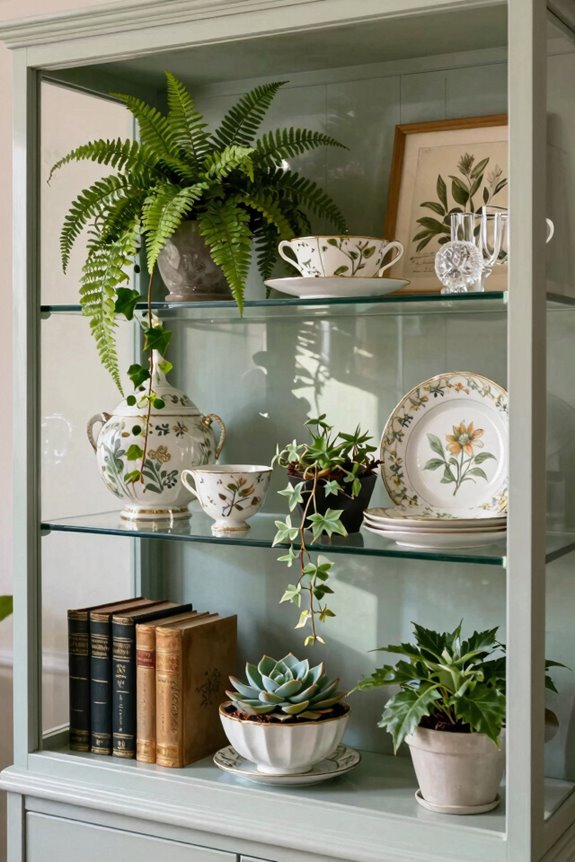
Your china cabinet doesn’t have to be a one-note showcase for dinnerware. It’s actually the perfect opportunity to create a layered, luxurious display that tells your story. I’ve found that mixing in plants, books, and greenery makes a simple cabinet feel more elegant. Cascading vines on higher shelves soften the look, while a single stem in a bud vase adds life without overwhelming the space.
Tuck in your favorite books between dishes, and scatter decorative vases and trinkets throughout. This approach creates depth and visual interest that makes your cabinet feel purposeful and inviting. By blending personal touches with thoughtful styling, you’re not just displaying items—you’re creating a curated space that reflects who you are and welcomes others into your home.
Remove One Item From Each Shelf to Sharpen Focus
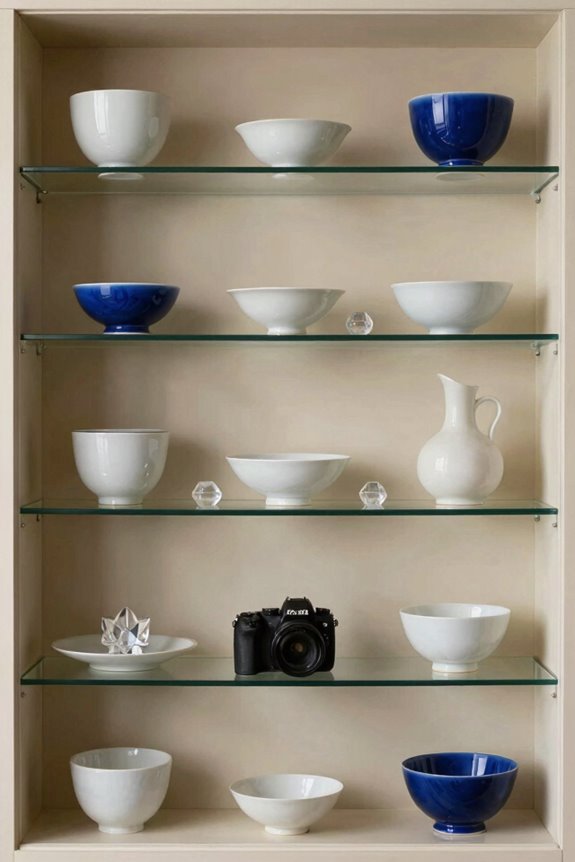
Once you’ve layered in plants, books, and trinkets, it’s time to step back and subtract. Sometimes less really does create more impact. This editorial pruning sharpens your shelving display by removing one item from each shelf, creating breathing room that lets your eye rest. The negative space you’ve added makes remaining pieces feel more valuable and easier to appreciate.
I recommend strategically selecting which pieces stay, choosing those that best represent your theme and color palette. This intentional editing maintains visual rhythm across shelves, preventing any single item from overwhelming others. After removal, reassess your spacing and adjust heights or groupings to preserve the elegant flow you’ve created. You’ll notice your collection suddenly feels like a carefully considered display, well-thought-out, and professionally styled—the hallmark of a truly balanced arrangement.
Layer in Lighting and Seasonal Accents for Polish
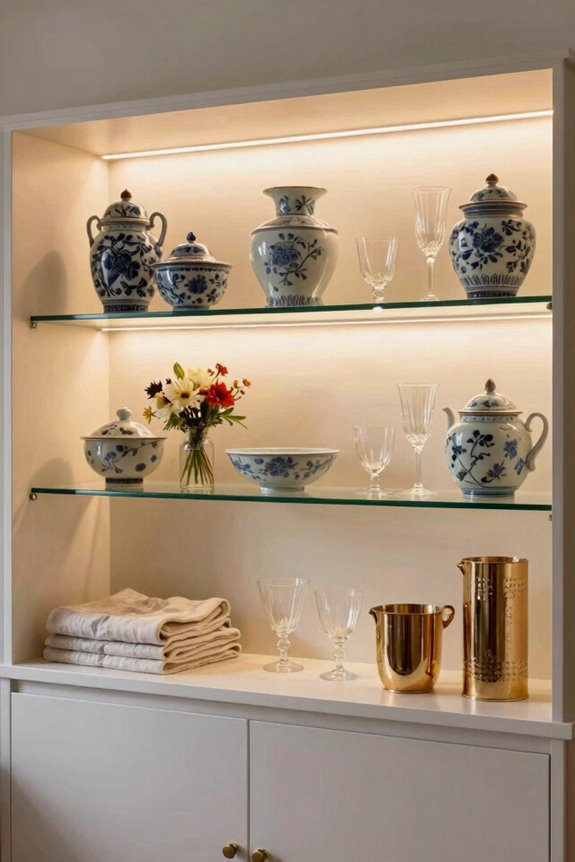
How much difference can light make in a cabinet display? It’s quite significant. I’ve discovered that strategic lighting instantly improves your glass-door cabinets from ordinary to elegant. Install puck lights to highlight cherished heirlooms or integrate lighting directly into shelving for seamless ambiance.
Consider your display’s textures. Smooth porcelain gleams under warm light, while rough ceramics gain dimension. Mixed materials like metal and wood deserve thoughtful illumination that creates depth and visual interest.
Seasonal accents refresh your showcase effortlessly. Swap in faux botanicals and warm-toned bulbs for cozy autumn vibes, then transition to cool greens for winter sophistication. These small tweaks, guided by intentional lighting choices, keep your cabinet feeling polished and inviting throughout the year.