I’ve found that a well-chosen table runner can really change how your dining space feels.
Whether you’re working with a formal mahogany table or a casual kitchen setup, the right runner adds elegance and pulls your whole look together.
From classic lengthwise placements to bold layering techniques, there’s a style that fits your space.
Let me show you how to pick the perfect runner and use it in ways you might not have considered yet.
Long and Lengthwise: Classic Placement for Traditional Tables
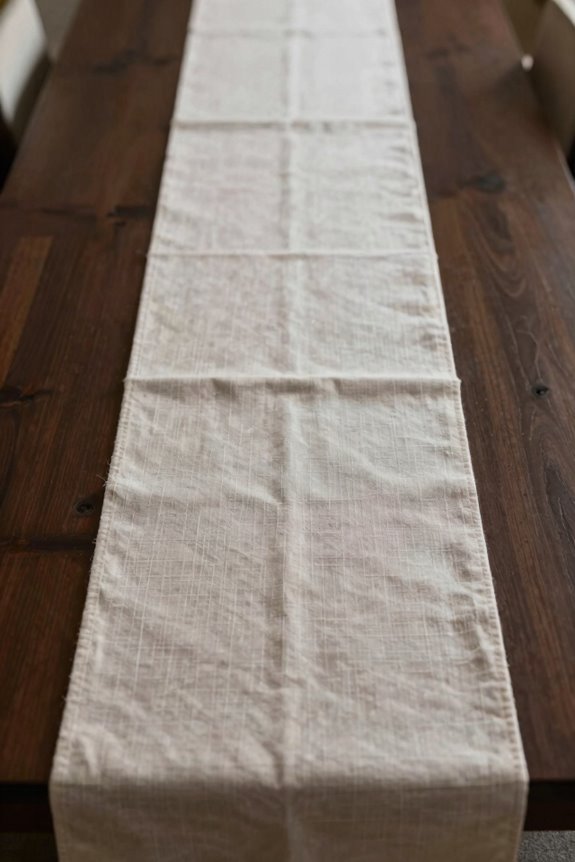
How does a simple piece of fabric refresh your entire dining table? When I center a runner lengthwise down my table’s center, it creates an instant focal point that brings the whole room together. I measure my table first to find the perfect runner length, ensuring it aligns with the long dimension. I hang 6–12 inches of fabric over each edge for that luxurious, intentional look.
This classic table runner placement covers roughly one-third of the tabletop, creating elegant visual balance. Alternatively, I position two runners on either side of center, spaced like placemats, which emphasizes traditional table lines beautifully. Both approaches deliver that formal, put-together aesthetic that makes guests feel welcomed and special.
You’ll discover how this simple styling choice turns an ordinary dining space into something sophisticated and inviting.
Short Runners: Make a Bold Impact
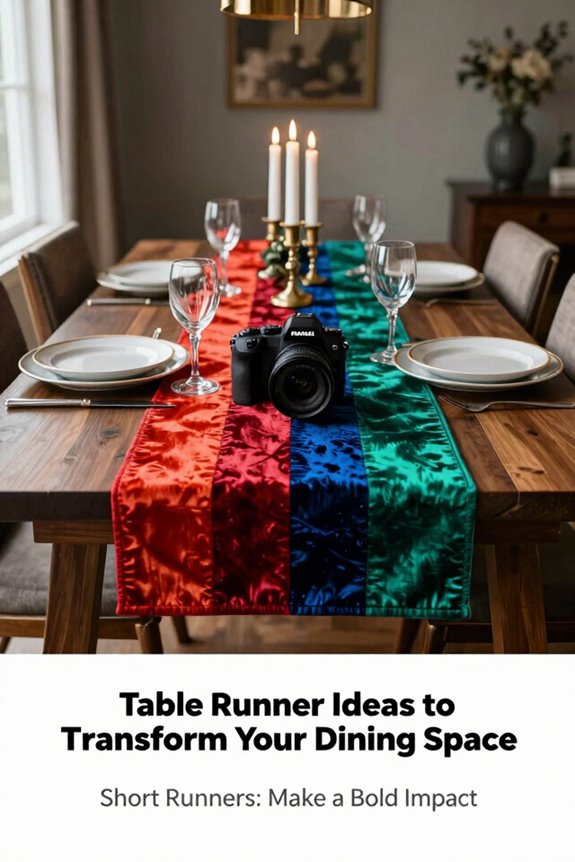
Why settle for covering your entire table when a shorter runner creates something far more striking? Short runners make a bold impact by deliberately ending before your table’s edge, showcasing the beautiful surface underneath. This approach highlights your table while adding visual contrast that draws the eye exactly where you want it.
I love pairing short runners with candles for an elegant, intimate feel without overwhelming full-length coverage. They’re perfect for everyday settings, offering a defined edge and style that emphasizes casual sophistication.
The key is balancing your runner with equal overhang on both sides, creating an intentional, polished look. Short runners give you flexibility and personality. They change your dining space into something distinctly yours, proving that sometimes less really is more luxurious.
Go Wide: Creating Visual Unity Across the Table
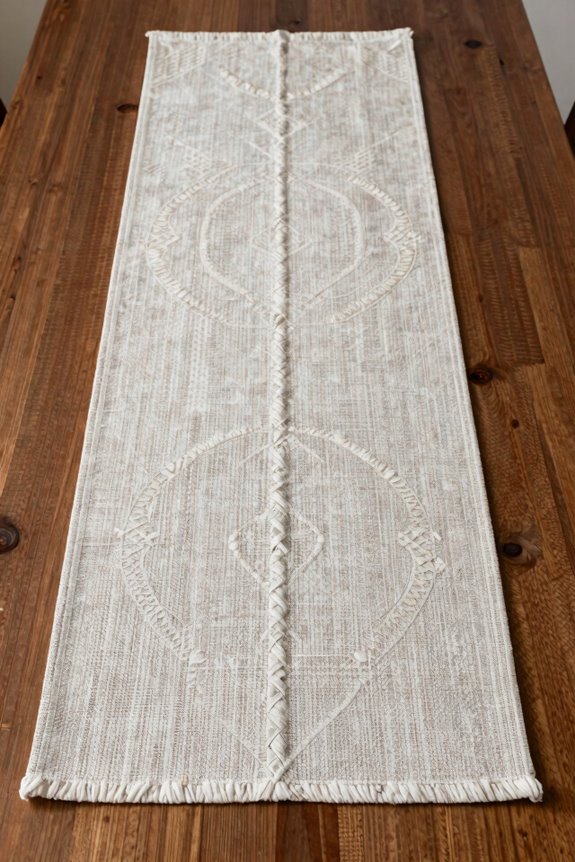
What if you placed your runners widthwise, straight across the table instead of lengthwise, to create a completely different visual effect? I’ve found that arranging a single table runner horizontally emphasizes your table’s width, creating a bold, unified line that draws everyone together. This approach works beautifully on long tables, defining a cohesive design without requiring formal placemats.
You’ll appreciate how widthwise runners subtly divide each place setting while maintaining an open, expansive feel. The arrangement lets individual centerpieces shine through, adding personality to your dining space. This style pairs perfectly with less formal gatherings, welcoming and relaxed.
For the best results, use enough runners to cover the width evenly, maintaining balanced, elegant proportions. You’re creating organization and visual harmony simultaneously, a refined touch that feels naturally sophisticated.
Layering Techniques: Build Visual Depth With Multiple Runners
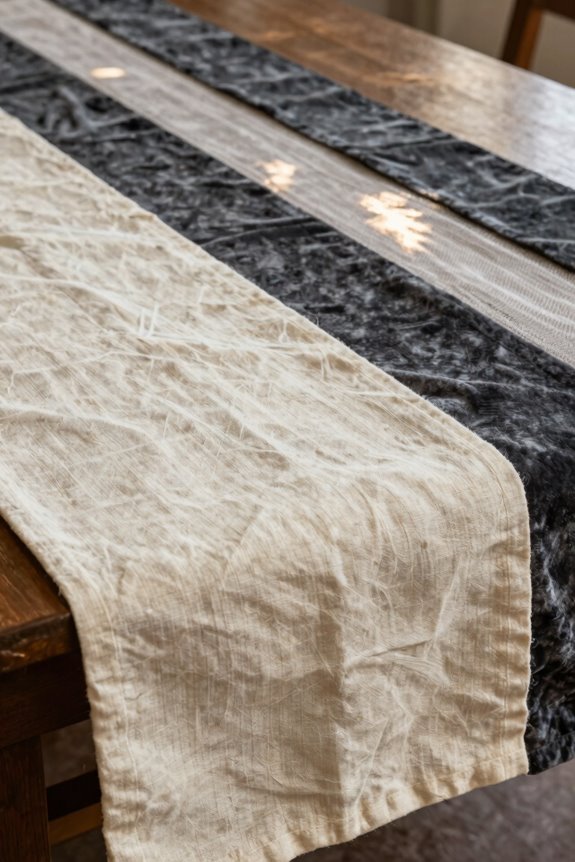
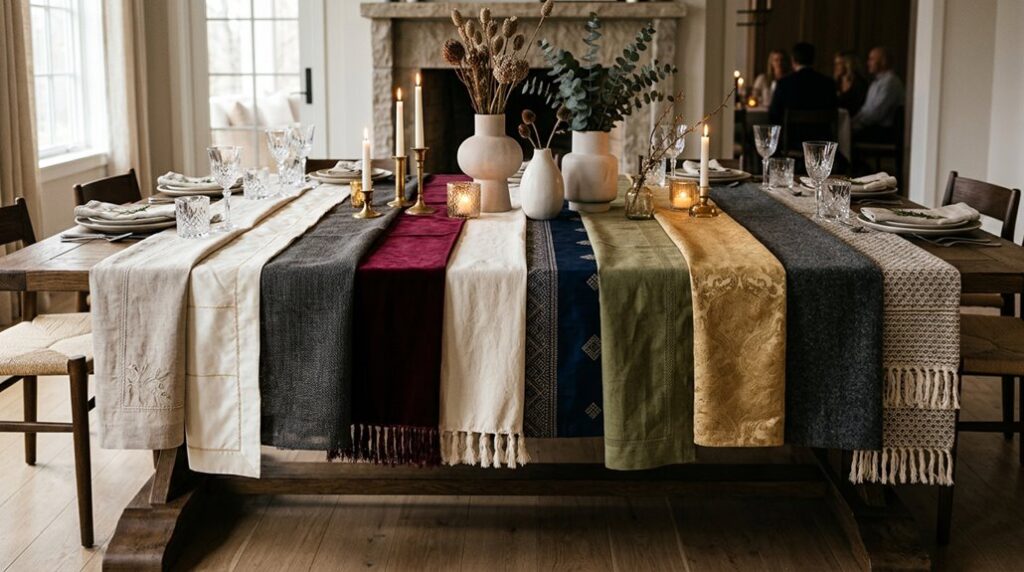
I’ll show you how to build visual depth by layering multiple runners, which means combining different textures like burlap, linen, and velvet, varying their lengths for dynamic interest, and coordinating colors that work together harmoniously. When you layer runners at cascading lengths or arrange them symmetrically, you’ll create a sophisticated look that’s far more intricate than any single runner could achieve.
The key is balancing your texture choices with a unified color scheme so each layer enhances the others rather than competing for attention.
Textures And Pattern Mixing
By stacking runners of different textures, patterns, and colors, you’ll create a sophisticated look that draws the eye and makes your table feel more intentional and elegant. I’ve found that mixing textures makes an ordinary table feel special.
| Texture | Pattern Style | Best Paired With |
|---|---|---|
| Burlap | Solid colors | Velvet, linen |
| Linen | Stripes, checks | Burlap, silk |
| Velvet | Geometric prints | Linen, cotton |
Consider pairing a rustic burlap base with a delicate patterned linen layer on top. The key is balancing scale; combine large patterns with smaller ones so they don’t compete visually.
You might layer a solid velvet runner with a striped linen piece for luxurious contrast. This approach lets you express your style while keeping your table visually cohesive and inviting.
Cascading Length Variations
How do you create real dimension on a dining table? I’ll tell you: cascading table runners in varying lengths do the trick beautifully. Start with your longest runner as the base, extending 6–12 inches beyond the table edge to anchor everything. Then layer shorter runners on top, aligning them diagonally or in a stepped pattern that guides your eye across the surface.
This technique works differently depending on your table shape. On rectangular tables, I balance the overhangs carefully so place settings stay accessible and uncluttered. For round tables, I position that longest runner down the center, then add shorter runners diagonally around it.
The result is a luxurious, elegant table with genuine visual movement and depth that makes your entire dining space feel more inviting and complete.
Color Coordination Strategies
The magic of layered table runners really comes alive when you think strategically about color. I’ve found that color coordination creates harmony across your dining space while expressing your individual style. Consider choosing a dominant color for your base runner, then selecting complementary or contrasting shades for additional layers.
For instance, pairing a neutral linen base with jewel-toned velvet accents creates elegant visual interest. You might also try monochromatic schemes, using different shades of the same color, for a sophisticated, unified look. The key is ensuring your color choices work together, not against each other.
Think about your table’s setting, your dishes, and your décor when selecting hues. When you coordinate colors thoughtfully, you’ll create a welcoming dining area that reflects your individual style and makes every meal feel special.
Pair Your Runner With a Tablecloth
When you pair a runner with a tablecloth, you’ll want to choose contrasting colors or patterns that make your runner stand out while keeping everything coordinated and clutter-free. I’d recommend selecting a runner that complements your tablecloth’s color scheme; think jewel tones over neutrals or geometric prints over solids, so the two layers work together rather than fighting for attention.
For the most balanced, elegant look, center a single long runner down the table’s middle or arrange multiple runners across the width, making sure the overhang drops equally on both ends and aligns perfectly with your table’s edges.
Contrasting Color Selection
Why settle for a single solid look when you can layer two complementary pieces together? I’ve discovered that pairing a bold runner with your tablecloth creates an elegant dining room aesthetic that feels thoughtfully arranged and polished. The key is choosing colors that contrast beautifully: think a deep jewel-toned runner against a cream tablecloth, or a patterned runner with a solid base cloth.
| Runner Color | Tablecloth | Effect | Best For |
|---|---|---|---|
| Navy | Cream | Classic elegance | Formal gatherings |
| Gold | Charcoal | Luxurious drama | Evening dinners |
| Coral | White | Fresh, modern | Casual meals |
| Emerald | Beige | Sophisticated depth | Year-round style |
This contrasting combination draws the eye downward, highlighting your table’s centerpiece while maintaining balance throughout your dining space.
Coordinating Pattern Combinations
Once you’ve mastered the art of contrasting colors, you’re ready to explore how patterns can work together on your table. Pattern coordination isn’t complicated; it’s about creating harmony through thoughtful pairing.
I recommend selecting patterns within the same color family but with different motifs. This approach keeps your table looking intentional and elegant without clashing. If your tablecloth features a busy pattern, choose a solid or subtly textured runner to balance the look. Conversely, a solid tablecloth pairs beautifully with a patterned runner that adds visual interest.
The key is varying scale: let one pattern dominate while the other supports it. Repeat a color from your runner in your tablecloth, tying everything together. This strategy creates a dining space with unified, refined style where every element belongs.
Balancing Overhang Alignment
How do you keep your table runner from looking like it’s sliding around when you’ve layered it over a tablecloth? Master your table runner alignment by centering it along your table’s length, creating a polished, intentional look. I’ve found that aiming for 6–12 inches of overhang on each end keeps things balanced and elegant.
Here’s the trick: keep your runner sitting flat atop the tablecloth without bunching or wrinkling underneath. If your tablecloth extends beyond the table edge, adjust your runner to complement that cascade rather than compete with it. This harmony makes your dining space feel more put-together and refined.
You’ll notice how proper alignment instantly improves your table’s appearance, making it feel more refined and welcoming for gatherings with people you care about.
Choose Durable Fabrics and Colors
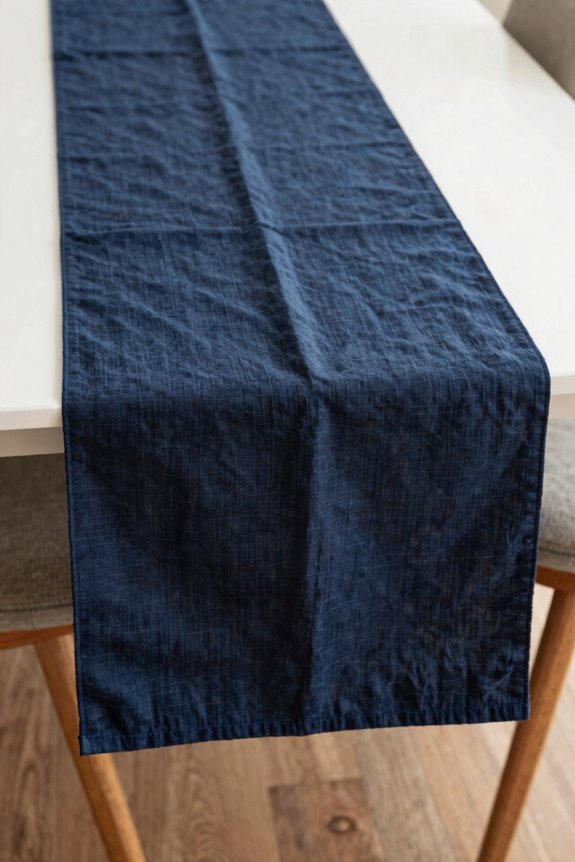
When you’re shopping for a table runner, the fabric you select significantly impacts how long it’ll look beautiful and function well in your home. I’d recommend choosing durable fabrics like 100% cotton or linen blends for everyday use, since they’re washable and handle frequent handling beautifully. Look for medium to heavy fabric weights that prevent wrinkling and lay flat on your table.
Colorfast materials are important; they resist color bleeding when spills happen and keep vibrant patterns looking fresh over time. Here’s a pro tip: prewash and preshrink natural fibers before cutting. This simple step prevents size changes after laundering and eliminates frustrating aftercare issues. By prioritizing durability and quality materials, you’re investing in a runner that’ll remain an elegant focal point for years.
Care and Maintenance: Keep Your Runner Looking New
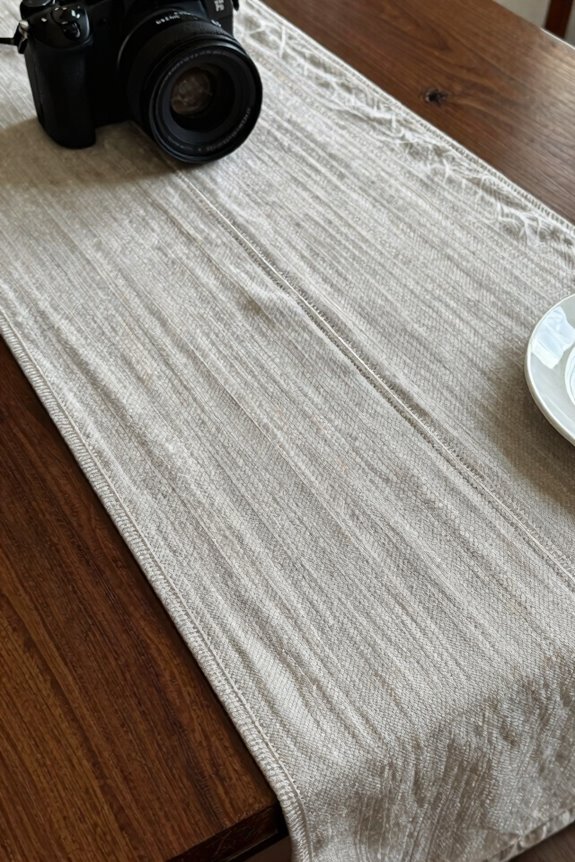
I’ve found that keeping your table runner looking fresh and elegant doesn’t require much effort, just a few smart cleaning habits and proper storage techniques that I’ll share with you. Regular maintenance, whether it’s gentle hand washing or machine washing on a delicate cycle with cold water, helps preserve the fabric’s color and texture while preventing damage from harsh detergents or bleach.
When you’re not using your runner, I recommend rolling it up and storing it in a cool, dry place, which prevents wrinkles, mildew, and fraying that can happen with careless folding or hanging.
Regular Cleaning Techniques
Why does a table runner that looked pristine last month suddenly seem dull and tired? Regular maintenance is key to keeping this essential table decor looking luxurious and elegant.
I recommend starting with gentle dusting or light vacuuming to remove surface debris. For spills, spot-clean immediately using mild detergent and water; this prevents stains from setting permanently.
Cotton runners benefit from pre-treating stains before washing in cold water on a gentle cycle, then air-drying to avoid shrinking. Heat is your enemy. Skip high temperatures during washing and drying; instead, hang your runner to air-dry completely.
If yours features embellishments like beading or tassels, hand-clean carefully or use a protective laundry bag to prevent snagging. Once completely dry, iron on low-to-medium heat for that crisp, refreshed appearance. You’ll notice the improvement immediately.
Storage and Preservation Tips
How you store your table runner matters just as much as how you clean it. Proper storage prevents wrinkles, fading, and damage that can’t always be fixed. I’ve found that folding or rolling runners neatly, then placing them in breathable fabric bags, keeps them fresh and ready for your next gathering.
| Storage Method | Best For |
|---|---|
| Folding neatly | Cotton runners |
| Rolling gently | Delicate fabrics |
| Breathable bags | Moisture prevention |
| Cool, dark spaces | Color protection |
| Rotated placement | Even wear |
Avoid direct sunlight, which fades beautiful colors over time. I rotate my storage spots to reduce wear in high-traffic areas.
Refresh Your Table Seasonally
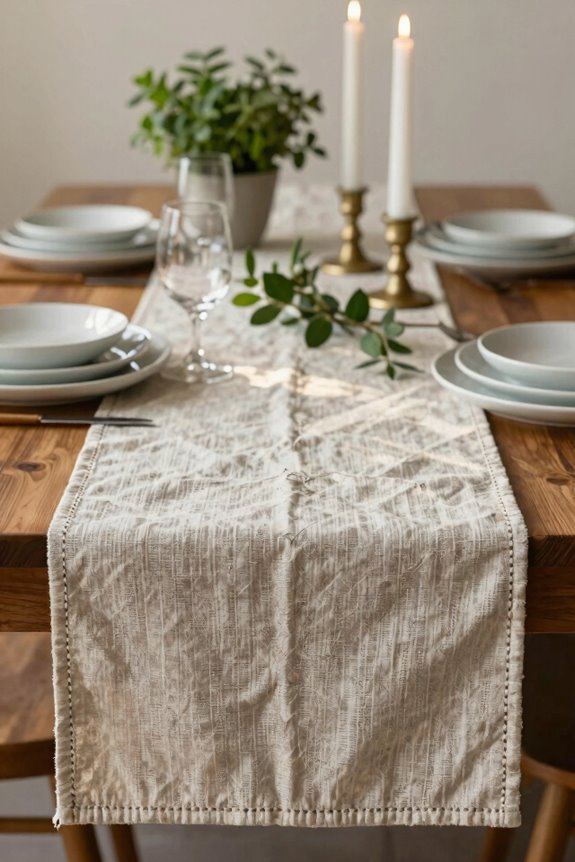
One of the easiest ways to give your dining space a completely new look is by swapping out your table runner with the seasons. I love how runners instantly change my table without requiring expensive updates. For spring, I layer lightweight linen runners with pastel colors and fresh neutrals that feel airy and inviting.
Come autumn, I switch to deep oranges, browns, and golds that warm up the entire room. Winter calls for luxurious velvet runners, while beaded options add festive elegance for special gatherings.
I pair my seasonal runners with complementary placemats, chargers, and centerpieces to reinforce the theme. Summer calls for shorter runners creating a casual vibe, while longer, layered runners bring cozy comfort during fall and winter months. This simple swap keeps your dining space feeling current and welcoming year-round.
Sew Your Own Table Runner
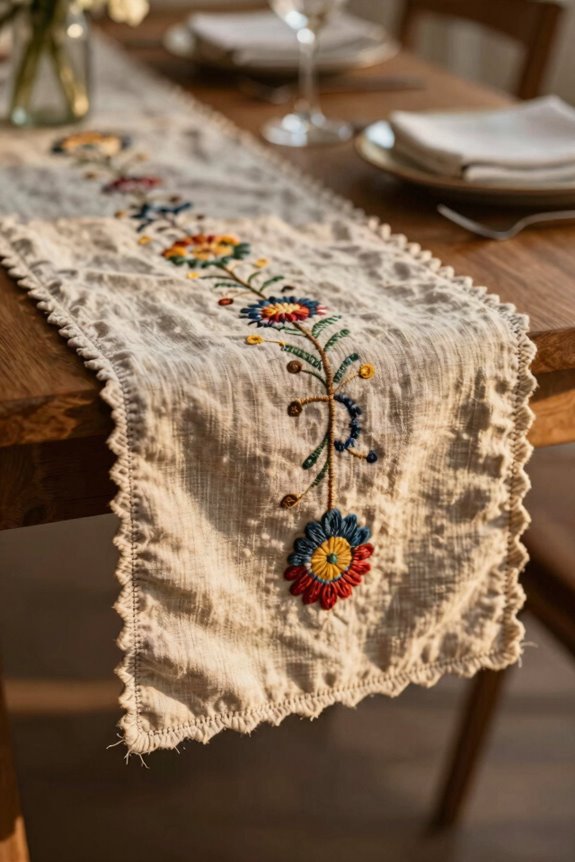
If you’re ready to create a truly personalized piece for your dining table, sewing your own runner is easier than you might think. I’ll guide you through this rewarding project using 2.75 yards of 100% cotton fabric, straight pins, scissors, and your sewing machine.
Start by cutting two fabric pieces measuring 15″ by 98″—perfect for a 6′ table. Place them right sides together, pin every 5–6 inches, then sew 1/4″ from the edge. Trim those corners at angles, turn your table runner right side out, and press everything flat.
Finish with a final 1/4″ seam, and you’ve created an elegant, reversible design. The best part? You’ll belong to a community of crafters creating beautiful dining spaces with homemade style and care.
Adapt Your Style for Casual and Formal Dining
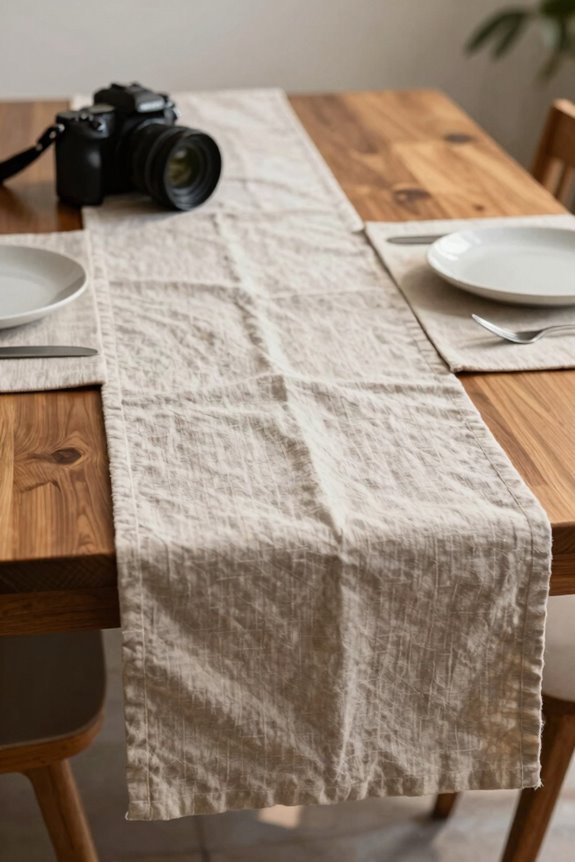
Your table runner’s length and layering instantly communicate the mood you’re creating, whether that’s relaxed and modern or refined and sophisticated. For casual dining, I’d recommend shorter runners that end before your table’s edge, revealing the tabletop surface for a bold, clean contrast. This approach feels contemporary and inviting.
For formal occasions, I’d extend runners 6–12 inches over the edges and pair them with coordinating tablecloths for that luxurious layered appearance. Mix textures like burlap with linen to add tactile depth while maintaining a unified color scheme. You could also layer multiple runners with varied lengths to define seating areas and add visual interest.
Each approach sets the right tone for your dining space, making guests feel welcome and at ease during your gathering.