
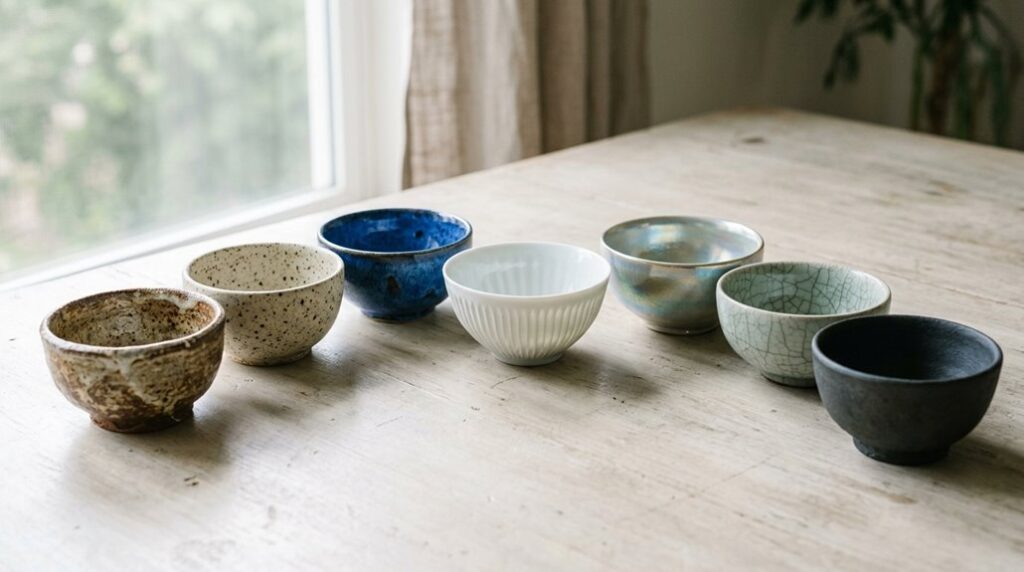
When designer Edith Heath created her iconic rimless Coupe Bowl decades ago, she discovered something powerful: the right bowl shape doesn’t just hold food—it changes how your whole table feels.
I’ve seen how a single ceramic bowl with the perfect glaze or rim style can make an ordinary dinner look intentional and elegant.
The question isn’t whether your bowls matter. It’s which designs will work best for your table, your style, and your life.
The Coupe Bowl: A Timeless Design for Modern Tables
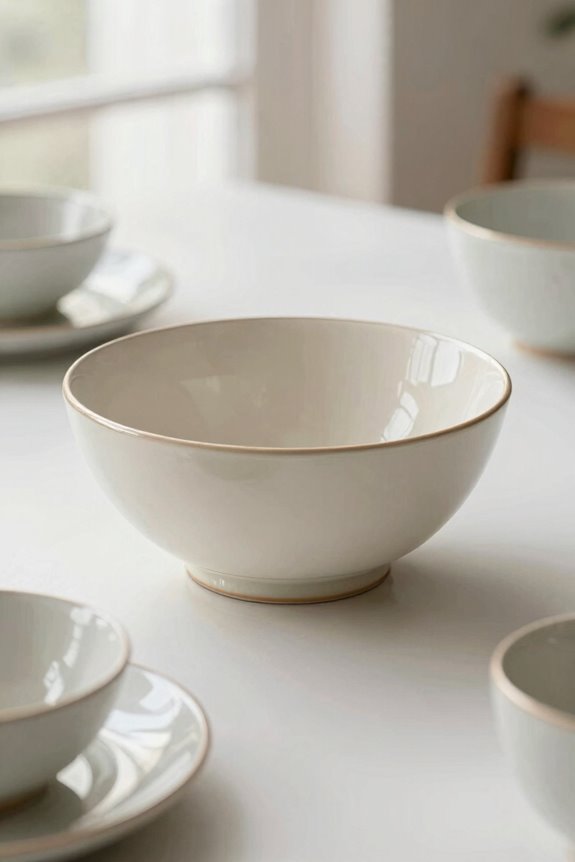
What makes a bowl design so special that it’s worth bringing back after nearly 70 years? I’d argue it’s because the Coupe Bowl represents something rare: an enduring design that actually works for modern life.
Originally created by Edith Heath in the 1940s, this iconic piece has been reimagined with contemporary glazes while keeping its distinctive rimless edges intact. That design choice isn’t just attractive—it’s practical, expanding your plating area and inviting creativity in how you present food.
The Coupe Bowl comes in fifteen beautiful colors, priced accessibly at $40, making luxury feel within reach. What I find compelling is how pattern, glaze, and form unite to create something photogenic and functional. You’re not just buying a bowl; you’re joining a design legacy that proves great ideas never really go out of style.
How Ceramic Glazes and Finishes Transform Bowls
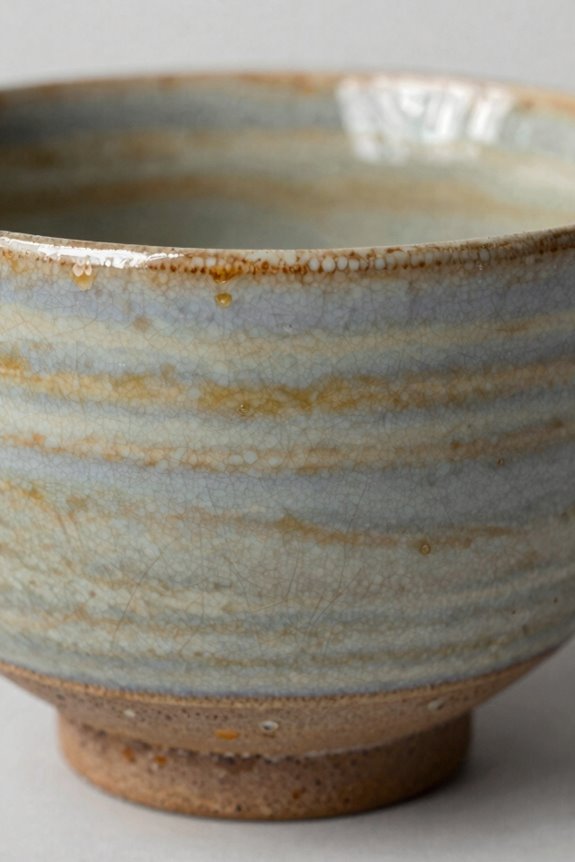
I’ll show you how glazes, the glass-like coatings that cover ceramic bowls, create dramatic differences in how your dishes look and perform. When potters apply glazes, they move and settle into the bowl’s natural folds, creating one-of-a-kind variations that no two pieces share.
High-gloss finishes bring out rich, intense colors that photograph well, while matte finishes deliver that contemporary, elegant feel. Understanding color layering and how light bounces off different surfaces helps you choose bowls that showcase your food beautifully while fitting your table’s style.
Glaze Movement and Reactivity
How does a simple layer of glaze create a plain ceramic bowl worth displaying on your table? Glaze movement is where the real artistry happens. When potters layer blue and white glazes onto a piece, they’re not just adding color; they’re inviting flow and variation.
During firing, these glazes settle into the bowl’s folds and curves, creating organic patterns you can’t replicate twice. The movement pools deeper in recesses, shifts across raised textures, and spreads along rimless edges, giving each bowl its own story. This natural reactivity means your bowl isn’t just functional; it’s one of a kind.
You’re not just serving food; you’re displaying an elegant conversation starter that reflects the artistry behind every meal.
Surface Finish and Visual Impact
Why does one ceramic bowl catch your eye while another fades into the background? The answer lies in surface finish. A high-gloss finish amplifies color intensity, making patterns pop and food appear more vibrant. Semi-matte finishes, meanwhile, read as contemporary and subtle, creating a sophisticated mood that feels well-considered and deliberate.
Embossed textures add tactile depth visible even under tone-on-tone patterns, enhancing the bowl’s story before food arrives. Your surface finish choice also affects how your bowl photographs on social media; glossy pieces photograph brilliantly, while matte finishes convey elegance and restraint.
Consider kintsugi-inspired gold detailing on warm clays. This luxe contrast blends Earth and Metal energies beautifully, though it requires hand-washing. Each surface finish changes both aesthetics and everyday usability.
Color Layering and Light Interaction
Glazes don’t just add color to ceramic bowls; they fundamentally change how light dances across the surface and affects what you see. High-gloss glazes intensify color richness, making patterns jump off the ceramic with vibrant energy. Matte finishes, meanwhile, create subtle sophistication that photographs beautifully on social media.
When you layer multiple glaze colors, you’re building depth that shifts with every viewing angle. The interplay between finish type, color placement, and light reflection happens when light hits embossed textures beneath the glaze, catching and pooling differently across your bowl’s surface. Add kintsugi-inspired gold accents on warm clay, and you’ve created something that bridges earth and metal energies.
This combination of elements turns an ordinary bowl into an elegant centerpiece for your table.
Rim Styles: How Edges Change Your Bowl’s Look and Function
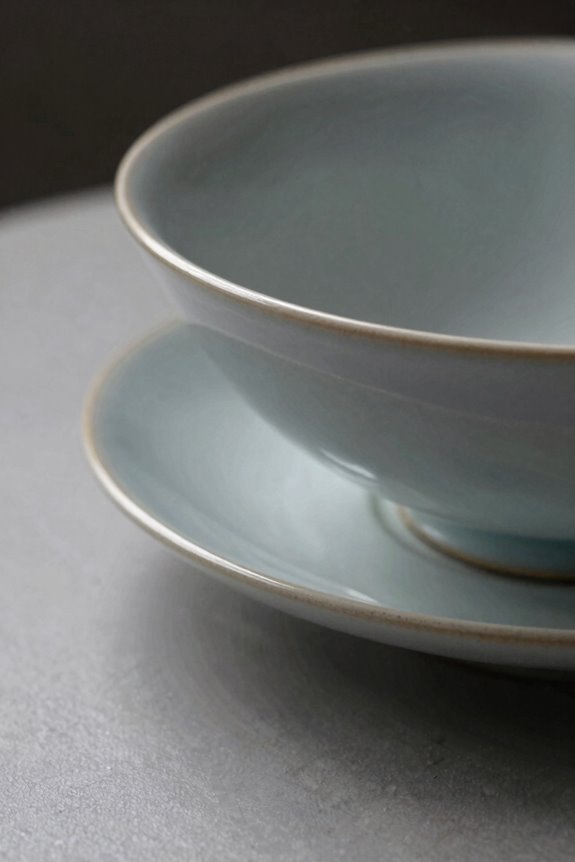
I’ve noticed that a bowl’s rim, that edge you might not think much about, actually shapes both how your piece looks and how you’ll use it every day. Rimless coupe edges create a sleek, expansive look that gives you more space for bold patterns and designs, while inverted rims (where the edge curves inward) form a distinct band that frames your food beautifully and gives you better control when pouring or serving.
Whether you choose a soft, casual edge or a more pronounced rim that signals elegance, you’re making a choice that affects everything from how your bowl appears in photographs to how comfortable it feels in your hands.
Rimless Coupe Edges Expand
When you choose a bowl without a traditional rim, you’re opening up an entirely new visual canvas. That’s exactly what makes rimless coupe edges so compelling. I find that these elegant designs expand the plating area dramatically, letting bold motifs and glazes take center stage without interruption. The smooth, uninterrupted edge doesn’t just look luxurious; it actually improves how the bowl functions.
You’ll pour more smoothly, handle it more naturally, and experience less interference during use. The subtle inverted outer edge provides grip without a traditional lip, maintaining that timeless silhouette you’re after. Plus, rimless coupe edges stack more easily and play nicer with your other dishes. They do require gentler handling to avoid chipping, but the visual payoff makes careful storage worthwhile.
Inverted Rims Support Function
How do you make a bowl feel weightless while keeping it strong enough for everyday use? Inverted rims solve this challenge beautifully. I’ve found that this rim style creates a rimless-feel interior while providing the structural strength your bowls need for daily handling and pouring.
The inverted edge design works hard for you in multiple ways. When glaze runs to the rim, it stays contained, emphasizing the contrast between glaze color and your bowl’s interior. You’ll notice how this design expands your visual plating area, making bold motifs more prominent without crowding the center.
| Material | Best Visual Effect |
|---|---|
| Porcelain | Refined pattern showcase |
| Stoneware | Weight-to-silhouette contrast |
| Feature | Benefit |
| Inverted edge | Practical pouring function |
| Structural support | Daily-use durability |
| Enhanced contrast | Pattern emphasis |
This rim style gives your tableware elegant, functional qualities you’ll reach for constantly.
Why Pattern and Color Matter More Than You Think
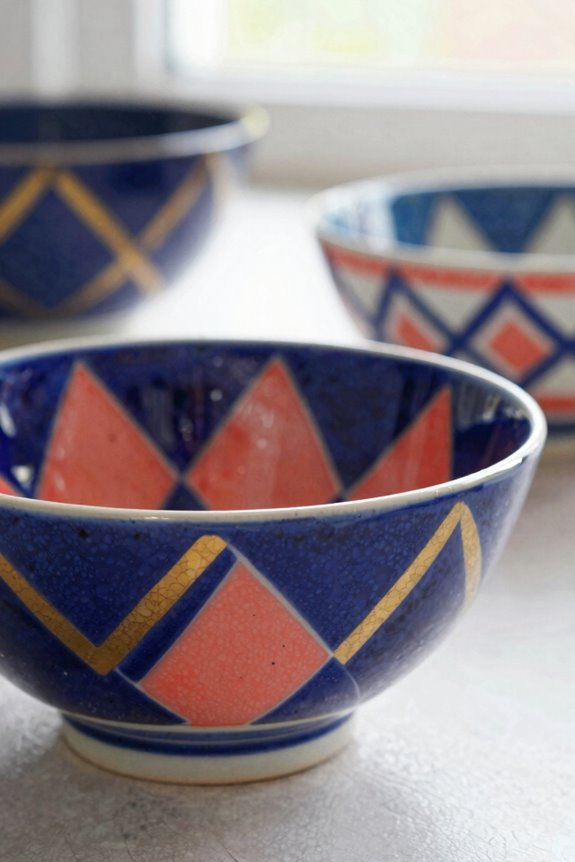
Most of us don’t realize that the patterns and colors on our bowls and plates do far more than look pretty. They actually change how we experience food itself. Pattern-focused dinnerware influences how tasty we perceive our meals, whether we judge them as healthy, and even what price we’d pay for them.
A hand-painted Seigaiha wave or delicate Sakura blossom design signals sophistication and care, turning your table into a personal statement. These visual choices work alongside glaze and form to make food photograph beautifully, which matters when you’re sharing meals with friends or online. When your dinnerware tells a story that matches your values, eating becomes more meaningful. You’re not just selecting a bowl; you’re choosing how you want to present yourself.
Matching Bowl Size and Depth to Courses and Serving Styles
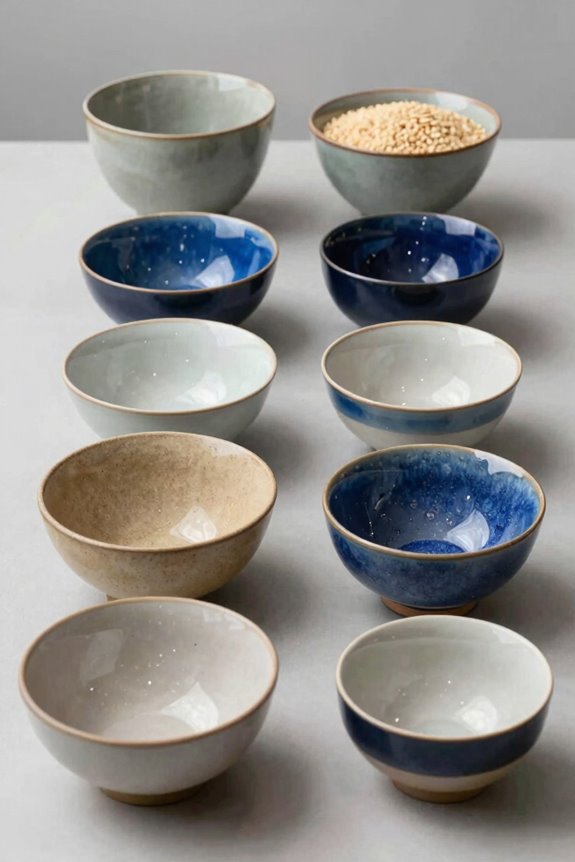
Why does your soup bowl look different from your dessert bowl? The answer lies in understanding how size and depth affect your dining experience. I’ve learned that matching your serving bowl to each course creates a natural flow that guides your guests through the meal.
Deeper bowls, like the large Rim Serving Bowl, cradle soups and sauces beautifully, while shallow Coupe bowls showcase salads and desserts with elegance. This intentional pairing isn’t just practical; it signals care and thoughtfulness to everyone at your table.
| Course | Bowl Type | Depth | Best Use |
|---|---|---|---|
| Soup | Rim Serving Bowl | Deep | Sauces, broths |
| Salad | Coupe Bowl | Shallow | Individual portions |
| Dessert | Coupe Dessert Bowl | Shallow | Plating presentation |
| Family Style | 13-inch Serving Bowl | Deep | Communal sharing |
| Appetizer | Plaza Bowl | Medium | Varied presentations |
Creating Harmony When Combining Different Bowl Styles and Colors
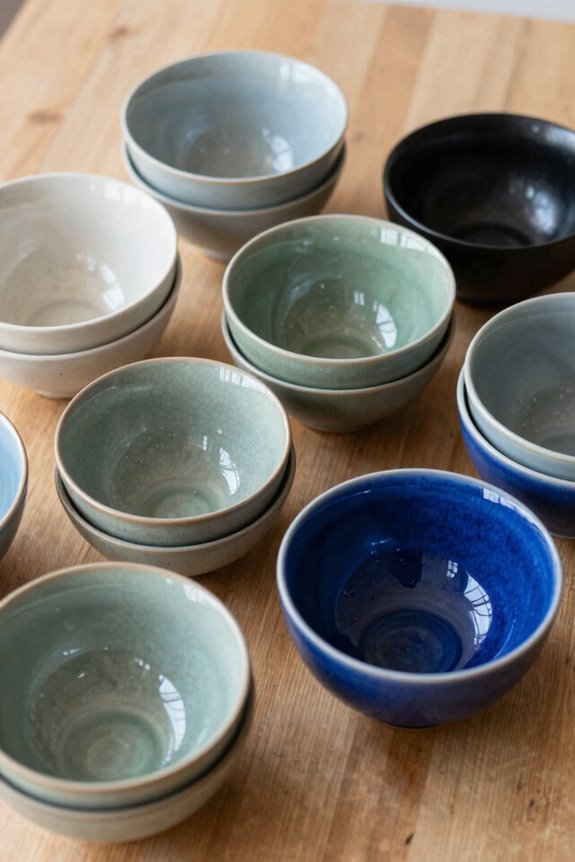
When you’ve got multiple bowl designs sitting on your table, the key to making them look deliberate rather than mismatched lies in building a thoughtful color and style story. I recommend anchoring your tablescape with larger Rim or Shallow Serving Bowls, then layering smaller dessert bowls around them for depth and visual movement.
Choose a cohesive six-color palette across your Bowl Designs, pairing them with complementary patterns like Seigaiha or Sakura motifs. Mix finishes strategically by combining high-gloss glazes with semi-matte or embossed textures to create balanced contrast that doesn’t compete with your food. When you align regional patterns with your menu concept, you’re reinforcing a narrative that feels well-thought-out and elegant. This approach brings separate pieces together into one unified, luxurious dining experience.
Keeping Your Bowls Looking and Performing Like New
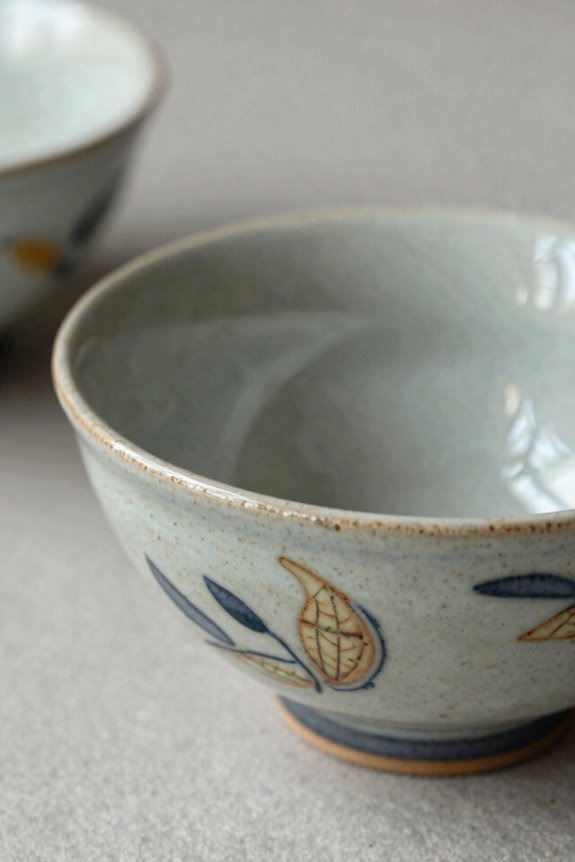
How you handle your ceramic bowls, from the moment you wash them to how you store them, directly determines whether they’ll maintain that luxurious appearance for years to come. I recommend handwashing with mild soap and avoiding sudden temperature changes, which can damage the glaze. Dry each bowl thoroughly to prevent water spots that dull their elegance.
For care and maintenance, use soft cloths between stacked bowls and lift with both hands. This prevents chips and cracks that interrupt your tablescape’s harmony. Store them securely with protective interliners to minimize wear.
Pay attention to your bowl’s finish. High-gloss glazes show scratches more easily than matte finishes, so handle accordingly. If your bowls feature metallic or kintsugi-inspired accents, keep them out of the microwave. These small steps preserve both performance and beauty.