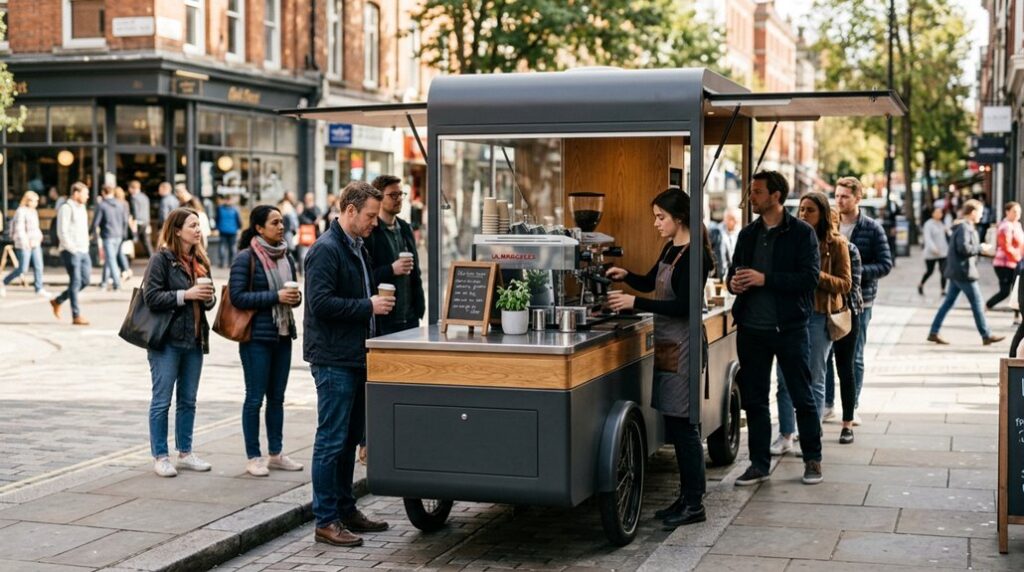
I’m going to show you how to start a coffee cart without breaking the bank or betting everything on untested ideas. You’ll discover affordable models, like compact bike carts under $5,000, and smart strategies for testing locations before scaling up.
Whether you’re drawn to premium single-origin beans or high-volume cold brew concentrate, there’s a profitable path waiting. The real question isn’t whether you can launch this venture; it’s which approach matches your style and goals.
Cost and Audience: Choose Your Cart Model First
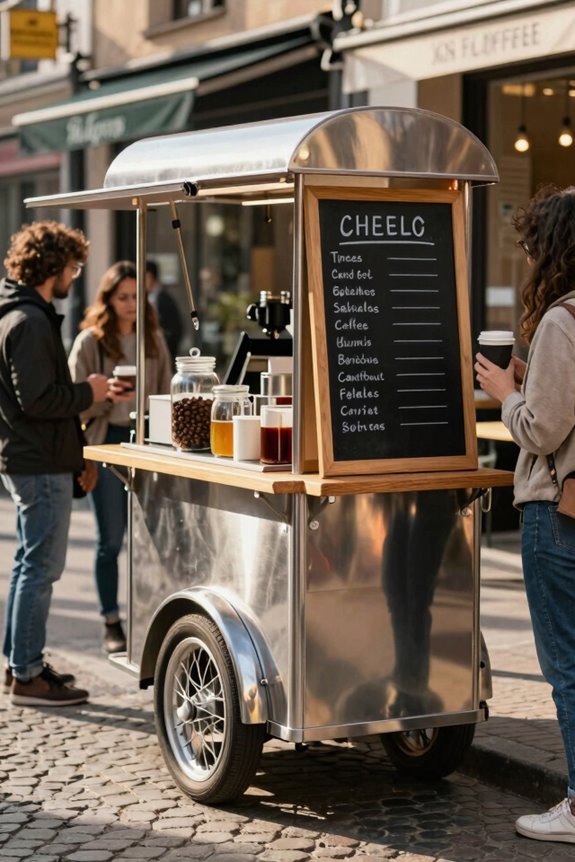
Why does your first decision matter so much? Starting with the right mobile cart model sets your entire business foundation. A quality mobile cart costs between $7,500 and $15,000, far less than kiosks, trailers, or brick-and-mortar shops. This affordable entry point means you’ll reach profitability faster because your initial investment stays manageable.
Your cart choice depends on two factors: your budget and your audience. Some carts prioritize sturdy, long-lasting frames that handle heavy daily use, while others emphasize portability and easy setup.
Consider what your target audience needs in their neighborhood. Does your community want specialty drinks at farmers’ markets or quick coffee during commutes? Matching your cart’s features to your audience’s preferences directly impacts your success and builds genuine customer loyalty.
Cold Brew Concentrate: Speed and Simplicity Over Espresso
If you’re launching a mobile coffee cart in 2026, I’d encourage you to contemplate cold brew concentrate as your efficiency tool. It eliminates the grinding, tamping, and espresso machine cleaning that slow down traditional carts, letting you serve quality iced drinks in roughly 30 seconds.
You’ll cut your operational costs appreciably since you can pre-make gallons of concentrate in a mini fridge, reduce equipment wear, and skip the expensive espresso machinery altogether. With a simple dispensing system like a nitro tap or button-activated hardware, you’ll deliver consistent, elegant drinks while keeping your setup lean and your profit margins healthier.
Preparation Speed Advantages
How quickly can you transform a customer’s order into a finished drink? With cold brew concentrate, you’re looking at roughly 30 seconds for an iced latte, a significant advantage for your mobile coffee cart.
Here’s why this matters for quick service:
- No grinding or tamping required: Cold brew concentrate eliminates the time-consuming espresso prep steps, letting you pour and serve instantly
- Batch-ready efficiency: Pre-brew gallons in advance, store them in accessible containers, and dispense with precision using systems like NitroPress DS
- Less equipment maintenance: Fewer machines mean less downtime and more consistent reliability on the go
You’re not sacrificing quality; you’re gaining speed and simplicity. This streamlined approach lets you serve more customers during peak hours, building the reputation that turns curious passersby into loyal regulars who value your efficient, elegant service.
Operational Cost Efficiency
Every dollar you save on equipment, energy, and labor is money you’re reinvesting into your business, and cold brew concentrate makes this possible by dramatically simplifying your operation.
| Cost Category | Espresso Setup | Cold Brew System |
|---|---|---|
| Equipment Investment | $3,000–$5,000+ | $500–$1,500 |
| Daily Energy Use | High (constant heating) | Minimal (refrigeration only) |
| Prep Labor Per Drink | 45–60 seconds | 20–30 seconds |
You’ll eliminate expensive espresso machines, grinders, and tamping tools. Instead, you’re pouring pre-brewed concentrate, equipment efficiency at its finest. Your throughput increases dramatically while your operational costs plummet.
Large-volume cold brew setups stored in mini fridges require virtually no maintenance, no descaling, no replacement parts. You’ll spend less on electricity and more time serving customers. That’s the elegant simplicity that lets your mobile business thrive.
Start Under $5,000 With a Bike Cart Model
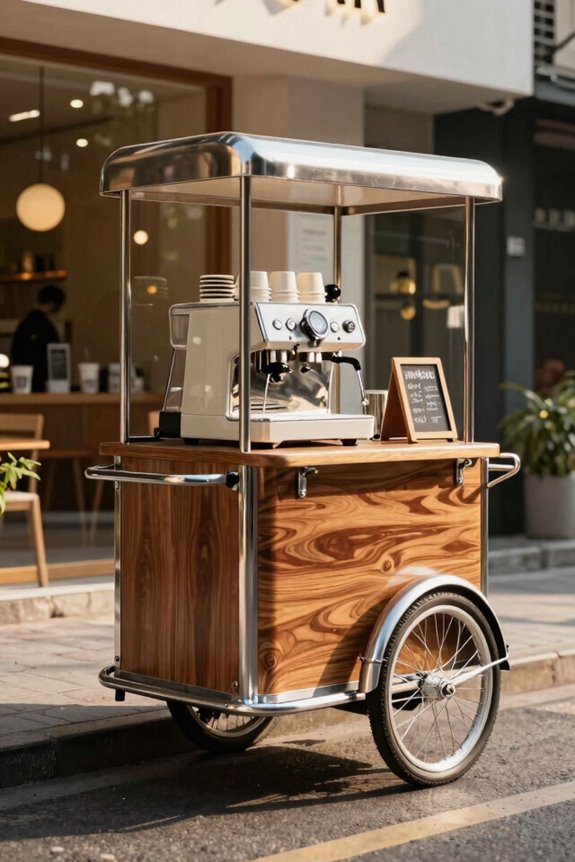
I’ll show you how a bike cart model, starting at around $2,499, lets you launch a mobile coffee business for under $5,000, compared to the typical $7,500 to $15,000 for larger setups. You’ll need to thoughtfully select compact equipment like a brewing system, water supply, and dispensing methods that fit your cart’s tight space without breaking your budget.
This lean startup approach actually accelerates your path to profit by letting you test locations, refine your menu, and build your customer base quickly before scaling up.
Affordability And Startup Investment
Want to start a coffee business without draining your savings? I’ll show you how affordable mobile coffee carts can be. A bike cart model is your strategic asset; you can launch for under $5,000, compared to traditional carts costing $7,500 to $15,000. This elegant, portable setup lets you join the coffee community without massive financial risk.
Here’s what makes bike carts smart investments:
- Lower startup costs mean faster profitability and less financial stress
- Portability lets you find high-traffic locations, maximizing customer reach
- Essential systems like plumbing, water, and dispensing work efficiently despite the compact size
You’ll need quality equipment that lasts, so budget wisely. Some entrepreneurs make incremental investments after launch, adding upgrades as profits grow. This approach makes your coffee dream achievable and affordable.
Equipment Selection And Configuration
How do you fit a functional coffee operation into a compact bike cart without compromising quality? I’ll show you. Start with a compact espresso machine, the heart of your mobile coffee cart, paired with a reliable grinder that produces consistent, flavorful grounds. Your equipment configuration determines everything: workflow efficiency, speed, and customer satisfaction.
I recommend choosing between solid-frame designs for durability or disassemblable models for flexibility. Include modular electrical and plumbing systems tailored specifically for mobile use. Add water storage, dispensing systems, and secure mounting points for your espresso machine and grinder.
Before permanent installation, test equipment placement thoroughly. Map out your ergonomic layout, ensuring everything’s within arm’s reach. This thoughtful equipment configuration creates a refined, elegant operation that delivers exceptional coffee while staying portable and profitable.
Growth Path Beyond Bikes
Your bike cart isn’t just a business; it’s a launchpad. I’ve watched successful operators build their modest mobile vending operations into thriving networks. Once you’ve mastered your bike and proven your concept through the three-time rule at test locations, reinvesting profits becomes your growth strategy.
Your next steps include:
- Adding modular upgrades to your current bike, like upgraded espresso machines or expanded storage compartments
- Purchasing additional bikes to cover multiple events simultaneously, multiplying your reach and revenue
- Scaling to food trucks or café spaces, leveraging everything you’ve learned from your bike platform
This elegant progression lets you grow without overwhelming risk. Each stage funds the next, building your community of loyal customers along the way. You’re not just expanding; you’re building an elegant coffee business, one pedal at a time.
Premium Single-Origin Coffee: Quality as Differentiation
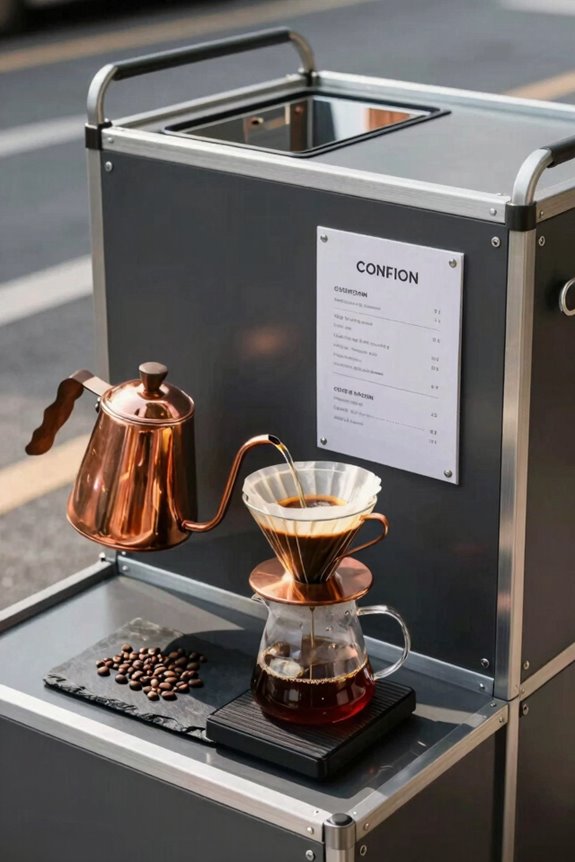
What sets a truly memorable coffee cart apart from the competition? Single-origin coffees. I’ve found that sourcing beans from specific regions, Ethiopia, Colombia, Kenya, lets me tell stories customers genuinely connect with. Each origin offers distinct flavor profiles: fruity, chocolatey, floral. This traceable provenance builds trust and justifies premium pricing.
I partner with reputable roasters offering lot-level data, guaranteeing consistent quality and transparency. My rotating menu showcases different origins monthly, keeping regulars excited and engaged.
Catering and Corporate Events: Higher Ticket Sales
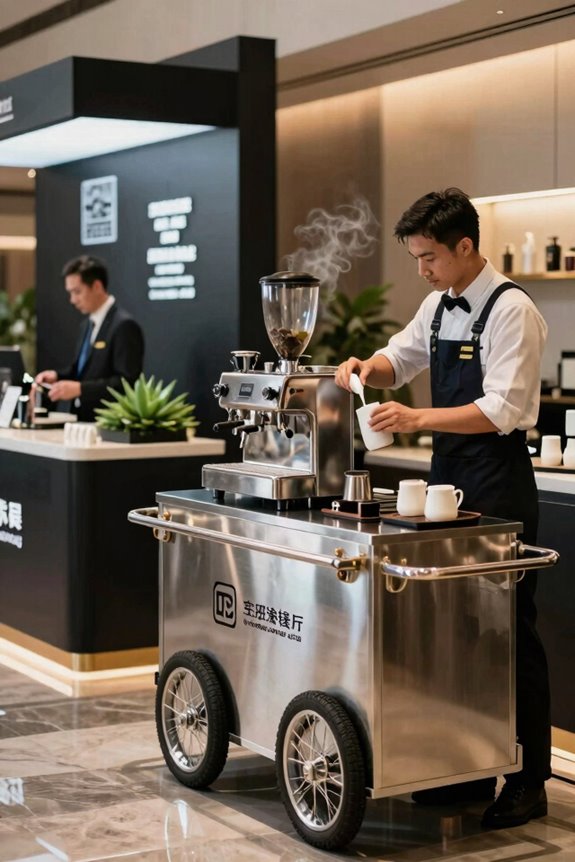
Once you’ve mastered the daily grind of street sales, catering and corporate events become your ticket to substantially larger revenue. I’m talking about contracts that can pay ten times what you’d make in a single day of cart operations.
I’ve found that bundling services makes your mobile coffee cart a practical solution for weddings, conferences, and sports events. You’re not just selling coffee; you’re creating branded experiences that justify premium pricing.
Here’s what sets you apart:
- Build partnerships with venues and event planners for repeat business
- Offer espresso stations and coffee bars that command higher minimum spends
- Test three times before committing to larger contracts
The key is mastering rapid setup, maintaining speed under pressure, and delivering consistent quality. You’re joining a community of entrepreneurs who’ve discovered that corporate events mean predictable revenue streams replacing daily uncertainty.
Attach Your Cart to a Retail Partner: Drive Foot Traffic
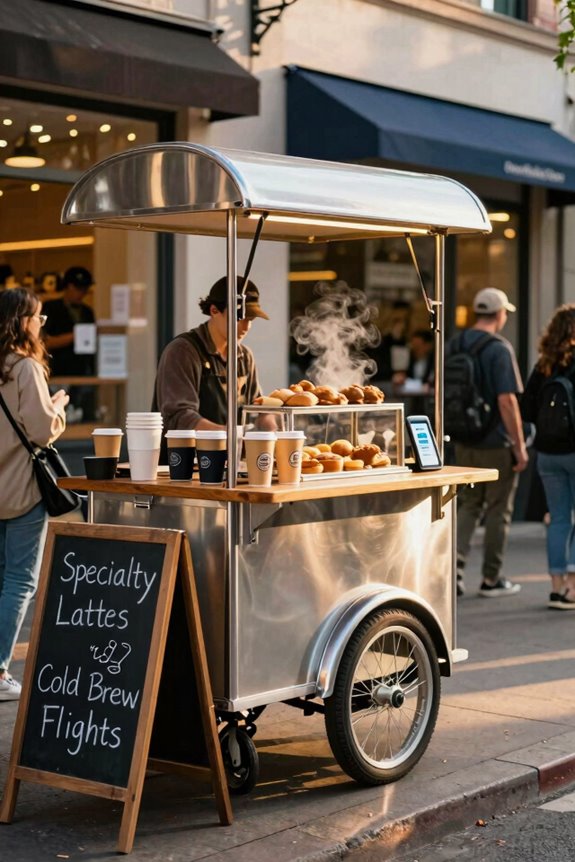
Partnering with an existing retail location changes your mobile coffee cart from a solo operation into a built-in business with guaranteed foot traffic. You’ll tap into customers already shopping, turning casual browsers into coffee buyers through strategic placement and impulse purchases.
This partnership eliminates location scouting headaches and streamlines permits since you’re operating within their established site. You gain a built-in customer base immediately, reducing startup risk significantly.
Work with your retail partner on cross-promotion through co-branded events, eye-catching signage, and social media posts that boost visibility for both businesses. Clear agreements should define revenue sharing, scheduling, provisioning, and compliance with health and branding standards.
This approach lets you test concepts affordably while expanding brand reach. It serves as a stepping stone toward multiple carts or a larger cafe presence.
Validate With the Three-Try Rule: Testing Locations and Events
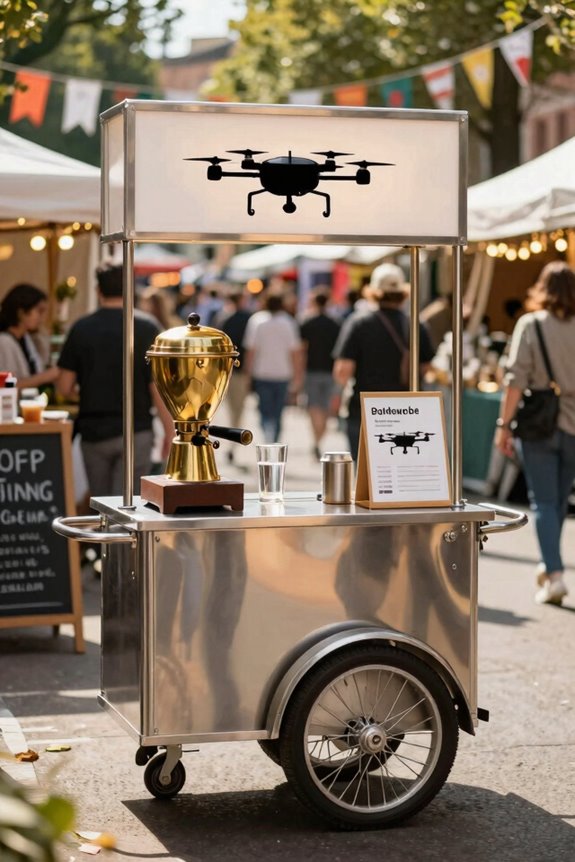
The smartest way to know if a location or event will make you money is to test it three times before you commit your full effort and resources. I’ve found that mobile business validation works best when you gather real data across multiple visits.
During each test, I track:
- Volume and sales: How many customers visit and what they spend per transaction
- Repeat interest: Whether people come back, showing genuine demand in that spot
- Operational fit: If your setup runs smoothly given the space, foot traffic, and local vibe
The three-try rule lets you compare performance across different site types: business parks, campuses, farmers markets, outdoor events. You’ll spot patterns that reveal which locations deserve your full investment.
This approach keeps your risk low while building confidence in your decision.
Seasonal Menus: Capitalize on Trending Formats
I’ve found that your cart’s real moneymaker isn’t just one killer drink: it’s knowing when to pivot your menu to match what customers actually crave, whether that’s a steaming latte on a crisp fall morning or a refreshing cold brew on a sweltering summer afternoon.
Year-Round Beverage Adaptability
How do you keep customers coming back when seasons shift from frosty mornings to scorching afternoons? I’ve found that a year-round beverage strategy bridges this gap by rotating offerings based on weather patterns and customer needs.
Here’s what keeps my cart thriving across all seasons:
- Cold brew concentrate in gallons stored in a mini fridge delivers iced drinks in 30 seconds using a NitroPress DS system, maintaining speed during peak afternoon rushes
- Hot options for cooler mornings paired with ready-to-serve cold formats maintain consistent throughput without sacrificing quality
- Pre-brewed batches and alt milks let me adapt quickly to customer preferences without slowing service
This mobility in my beverage lineup means I’m never caught unprepared. Seasonal menus featuring signature drinks, rotating features, and non-coffee options attract diverse crowds year-round.
Building a community that returns regardless of temperature is the result of staying flexible and responsive to what customers need.
Trending Flavor Innovation Strategies
When customers walk up to your cart, they’re drawn in by what’s new and exciting—not just what’s familiar. I’ve found that trending formats like Ready-to-Serve Formats and Nitro Cold Brew create that moment that keeps people coming back.
Here’s my strategy: I stock pre-brewed Cold Brew concentrate in one-gallon growlers, cutting prep time dramatically. Then I layer in Nitro Cold Brew for that elegant, creamy texture without extra steps. These formats let me serve more customers quickly while maintaining consistent quality.
I rotate seasonal flavors monthly; vanilla lavender in spring, salted caramel in fall, keeping my menu fresh. Adding simple add-ons like flavor shots or premium toppings boosts my average order without complicating operations. This approach builds community around your cart because regulars always anticipate what’s next.
Seasonal Pricing And Promotions
Your menu’s pricing and offerings should shift right alongside the weather and what customers actually crave in each season. Adjusting seasonal pricing and promotions keeps your mobile coffee cart competitive and profitable year-round.
Here’s how I approach it:
- Test before scaling: Run seasonal formats at three different locations or events first, measuring profitability before rolling out cart-wide changes
- Leverage pre-brewed cold brew: Stock gallons during warm months for quick service and faster transitions between seasonal drinks
- Balance your menu strategically: Offer one signature drink, one seasonal feature, and one non-coffee option to maintain high volume while managing inventory
This approach lets you join a community of mobile operators who understand their customers deeply. You’ll respond authentically to what people want, when they want it.
How to Choose High-Profit Locations: Geography and Timing
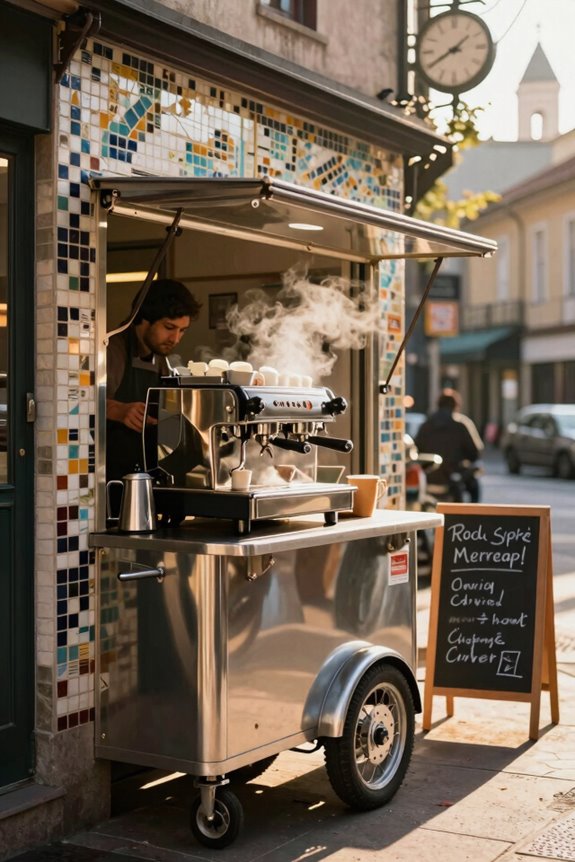
Where you park your cart matters just as much as what you serve inside it. Your mobile cafe’s success hinges on choosing high-profit locations strategically. Start by testing spots three times before committing; this reveals actual demand without financial risk.
Target high-potential areas: business parks, campuses, tourist hotspots, stadiums, and farmers markets. Location timing is equally crucial; understand when crowds gather and what they need. Morning rushes at offices differ from afternoon foot traffic at tourist sites.
Use the mobile format’s flexibility to your advantage. Update your location daily across Google Business Profile, Instagram Stories, and site banners. Partner with event venues like weddings and conferences for recurring, high-margin opportunities. This approach builds community while maximizing profits.
Scale Smart: When to Add Carts, Trucks, or a Café
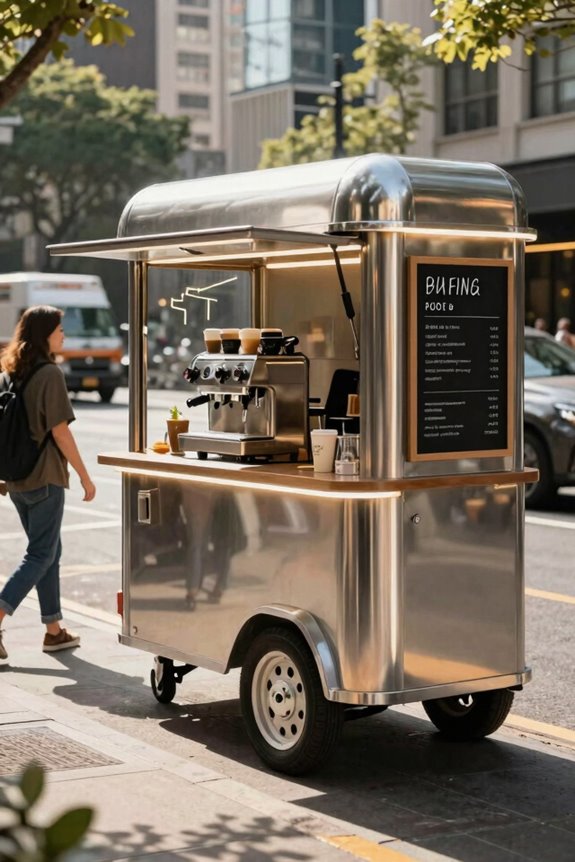
How do you know it’s time to grow beyond your single cart? I track three key metrics that signal readiness for expansion:
- Average ticket and order value consistently exceed your targets week after week
- Weekly booking inquiries show demand you can’t fulfill with one cart
- Profit margins remain strong even after accounting for operational costs
When you’ve hit these benchmarks, you’re ready to scale. I’d recommend testing a second cart at a proven location before investing in a truck. This expansion strategy lets you validate systems without overcommitting resources.
Your mobile coffee business thrives on branding consistency. Keep every cart delivering the same polished experience. Standardized processes, identical signage, and training keep quality intact as you grow. Once you’ve perfected multi-cart operations, a permanent café becomes the natural next step for serious entrepreneurs.