
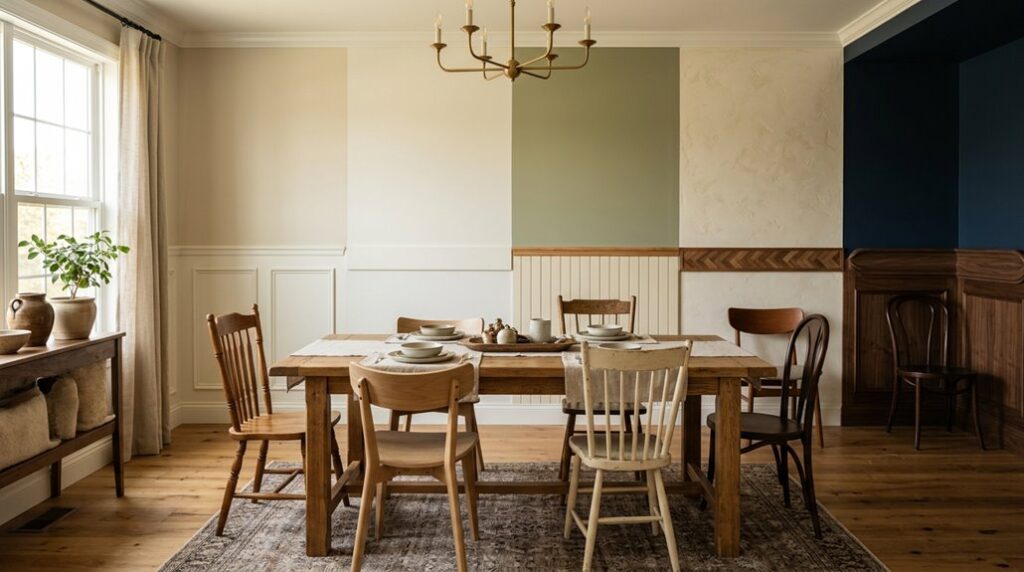
Whether you’re drawn to classic elegance or contemporary refinement, chair rails offer both beauty and function. I’ve found that these horizontal moldings, typically installed 36 to 42 inches up your wall, create visual interest while protecting your walls from chair damage.
The right height, color, and style for your space makes a significant difference. However, most homeowners don’t realize what a chair rail can accomplish in a dining room with this single addition.
Are Chair Rails Right for Your Home? Heritage vs. Modern Considerations
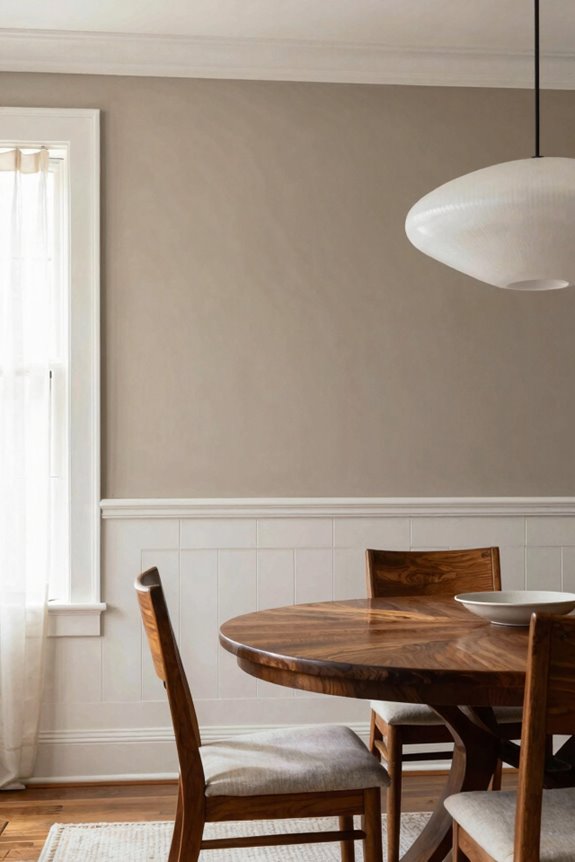
Why do some dining rooms feel timelessly elegant while others feel fresh and streamlined? The answer often lies in your chair rail choice. Heritage homes typically embrace two-color palettes, featuring darker lower walls and lighter upper walls that highlight architectural details like crown molding. This classic approach creates authentic, luxurious charm.
Modern homes, built in the 1970s onward, favor a different strategy: using one cohesive color on both upper and lower walls, with the chair rail matching your trim seamlessly. If you’re updating a heritage space, you’ll find that painting your chair rail white heightens traditional contrast beautifully. Alternatively, matching it to your walls creates subtle elegance. Understanding your home’s style helps you decide whether a chair rail enhances your dining room’s character or detracts from its contemporary appeal.
Determine Your Chair Rail Height: Standard 36″ or Proportional 40-42″
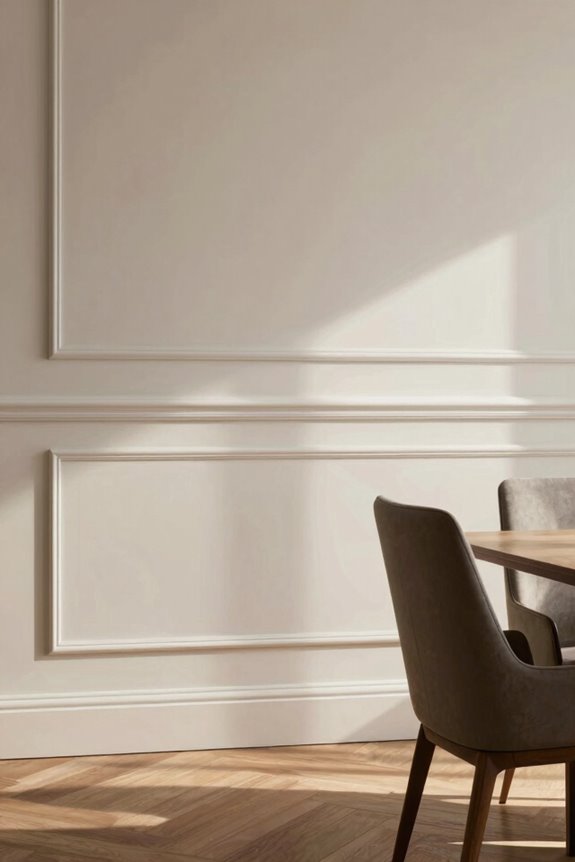
Once you’ve decided that a chair rail belongs in your dining room, the next critical choice is figuring out exactly where to install it. The height you choose dramatically affects your space’s visual balance and elegance.
Consider these installation guidelines:
Consider these installation guidelines: standard 36-inch height for traditional spaces, proportional 40-42 inches for modern installations with higher ceilings.
- Standard 36-inch height: The traditional measurement from floor to rail, perfect for older homes and conventional dining spaces
- Proportional 40-42 inches: Modern installations that complement higher ceilings and create sophisticated proportions
- Ceiling line relationship: Your rail’s placement should work well with crown molding and wall paneling above it
I recommend measuring your room’s total height first. A proportional height creates an elegant visual connection between your chair rail, crown molding, and ceiling line.
Your furniture placement matters too. The rail should sit slightly above chair backs, protecting walls while maintaining that luxurious aesthetic you’re creating.
Choose Paint Colors: When to Contrast and When to Match
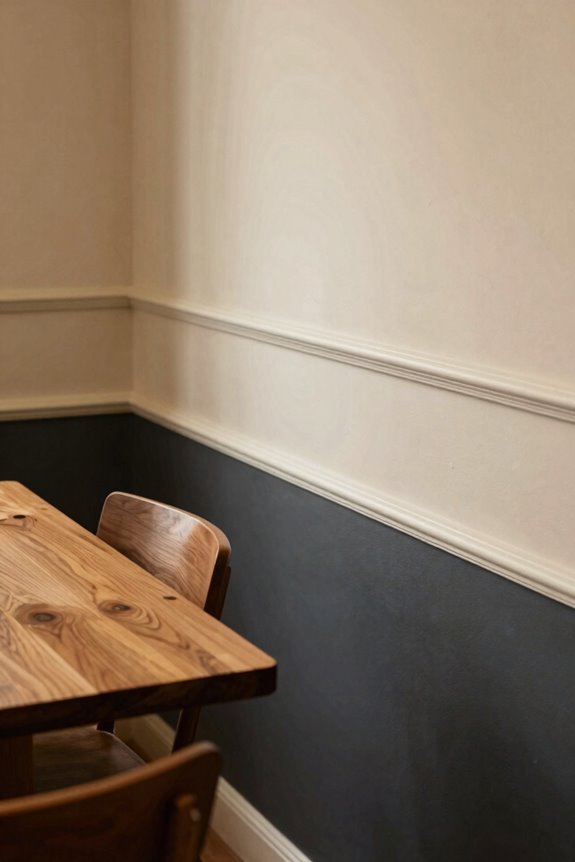
How you paint your walls around the chair rail changes your entire dining room’s look, and it’s easier than you might think. You’ve got two main approaches: contrast or match.
If you’re embracing contrast, darker wall colors below the rail make white moldings pop beautifully, creating drama and elegance. However, if you prefer subtlety, matching your upper and lower wall colors with soft, cohesive shades keeps everything unified and modern.
For wood chair rails, I recommend lower-contrast paint colors to avoid heavy two-tone blocking. This approach feels fresher, especially in newer homes where minimalist design thrives.
When selecting paint colors, consider your room’s mood. Bold contrast commands attention; matching creates calm sophistication. Either way, you’re creating a dining space that reflects your style and welcomes everyone who enters.
Upgrade With Wainscoting, Beadboard, or Board-and-Batten
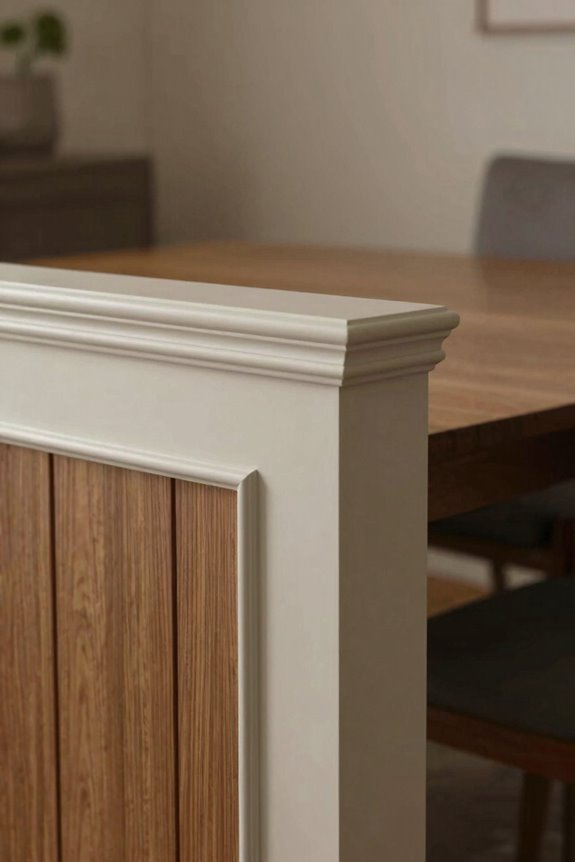
Ready to upgrade your dining room from basic to something special? I’ve discovered that adding wainscoting, beadboard, or board-and-batten to your chair rail makes a real difference in how the space feels. These options add authentic charm and character that simple trim alone can’t achieve.
Adding wainscoting, beadboard, or board-and-batten transforms your dining room from basic to authentically charming and sophisticated.
Here’s what I recommend considering:
- Wainscoting or board-and-batten visually breaks up large walls, creating a dining room that feels architecturally sophisticated
- Beadboard paired with your chair rail delivers a modern-meets-traditional aesthetic, especially when painted in satin finish
- A narrow horizontal molding beneath the chair rail mimics traditional paneling while maintaining contemporary appeal
I find that combining these elements creates an integrated look that feels intentional. You’ll notice how these upgrades make your dining room into a space where you genuinely want to gather. The investment in these materials pays off through timeless style and sophisticated atmosphere.
Make It Modern: Why Minimal Contrast and Cohesive Trim Matter Today
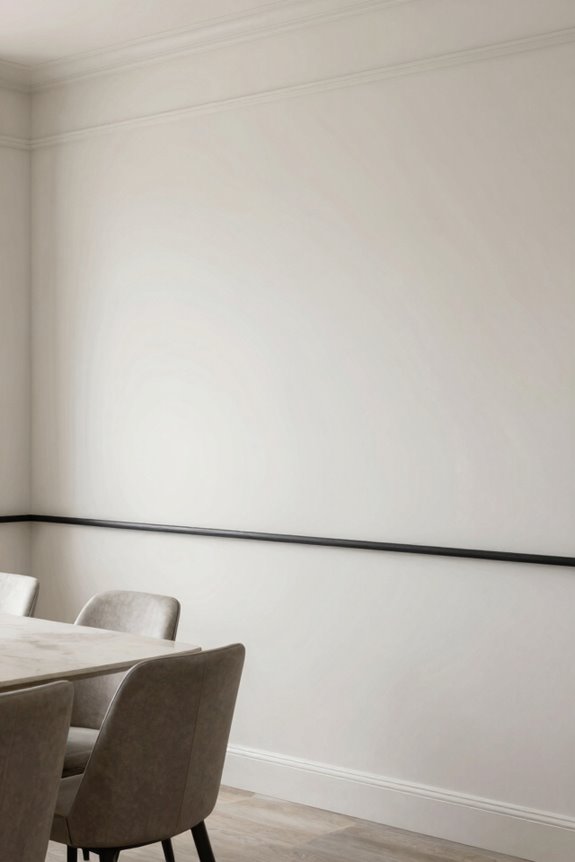
What if your chair rail could practically disappear into your walls, creating an elegant, unified appearance instead of a bold dividing line? That’s the modern dining room aesthetic: one where matching trim and minimal contrast reign supreme. Rather than making your chair rail a focal point, I recommend painting it the same color as your walls or trim. This approach creates a luxurious, integrated feel that appears deliberate and sophisticated.
When you pair beaded board or wainscoting with a slim, similarly colored chair rail, you maintain that clean, contemporary vibe without heavy delineation. Consider lighter lower walls with matching or slightly lighter upper walls to further reduce emphasis. This strategy lets your dining room’s overall design shine while keeping everything wonderfully unified and calm.