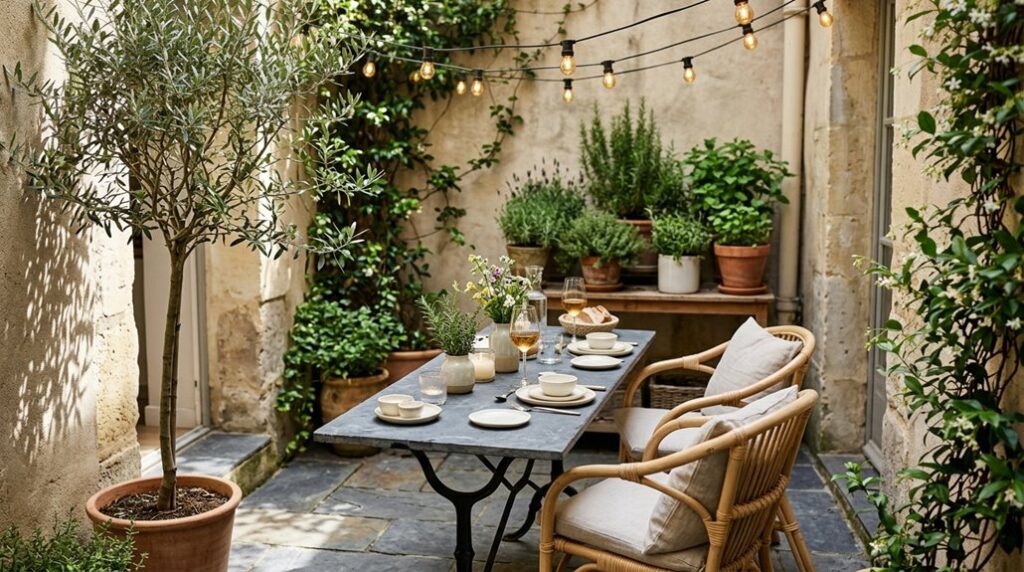
You might not realize that a small outdoor space can feel just as luxurious as a sprawling patio. It’s all about smart planning. I’m here to show you how lightweight planters, compact tables, and layered shade can create an elegant dining destination in your tight corner. The key isn’t adding more; it’s organizing what you have strategically.
Let’s explore how to make every square inch count while keeping your space open and welcoming.
Measure Your Space and Map Out Zones
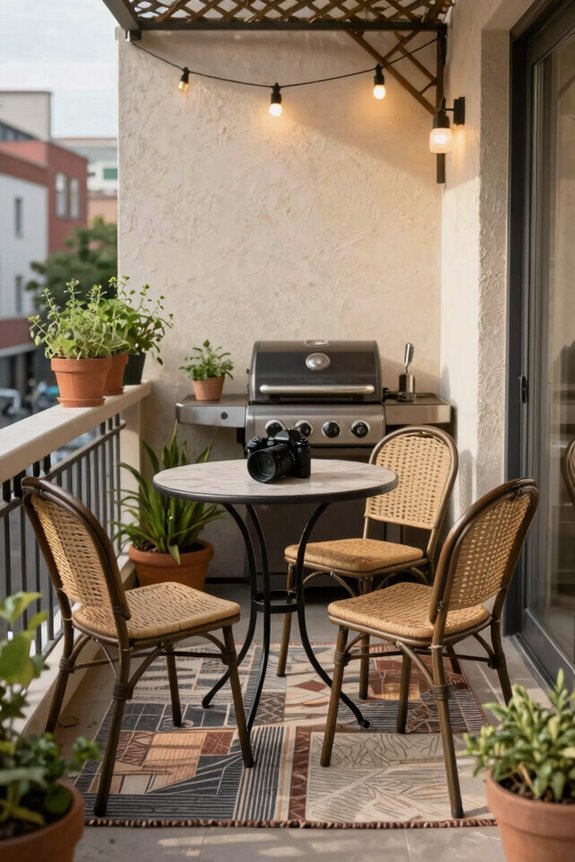
Before you buy a single piece of furniture, you’ll want to grab a measuring tape and sketch out your outdoor space. It’s the smartest first step toward creating a dining area that actually works. I recommend noting doorways, sun exposure, and existing features like trees or structures that affect your outdoor dining space layout.
Next, define zones using visual dividers. Planters as dividers create elegant separation between your dining area and lounging spots, while an outdoor rug zoning strategy anchors your small space dining elegantly. These elements help guests understand where dining happens versus relaxing.
Consider traffic flow carefully. Align your table to maintain clear walking paths, ensuring people move comfortably between areas. Choose seating versatility with foldable chairs and stackable options, maximizing functionality without crowding.
Position near-kitchen dining strategically; this proximity simplifies entertaining and reduces indoor trips, creating the welcoming gathering space you’re building.
Choose a Compact Table and Smart Seating Combo
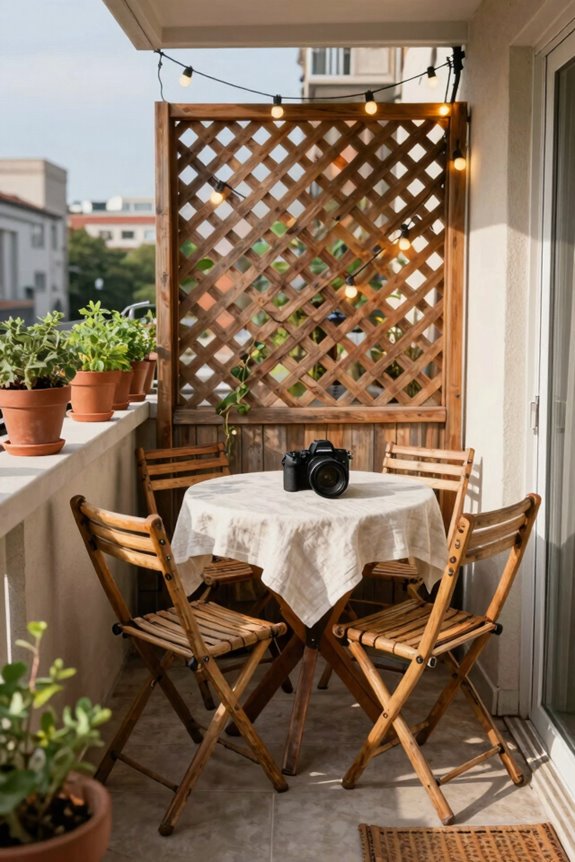
The right table and seating combination can make your small outdoor space feel comfortable instead of cramped. I recommend choosing a circular or compact table, which naturally encourages conversation while maximizing flow around your dining area. Pair it with smart seating options like folding chairs or stacking stools that you can tuck away when not needed, creating breathing room in tight quarters.
Consider mixing seating styles, perhaps a built-in bench on one side paired with lightweight, weather-resistant chairs at the ends. This versatile layout adapts to your needs without crowding the space. Built-in benches with hidden storage offer elegant functionality, keeping clutter minimal.
Lightweight, portable furniture makes rearrangement effortless whenever you want a fresh arrangement. These thoughtful choices help your outdoor dining area feel both luxurious and livable.
Add Shade Without Eating Up Square Footage
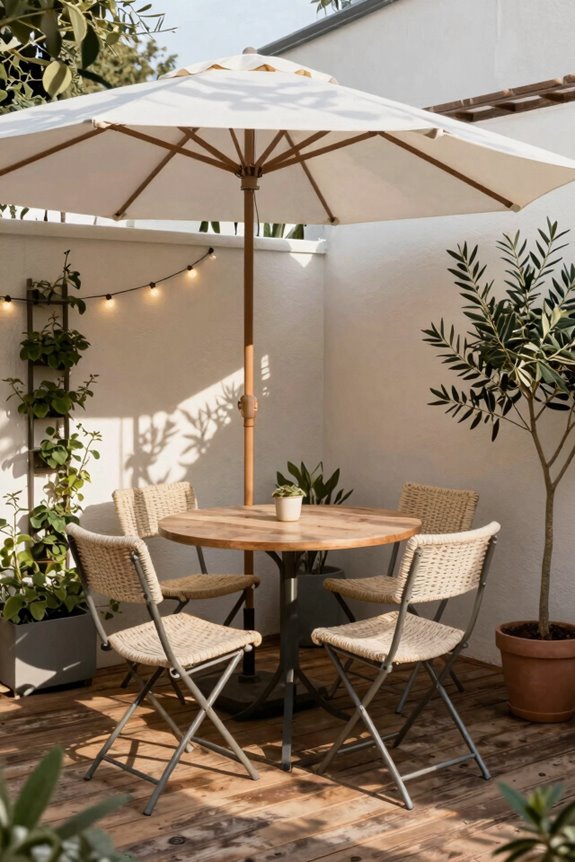
Now that you’ve got your furniture sorted, it’s time to tackle the sun without letting shade solutions swallow your precious square footage. I’ve found that weather-resistant umbrella and cantilever umbrella with tilting options deliver focused shade directly over your covered outdoor dining without dominating your patio shade footprint.
Consider a pergola shade with retractable canopies. They’re elegant yet flexible, adjusting as the sun moves. I also layer lightweight outdoor textiles like curtains and cushions to soften sunlight while keeping your dining space open and airy.
Here’s my favorite trick: strategically position shade structures to block peak-hour sun, then let climbing vines creep across beams. This natural approach creates rich texture while keeping your outdoor dining room intimate and inviting without sacrificing square footage.
Use Tall Planters to Define Zones and Block Sightlines
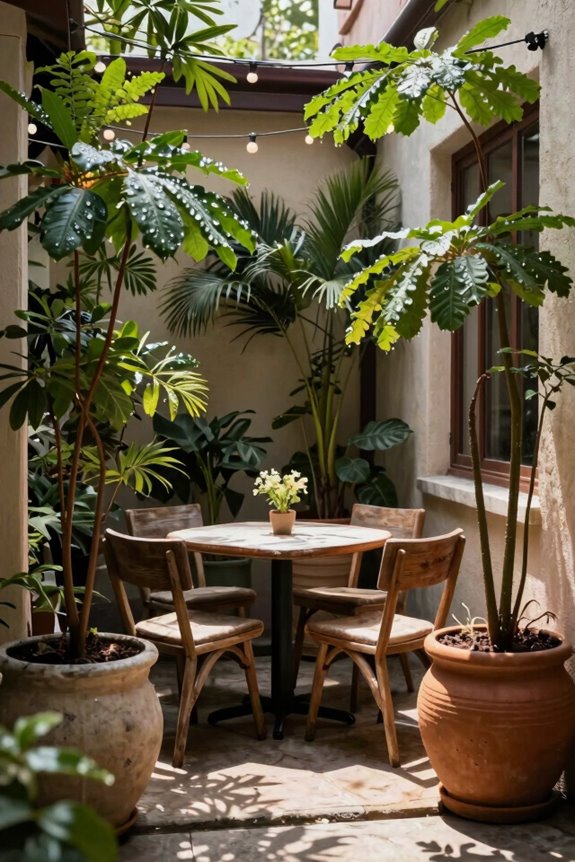
While shade structures handle the sun overhead, tall planters work equally hard at ground level to carve out your dining zone and shield it from wandering eyes. I’ve found that fiberglass planters offer the perfect solution for small spaces because they’re lightweight, durable, and weather-resistant across climates.
Strategically placing tall planters defines zones and creates secluded niches where you feel genuinely enclosed. Cluster them with grasses or small trees to add natural texture and depth while keeping your space mobile.
Use height composition by positioning tall planters at the back with medium planters around edges to anchor your layout and guide flow.
| Planter Strategy | Benefits |
|---|---|
| Tall planters at back | Creates backdrop, blocks sightlines |
| Medium planters at edges | Anchors layout, guides movement |
| Clustered with plants | Adds texture, maintains flexibility |
This approach creates an elegant, private retreat in your outdoor space.
Layer Lighting for Evening Ambiance and Function
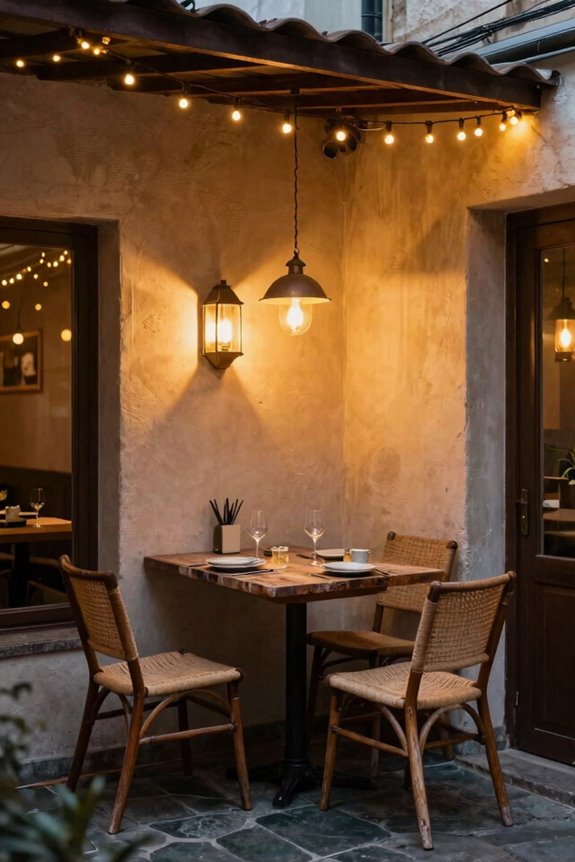
How does your outdoor dining space look after sunset? Layered lighting turns your small dining area into an elegant retreat where you’ll want to linger with friends and family.
I recommend building your night dining setup with these elements:
- String lights strung overhead create warm, broad illumination perfect for pergolas or tree branches
- Lanterns placed on tables or railings offer portable, decorative glow that’s easy to adjust
- Table candles in hurricanes provide intimate ambiance while protecting flames from wind
- Uplighting accentuates planters or walls, adding depth without casting glare on diners
- Solar lighting powers your outdoor dining ambiance sustainably, eliminating cord clutter
This layered lighting approach delivers functional visibility alongside luxurious mood. You’ll extend evening gatherings naturally, creating the inviting outdoor space you’ve imagined.
The combination feels well-considered, not cluttered, perfect for intimate entertaining in tight quarters.
Combine Materials to Create Visual Depth in Tight Layouts
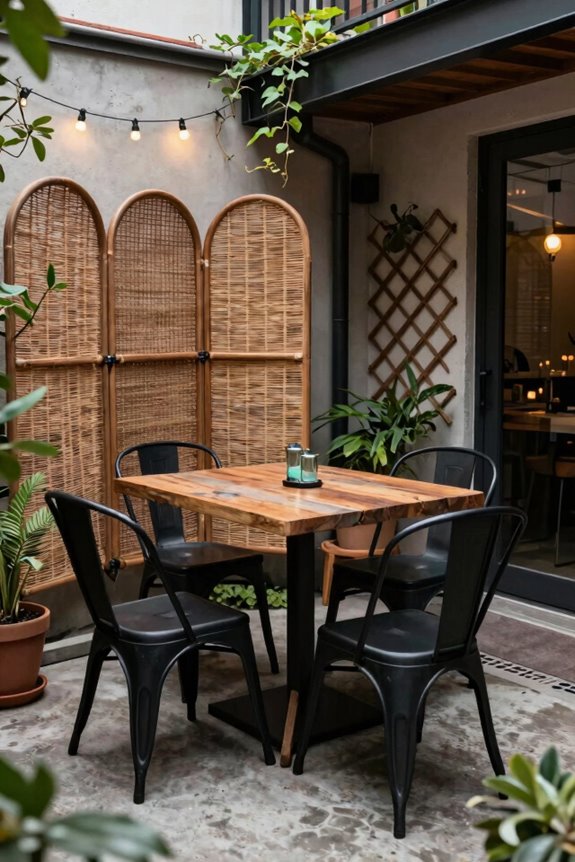
When you combine different materials like a sleek metal table with warm wooden chairs, you create visual interest that makes your compact dining area feel larger and more sophisticated. I’d recommend layering textures too; think fiberglass planters with stone finishes paired alongside outdoor cushions and a small rug, which adds dimension without making the space feel cramped.
This strategic mix of metals, wood, and textured accents gives your tight layout a refined, carefully considered look that draws the eye around the space rather than making it feel small.
Mix Metals and Wood
Why settle for a one-note look when you’re working with limited square footage? Mixing metals and wood in your outdoor dining furniture creates an elegant contrast that makes small spaces feel well-considered and stylish.
I recommend pairing these complementary materials strategically:
- Combine galvanized metal tables with angular wooden chairs for clean lines and tactile warmth
- Use built-in benches instead of freestanding seating to maximize your compact dining setup
- Add metal planters and pendant fixtures that echo your furniture’s metal accents
- Layer weather-resistant cushions in mixed tones to enhance comfort without cluttering
- Choose metal frames with wooden slats for visual depth
This balanced approach makes your small space dining feel luxurious. The contrast between cool metal and warm wood creates visual interest while keeping your footprint efficient and welcoming.
Layer Textures Strategically
Layering different textures and materials creates a compact outdoor dining space that feels purposeful and visually rich. I combine weather-resistant cushions, outdoor rugs, and throws in varied fabrics to add comfort without overwhelming my small area. These tactile materials add dimension and make the space feel luxurious.
| Texture Layer | Best Material |
|---|---|
| Cushions | Fade-resistant outdoor fabric |
| Rugs | Moisture-resistant synthetic fibers |
| Throws | Mildew-resistant blends |
| Planters | Fiberglass with varying heights |
| Accents | Natural wood or metal |
I strategically introduce contrast through color and pattern combinations; perhaps neutral seating with bold accent cushions or planters. Pairing fiberglass planters at different heights near my dining zone frames the space elegantly while maintaining indoor-outdoor layering.
This seating variety, combined with weather-resistant textiles, creates an inviting gathering spot you’ll actually want to use.
Choose Dual-Purpose Furniture to Avoid Clutter
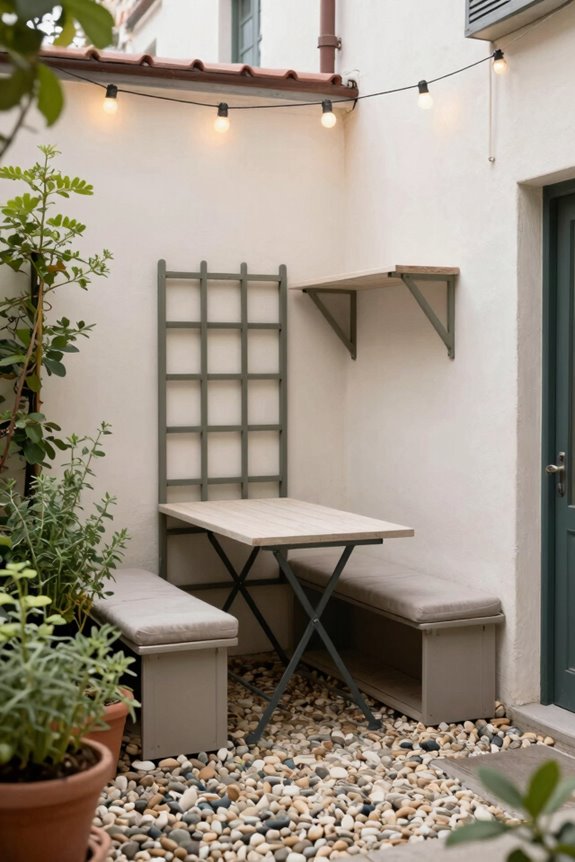
Smart furniture choices can help you make the most of a cramped outdoor dining area, creating a functional, elegant space that doesn’t feel packed or cluttered. Investing in dual-purpose furniture is key for small outdoor dining spaces. Here’s what works:
- Built-in angular benches with hidden storage underneath keep seating accessible while storing grilling tools and utensils
- Foldable or stackable chairs paired with a compact table adapt from intimate meals to larger gatherings effortlessly
- Dual-purpose dining tables that prep and dine eliminate the need for separate surfaces
- Wall-mounted options and modular pieces create clear circulation paths without blocking movement
- Multi-function features like planters doubling as space dividers reduce furniture overload
This space-saving design approach lets you create an inviting gathering spot without sacrificing comfort or style. You’ll appreciate how much breathing room these versatile furniture choices provide while maintaining that luxurious outdoor dining experience you’re seeking.