
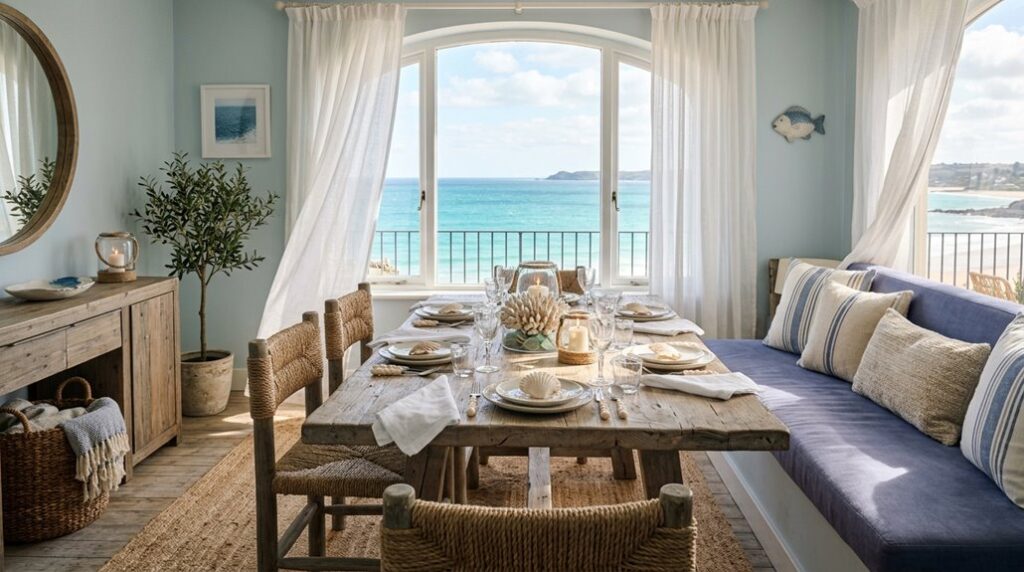
Creating a dining room that whispers rather than shouts coastal charm requires thoughtful choices. I’ve found that the best seaside-inspired spaces start with a foundation of whites, soft grays, and muted blues—colors that feel calm and inviting.
Natural wood tables, seagrass chairs, and woven textures provide depth without overwhelming the space. But here’s where most people stumble: knowing which nautical accents actually belong in your room and which ones will make your space feel like a tourist trap.
Define Your Coastal Color Palette: Whites, Blues, and Soft Beiges
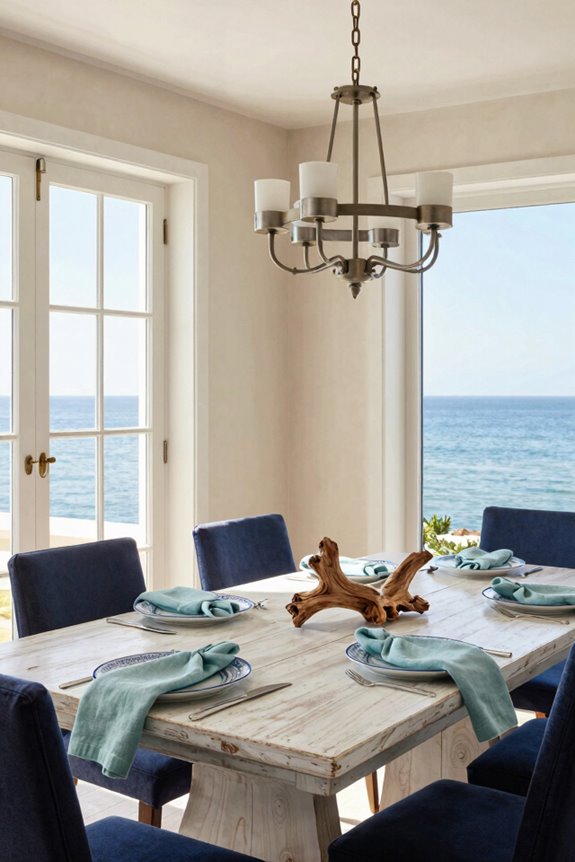
How do you capture the calm, refreshing feeling of a beach getaway in your dining room? Start by building a coastal color palette using whites, blues, and soft beiges. These colors create a light, airy backdrop that feels both luxurious and inviting.
I recommend pairing sea-toned blues with crisp white walls or trim, then anchoring the space with sandy beiges. This combination evokes authentic beach environments naturally. Incorporate light wood dining tables and natural textures like seagrass chairs to ground your design. These materials reinforce the coastal vibe while adding warmth.
Layer in nautical accents through soft blue textiles, striped patterns, and coral or shell-inspired decor. Balance bold blue tones with ample white space and natural light, maintaining that open, breezy feeling you’re seeking. You’ll create an elegant retreat where gathering feels effortless.
Choose Light Wood and Natural Fibers for Coastal Warmth
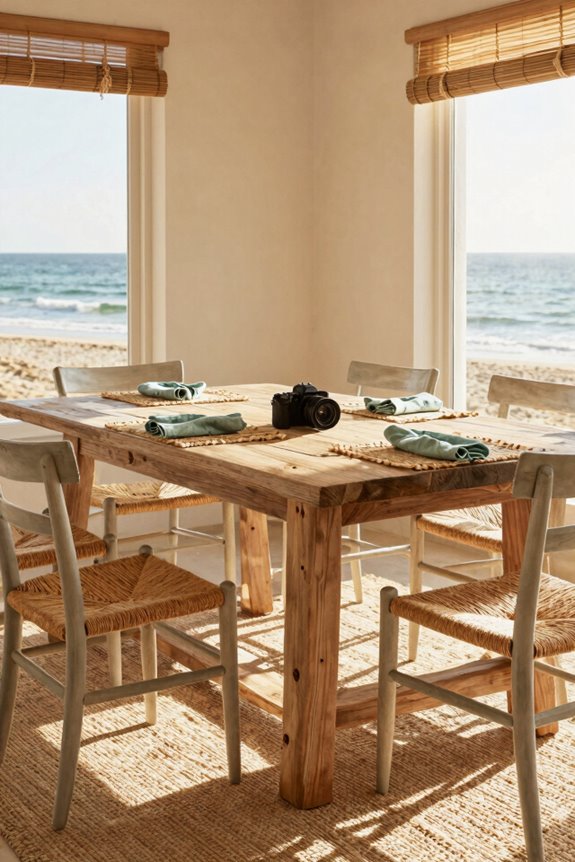
What makes a dining room feel like a warm, inviting coastal retreat? I’ve discovered that light wood and natural fibers create the luxurious coastal warmth you’re seeking. These materials work together beautifully, anchoring your space in comfort and authenticity.
Light wood and natural fibers create the luxurious coastal warmth that anchors your space in comfort and authenticity.
Here’s how I’d approach this:
- Select light wood dining tables and floors to establish a bright, airy foundation
- Layer seagrass chairs and rattan accents for organic texture and visual interest
- Incorporate jute rugs to add depth beneath your dining area
- Choose woven pendant lighting that complements your neutral palette
- Blend these elements against white or sea-salt walls for elegance
When you combine light wood with natural fibers like seagrass, you’re creating a cohesive coastal warmth that feels both sophisticated and approachable. The textures invite touch, while the neutral backdrop keeps everything feeling open and serene.
This is exactly what belonging in a coastal home feels like.
Select Timeless Furniture Pieces for Lasting Coastal Appeal
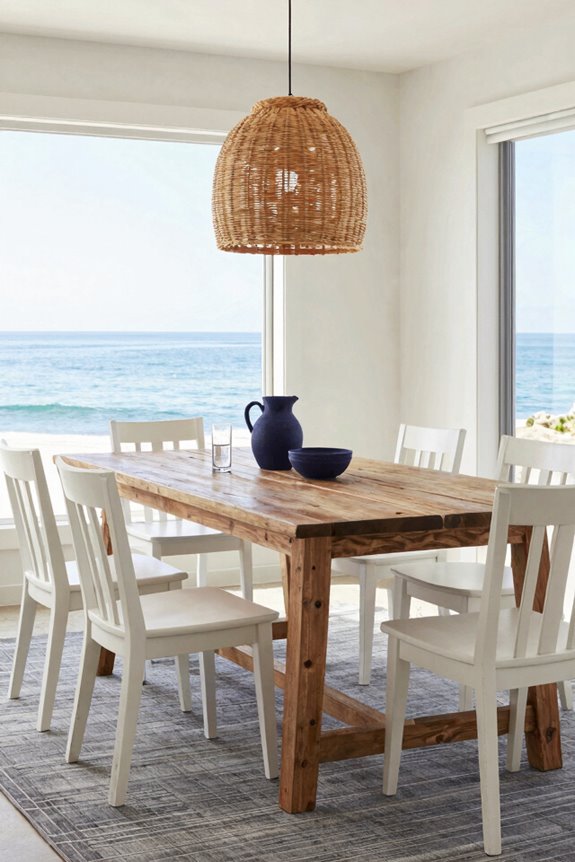
Building on that foundation of light wood and natural fibers, you’ll want to invest in furniture pieces that won’t feel dated in five years. A natural wood table serves as your dining room’s anchor, offering warmth and durability that lasts decades. Pair it with woven chairs—whether seagrass, rattan, or jute—to create visual interest and texture.
Your coastal dining furniture should embrace a neutral coastal palette of whites, soft grays, and muted blues. These timeless pieces work together without struggle, adapting to changing styles without requiring replacement.
Statement lighting, like beaded chandeliers or woven pendant lights, anchors the room elegantly while complementing any furniture arrangement. This approach helps your dining space feel inviting and unified, creating the relaxed elegance you’re seeking.
Select Coastal Lighting: Woven Pendants and Sculptural Chandeliers
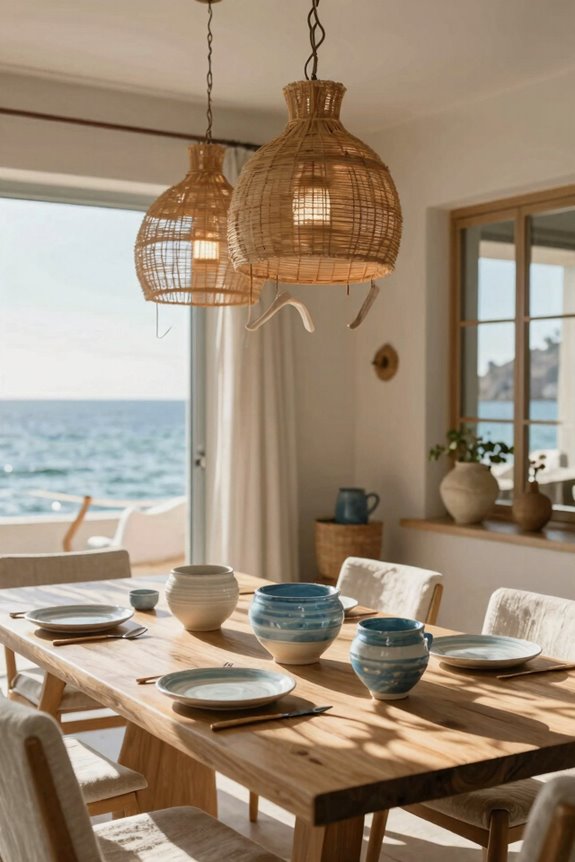
I’ll guide you through selecting coastal lighting that creates an elegant retreat in your dining room. Woven pendants in natural materials like rattan and jute create that airy, beachy feel, while sculptural chandeliers, such as brass finishes or beaded designs, add visual interest without feeling heavy.
You’ll layer these fixtures strategically to build ambiance: overhead pieces for drama, paired with softer accent lighting that lets you adjust the mood from bright dinnertime conversation to warm evening gatherings.
Woven Pendant Materials and Styles
When you’re designing a coastal dining room, woven pendant lights offer an authentic way to bring natural texture and warmth overhead. I’ve found that selecting the right materials is important in creating that coordinated, inviting space you’re after.
Consider these popular woven pendant materials and styles:
- Rattan textures that mimic woven baskets, adding organic charm
- Natural fiber options like seagrass or jute for authentic coastal appeal
- Beaded chandeliers combining multiple strands for elegant visual interest
- Brass or mixed metal finishes that complement natural materials beautifully
- Oversized sculptural forms serving as striking focal points above your dining table
These materials work together to create that luxurious yet approachable coastal aesthetic. Pairing woven pendant lights with light wood furniture and airy colors strengthens your design’s natural harmony. This combination helps you achieve the sophisticated, welcoming dining space you’re building.
Sculptural Chandelier Design Features
How do you create a dining room that commands attention? Sculptural chandeliers serve as elegant focal points that anchor your coastal design. A capiz chandelier, crafted from natural shell pieces, diffuses light beautifully while creating that authentic beach-house feel you’re seeking. Beaded chandeliers offer similar sophistication, catching and reflecting light across your dining table in mesmerizing ways.
These fixtures work wonderfully alongside woven pendants, creating visual interest and warmth. Consider pairing them with seagrass lighting elements to maintain consistency throughout your space. The combination of natural materials, shells, beads, and fibers produces a luxurious yet relaxed nautical lighting scheme.
When you layer sculptural chandeliers with complementary fixtures, you’re not just illuminating your room. You’re crafting an inviting gathering space where everyone feels at home, embraced by coastal elegance and organic textures.
Layering Light for Ambiance
Creating the perfect coastal dining room means thinking beyond a single light source. You’ll want to layer your lighting to build warmth, depth, and visual interest.
I recommend combining pendant lighting with natural textures to achieve elegant layered illumination. Consider these approaches:
- Install woven pendants above your dining table as a focal point
- Add wall sconces near large windows to highlight natural light during day
- Use table lamps with fabric shades for softer, intimate evening ambiance
- Incorporate mirrors strategically to reflect and amplify available light
- Layer in seagrass chairs and jute rugs to ground your coastal dining space
This combination creates dimension without overwhelming the room. Your pendant lighting becomes a sculptural focal point while natural textures anchor the space.
Add Coastal Architectural Details: Shiplap, Beadboard, and Coffered Ceilings
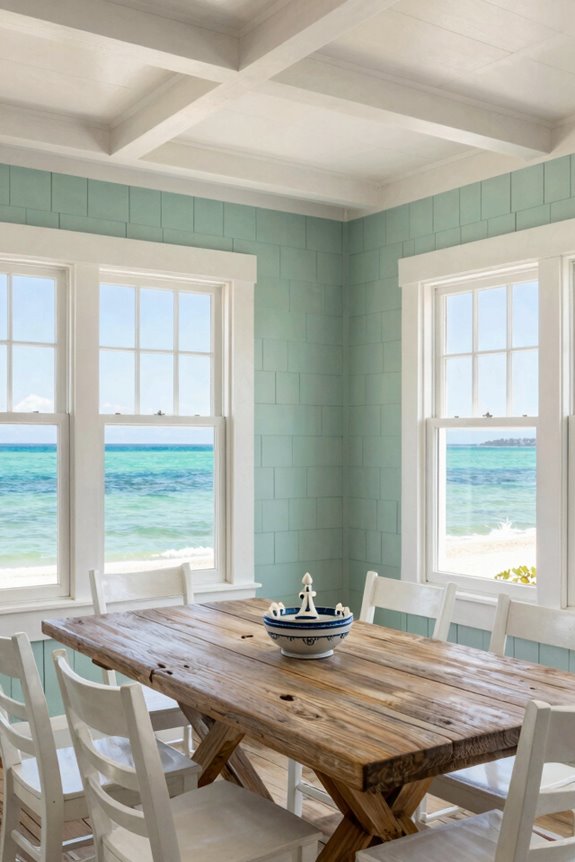
I’ll guide you through three powerful architectural details that’ll enhance your dining room’s ceiling and walls with coastal character. Shiplap installations on walls create that authentic beachy vibe by mimicking traditional boat interiors, while beadboard ceilings add soft, vintage nautical texture that catches and reflects light beautifully.
Coffered ceilings, featuring recessed panels in a grid pattern, deliver an elegant, high-end look that deepens the room’s architectural character without overwhelming your space.
Shiplap Wall Installation
Why settle for flat, plain walls when you can add architectural interest that makes your coastal dining room feel more polished? Shiplap wall installation creates an elegant retreat that welcomes everyone who enters.
I recommend these installation approaches for your coastal dining:
- Install shiplap horizontally to emphasize spaciousness and create visual flow
- Paint shiplap white or soft neutrals for that airy, open-concept feel
- Combine shiplap with natural wood tones and woven textures for depth
- Extend shiplap from walls to ceilings for continuity
- Use shiplap as an accent wall to anchor your dining area
These resilient textures work beautifully in modern coastal dining rooms. Shiplap’s grooved pattern catches light differently throughout the day, creating subtle movement without clutter.
You’ll discover that this simple wall installation becomes the foundation for layering coastal elements throughout your space, making everyone feel at home.
Beadboard Ceiling Applications
When you’re looking to create visual interest in your coastal dining room beyond standard drywall, beadboard ceilings offer a subtle yet sophisticated solution that makes your overhead space into an architectural feature. These textured panels create vertical lines reminiscent of traditional seaside interiors, adding depth without overwhelming your space.
You can paint beadboard in light, airy colors like sea salt blue or extra-white to maintain that breezy coastal feel. Layered ceilings work beautifully when you pair beadboard with shiplap or coffered details, creating elegant dimension. In open-plan dining areas, beadboard helps define zones while preserving your room’s expansive ambiance.
Consider complementing these architectural details with woven pendants, natural wood beams, and white surfaces. This approach reinforces coastal texture authentically, letting your beadboard ceilings become the sophisticated anchor your dining room deserves.
Coffered Ceiling Design Elements
Building on beadboard’s textured appeal, coffered ceilings take coastal architecture a step further by creating geometric patterns of recessed panels that catch light and shadow beautifully. I find this design element creates dining spaces with refined, sunlit qualities that feel both elegant and welcoming.
Coffered ceilings work wonderfully when paired with these coastal features:
- Light wood finishes that enhance the airy, maritime ambiance
- White or pale wall palettes that reflect natural light throughout the room
- Shiplap accents that complement the ceiling’s geometric pattern
- Beadboard elements that create visual continuity across surfaces
- Wood beams integrated subtly to add vertical interest without overwhelming the space
When you combine coffered ceilings with these textures, you’re creating a cohesive coastal dining environment. This architectural approach delivers that light, open feeling we all crave while maintaining authentic nautical character.
You’ll notice how these elements work together, drawing guests upward and creating an inviting atmosphere that captures coastal elegance.
Avoid Anchor Motifs and Rope Accents: When Coastal Goes Wrong
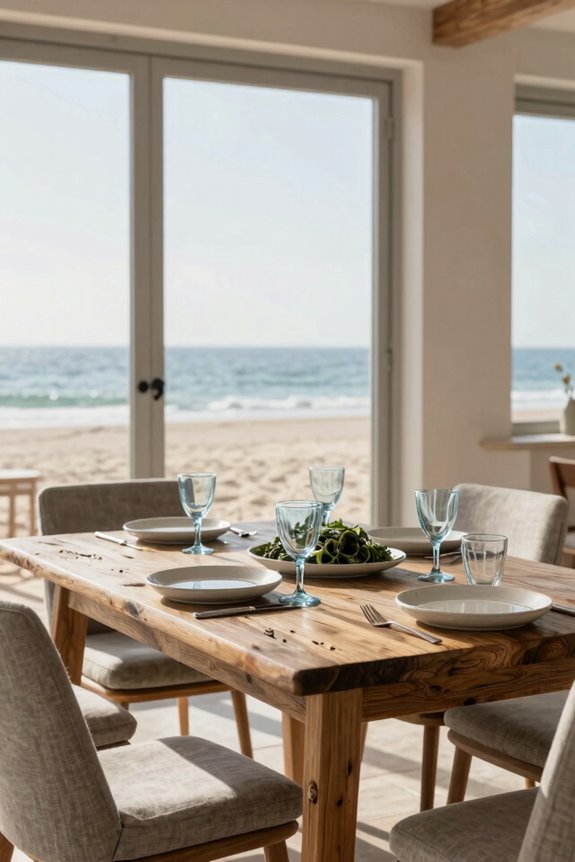
How’s this for a common design mistake: you’re drawn to coastal style, so you fill your dining room with anchors, rope wall hangings, and nautical knickknacks, only to end up with a space that feels more like a ship’s cabin than a relaxed beach house.
I’ve learned that sophisticated coastal decor relies on restraint, not nautical motifs avoidance alone. Instead, I focus on natural textures like seagrass, wicker, and driftwood that whisper coastal charm without screaming “anchor.” A balanced palette of whites, soft blues, and warm neutrals creates elegance.
I let lighting and architecture do the heavy lifting. Shiplap walls, subtle coffered ceilings, and layered lighting evoke beachy tranquility far better than tacky rope accents. This approach welcomes you into an inviting, sophisticated space where you actually want to gather.
Layer Texture With Rugs and Woven Details
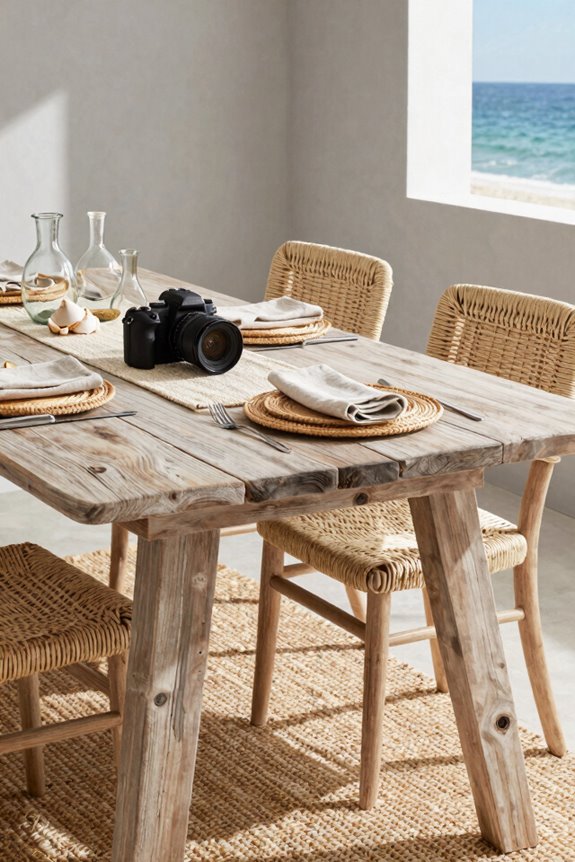
Now that you’ve ditched the anchor clutter, it’s time to build depth through layered textures that feel authentic to coastal living.
I’ve found that combining rugs and woven details creates the elegance you’re seeking without feeling overdone. Here’s how:
- Large dining room rugs ($800–$1200) anchor your space and invite barefoot comfort
- Seagrass chairs add warmth against pale walls
- Natural fiber placemats in jute ground your table styling
- Woven light fixtures cast soft, inviting shadows
- Seagrass rugs layer beneath your dining table for depth
These coastal textures work together, creating an open, airy atmosphere. Pair them with light wood tones and your blues, beiges, and whites palette.
The beauty is that you’re building a space that feels relaxed, not resort-themed. Consider removable rugs you can shift seasonally, keeping your coastal sanctuary fresh and purposeful.
Connect Your Dining and Kitchen With Unified Design
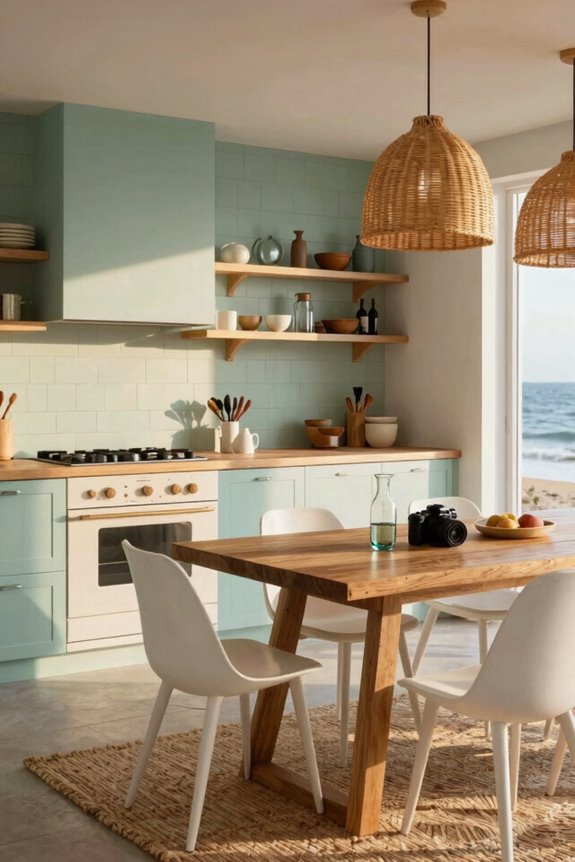
Your dining room and kitchen shouldn’t feel like separate spaces. They’re a team, and when you design them together, you’ll create smooth transitions that make entertaining effortless and your home feel larger. In a coastal dining room, unified design means choosing matching light wood furniture, consistent color palettes of blues and whites, and coordinating materials across both areas.
An open concept layout lets you extend your kitchen’s aesthetic into your dining space. Install pendant lighting that works in both zones, creating visual continuity. Use similar textures—seagrass, jute, and woven accents—throughout. When your dining and kitchen share this consistent approach, you’ll feel more connected to your home and to the people you’re entertaining.
Where to Buy Modern Coastal Furniture
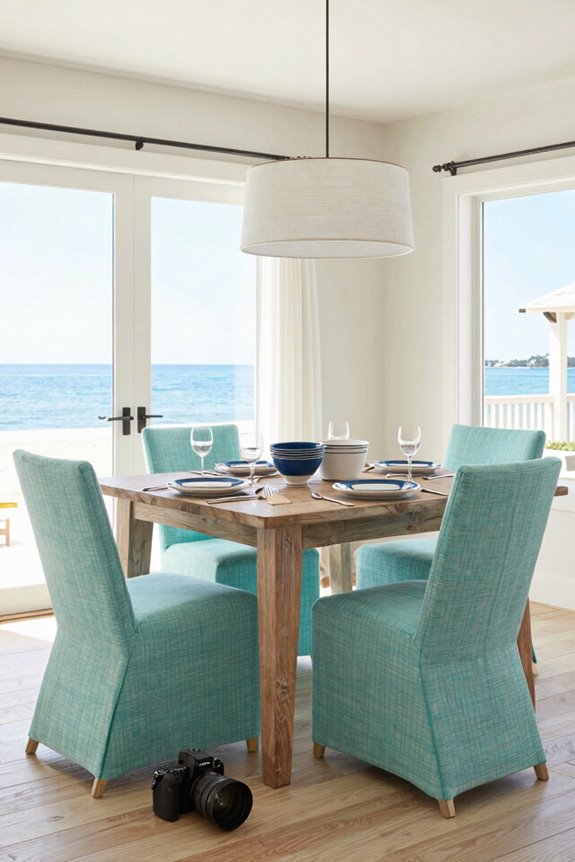
Where do you find those gorgeous light wood tables, woven chairs, and beaded chandeliers that make a coastal dining room feel so inviting? I’ve discovered several trusted sources for modern coastal furniture that deliver authentic beachy style:
- Serena & Lily offers elegant light wood pieces and natural fiber seating
- Mindy Gayer Design specializes in curated coastal furnishings with refined aesthetics
- Studio McGee creates sophisticated coastal dining solutions with architectural details
- Pottery Barn provides accessible woven pendant lights and sandy-neutral upholstered chairs
- West Elm features contemporary coastal furniture blending natural materials with modern design
These retailers understand what makes coastal dining rooms feel like home. They stock the jute rugs, shiplap accents, and capiz chandeliers you’re seeking.
Shopping here means investing in quality pieces that capture that relaxed, beachy atmosphere while maintaining clean, uncluttered spaces that welcome everyone to your table.