
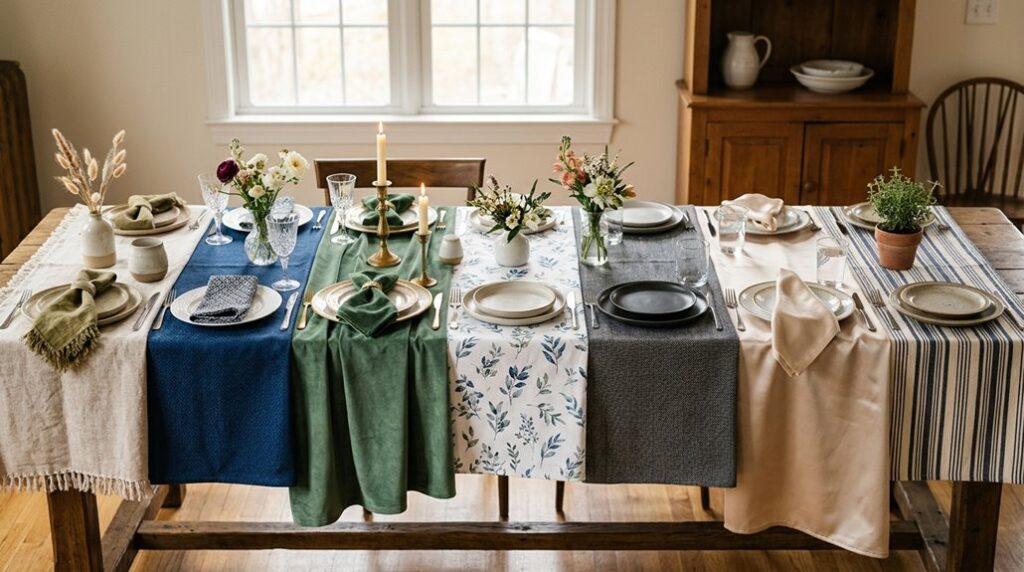
Your dining tablecloth is the canvas upon which memorable meals are painted. I’ve discovered that refreshing your dining room doesn’t require an expensive overhaul. It starts with understanding how fabric, color, and layering work together.
Whether you’re hosting formal dinners or everyday family meals, the right tablecloth choice can enhance your space in meaningful ways. Let me show you how seven strategic approaches can completely refresh your dining experience, and which combinations work best for your lifestyle.
Choose Your Base Color to Set the Mood
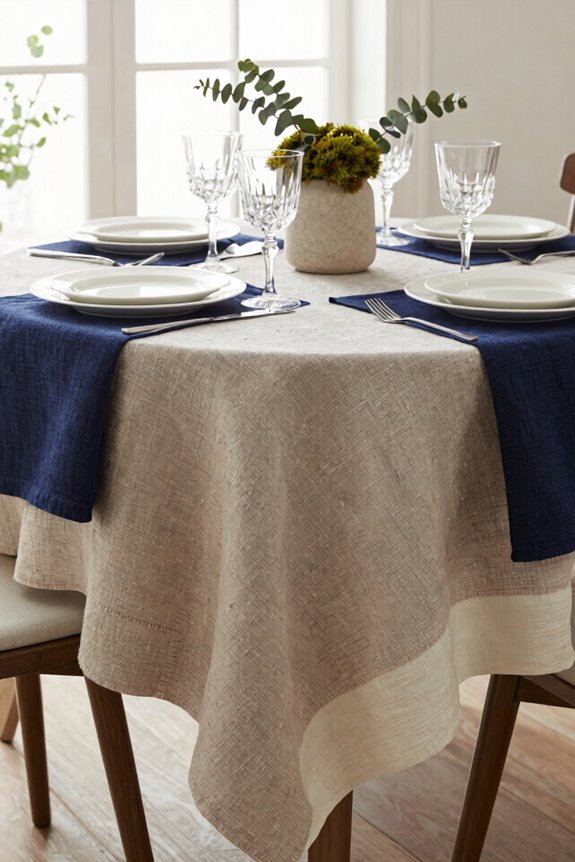
Why does a tablecloth’s color matter so much? Your base color sets the entire mood for your dining space. I’ve found that choosing the right foundation makes everything else fall into place beautifully.
An Ivory or Champagne base creates classic sophistication that pairs effortlessly with nearly any napkins, tableware, and decor style. These classic choices feel sophisticated yet welcoming. Soft pastels, such as mint, peach, or soft yellow, work wonderfully for spring and summer gatherings, brightening your dining area naturally.
Consider your room’s overall palette too. Look at your curtains, chairs, and walls. Does your space feel formal or relaxed? Your tablecloth’s base color should work with these surrounding elements, creating a unified appearance that makes everyone feel comfortable and welcome at your table.
Layer Your Tablecloth With Runners and Patterns
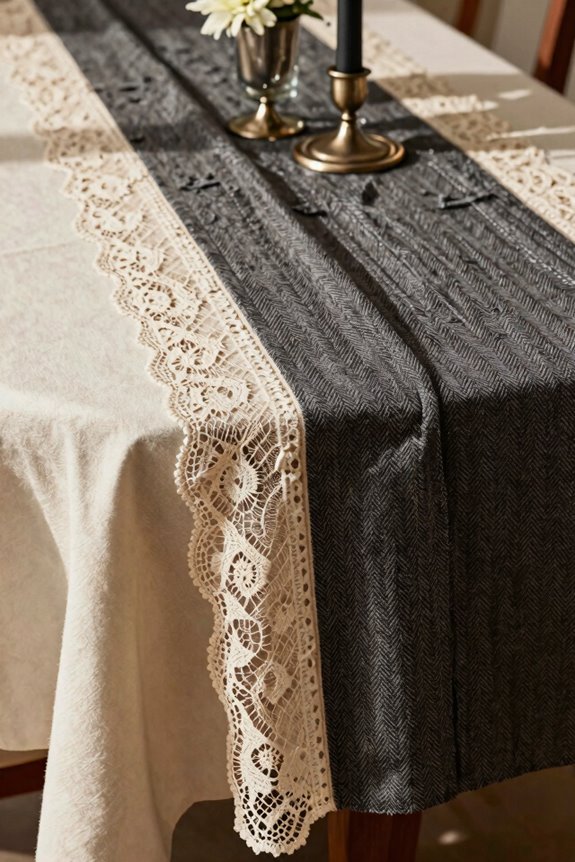
Once you’ve set your base color, layering a runner on top creates wonderful depth and guides your guests’ eyes along the table, much like adding a luxurious frame to your place settings. You can contrast a crisp white linen base with a patterned or richly textured runner, mixing materials like smooth cotton with woven or velvet for visual interest that stays balanced and cohesive.
Proper placement matters too: choose a runner that complements your table shape, let it drape elegantly 6–12 inches over the edges, and you’ll create an elegant focal point without overwhelming the space.
Contrast Colors and Textures
How can you make a simple tablecloth look more sophisticated? I’ve found that contrast colors and textures create an elegant dining space. Start by layering a plain base tablecloth, say ivory cotton, with a deep navy runner. This color contrast naturally draws your eye along the table’s length, highlighting your serving ware beautifully.
Next, mix textures intentionally. A smooth cotton base paired with a textured linen runner creates tactile interest that guests notice immediately. The combination feels luxurious without appearing overdone.
When using patterns, keep it simple: pair a solid base with a patterned runner, never both patterned. This prevents visual clashing and maintains sophistication.
Finally, make sure your runner hangs evenly on all sides, leaving room for place settings. This polished detail completes your tablecloth ideas, creating a well-coordinated, inviting dining experience that feels purposefully designed.
Mixing Patterns Effectively
Layering patterns on your table doesn’t mean everything has to match perfectly. In fact, the best tablescapes come from intentional mixing that creates depth and visual interest. I recommend pairing a subtle striped or polka-dot runner with a solid base cloth to avoid clashing patterns. This combination keeps your table linens sophisticated without overwhelming the eye.
Consider mixing textures too: cotton paired with lace or embroidered details creates tactile interest that feels luxurious. The key to elegant pattern mixing is drawing from a shared color palette. Try an ivory base with navy and gold accents, for example. When you coordinate your table linens thoughtfully, you’re creating an inviting space where guests feel welcomed and impressed by your attention to detail.
Runner Placement Strategies
Why settle for a flat, one-dimensional table when you can add depth and visual interest with a strategically placed runner?
I’ve found that runner placement creates an elegant table setting. Start with a solid base linen or cotton tablecloth, then layer a narrower, patterned runner off-center to create asymmetrical interest without overwhelming your space. This approach guides your eye naturally along the table’s length while defining its edges beautifully.
For round tables, I recommend pairing a circular or square-turned runner with a larger rectangular tablecloth to achieve balanced layering. Don’t forget height variation; combine low-profile runners with tall candlesticks or vases to maintain clear sightlines across your table.
When selecting colors, I choose complementary hues, like ivory with sage-green, keeping everything cohesive and harmonious. Your tablecloth and runner work together, creating a luxurious dining experience you’re seeking.
Swap Tablecloth Colors by Season
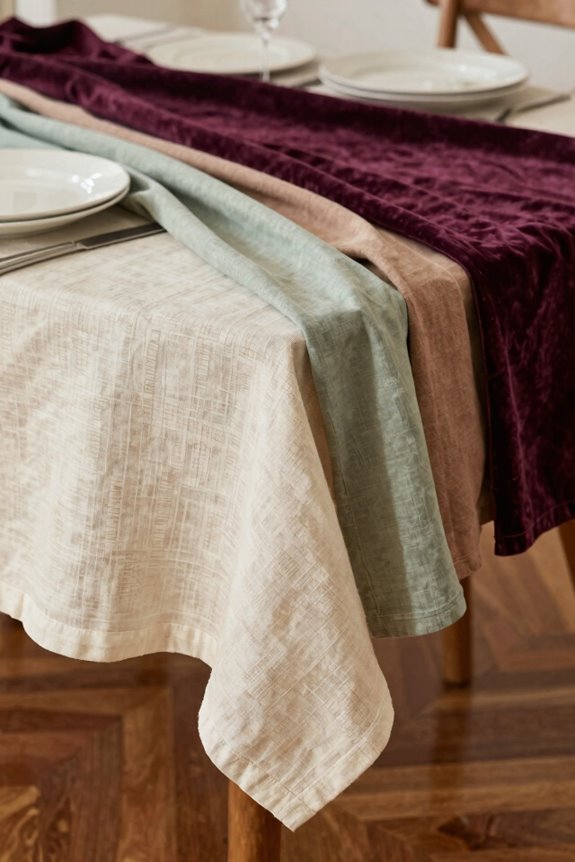
I’ve found that rotating your tablecloth with the seasons is one of the easiest ways to refresh your dining room without major changes. You’ll swap soft pastels and florals for spring and summer’s bright, airy vibes, then transition to autumn and winter’s warm, luxurious tones.
When spring arrives, I reach for linen or cotton in mint, peach, or soft yellow with floral prints, but come fall, I’m drawn to earthy rust, olive, and deep brown textures that make the room feel cozy and intimate. This seasonal approach keeps your dining space looking current and well-considered throughout the year, whether you’re going for that breezy outdoor-ready look or an elegant, formal atmosphere.
Spring and Summer Refresh
As the weather warms up, swapping your tablecloth is one of the easiest ways to refresh your dining room and match the season’s lighter, brighter energy. I’d recommend choosing linen tablecloths or cotton in soft pastels like mint, peach, or light yellow to brighten your space. These spring colors instantly give your dining area an inviting, airy feel.
Floral prints on breathable fabrics pair beautifully with matching cloth napkins for a unified appearance that feels intentional. I love adding small seasonal vases with fresh flowers to complement this light aesthetic.
The key is selecting fabrics with a light weave. Cotton and linen keep your table setting cool during warmer months. Consider white or ivory baselines with pastel accents for an elegant foundation that welcomes everyone to gather around your table.
Autumn and Winter Warmth
When the leaves turn golden and temperatures drop, your tablecloth deserves a seasonal makeover too. I’ve found that autumn warmth comes alive through earthy tones like rust, olive, and deep brown. These tablecloth ideas create cozy dining spaces perfect for gathering with loved ones.
I recommend textured fabrics such as linen or woven blends in warm shades. They add tactile interest on cooler nights. Layer your table with runners or placemats in burnt orange, mustard, or deep red without overwhelming the space.
For winter elegance, I pair velvet or thick cotton tablecloths with candles and metallic accents. This combination feels festive and luxurious. If you’re dining outdoors, choose weather-appropriate, easy-care fabrics in darker hues. They hide spills and maintain that polished appearance you’re seeking.
Style With Complementary Table Linens and Runners
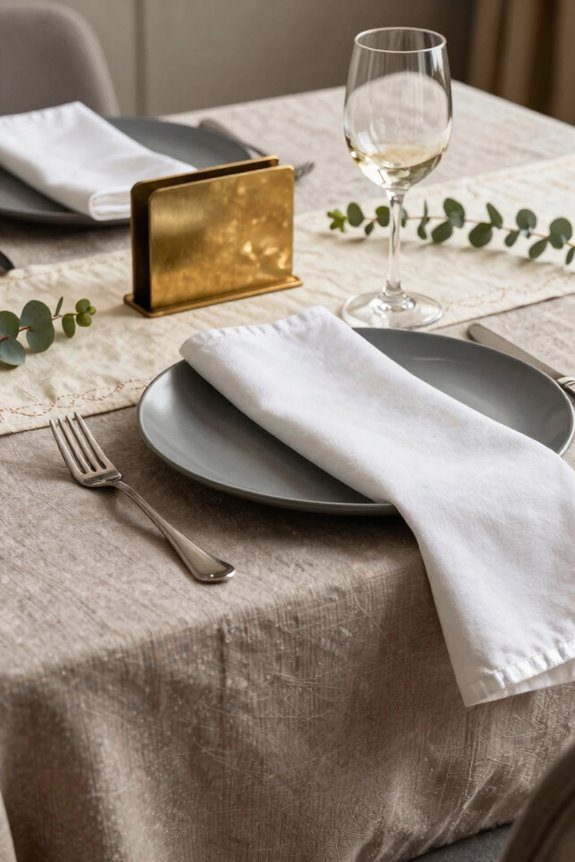
Why settle for a plain tablecloth when you can layer textures and colors to create a more dynamic dining room? I recommend pairing a crisp cotton tablecloth with a contrasting linen runner to create depth that naturally defines your dining zones. Start with a neutral base, ivory or soft gray work beautifully, then add a patterned runner featuring florals or stripes to introduce personality without competing with your centerpiece.
For formal occasions, I suggest combining velvet or thick cotton with a slim metallic or lace runner for subtle elegance and visual interest. The key is balancing bold tablecloths with simpler runners, making sure your runner’s colors complement any placemats and napkins you’ve chosen. This thoughtful layering makes your table feel like a place where people want to gather and creates a space that reflects your style.
Make Your Tablecloth a Backdrop for Drama
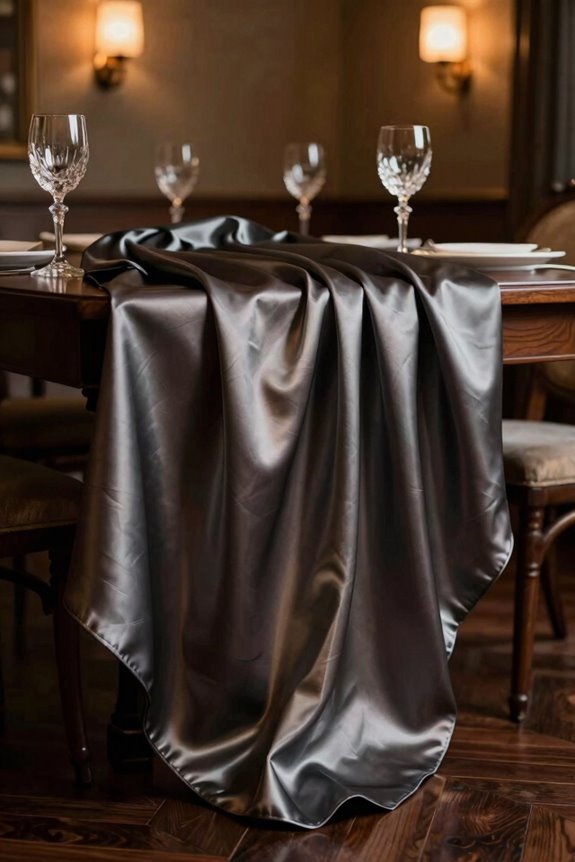
Now that you’ve mastered the art of layering, it’s time to push your tablecloth styling further by letting it become the star of your tablescape. Your tablecloth acts as a dramatic backdrop, setting the entire tone for your dining room. Bold prints and rich textures create immediate visual impact that draws everyone’s attention.
| Material | Color | Effect |
|---|---|---|
| Velvet | Burgundy | Luxurious depth |
| Thick cotton | Navy | Formal ambiance |
| Lace embroidery | Charcoal | Sophisticated contrast |
Pair your dramatic tablecloth with clustered candlesticks and fresh florals to enhance the centerpiece’s impact. Deep hues like burgundy and charcoal add elegance and formality.
When you layer contrasting textures, such as lace over satin, you’ll create dimensional interest that improves your entire dining space.
Choose Long-Lasting Tablecloth Fabrics
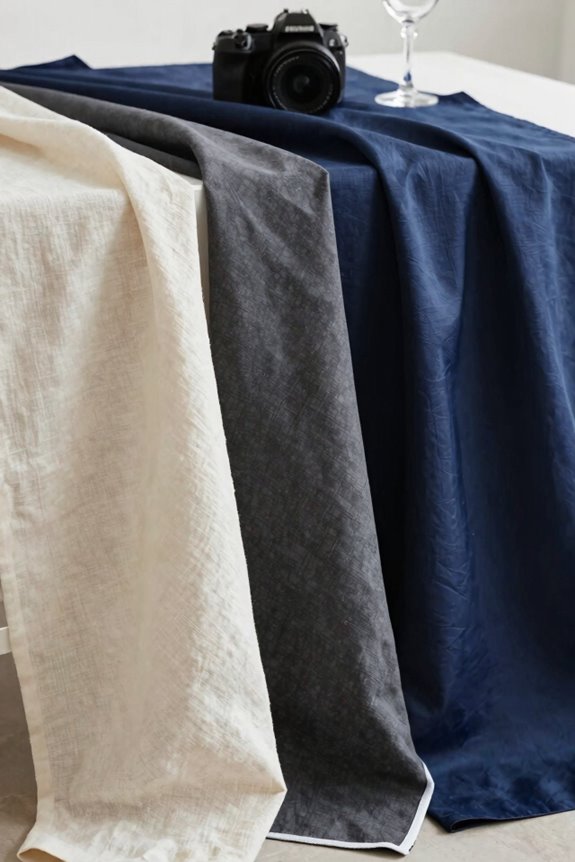
The fabric you choose for your tablecloth is important for how long it’ll look beautiful and perform well in your home. I recommend investing in cotton and linen, which soften beautifully with use while resisting everyday wear. These durable fabrics work equally well for daily dining and special occasions, giving you versatility.
When shopping, prioritize tablecloths with even weave, reinforced hems, and colorfast dyes. These features keep edges crisp and colors vibrant after repeated washing. Cotton-polyester blends offer an easy-care advantage too, resisting wrinkles and simplifying cleanup without sacrificing appearance.
For outdoor entertaining, consider weather-resistant options like high-quality cotton blends or acrylic-coated textiles that withstand sun and spills. By choosing quality fabrics with excellent construction, you’re joining a community of people who value both style and practicality in their homes.
Coordinate Tablecloths With Your Existing Décor
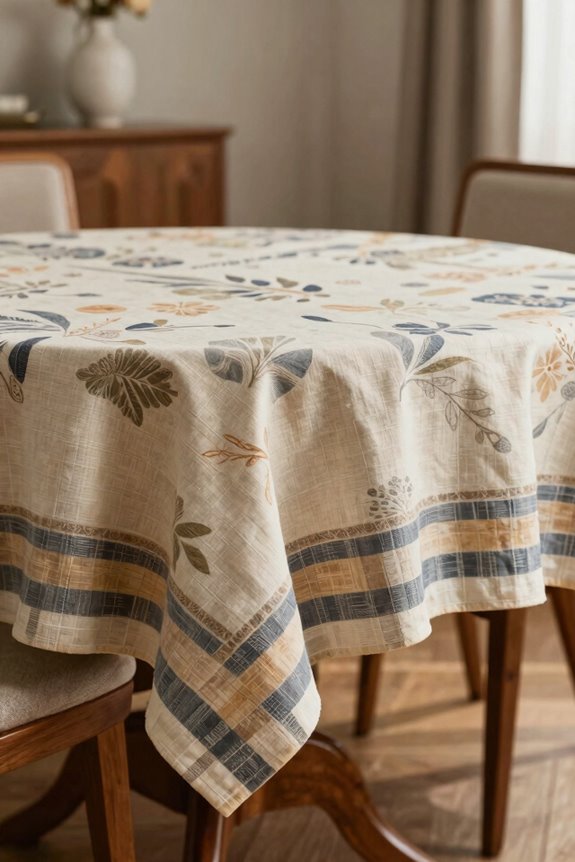
Once you’ve selected a quality fabric that’ll stand the test of time, it’s time to think about how your tablecloth works with everything else in your dining room. Start by considering color harmony—I recommend using whites or neutrals as your base, which complement bold furnishings beautifully. A linen tablecloth in cream or beige pairs wonderfully with existing wood furniture and woven elements throughout your space.
Next, reference your room’s palette. If you’ve got greens, blues, or warm earthy tones already present, choose tablecloth colors that echo these hues. Layer strategically too: pair a base tablecloth with a contrasting runner or placemats to tie in patterns without clashing.
For formal dining areas, luxurious fabrics like velvet in muted tones improve your entire room’s ambiance. This thoughtful coordination makes your table a unified center point.