
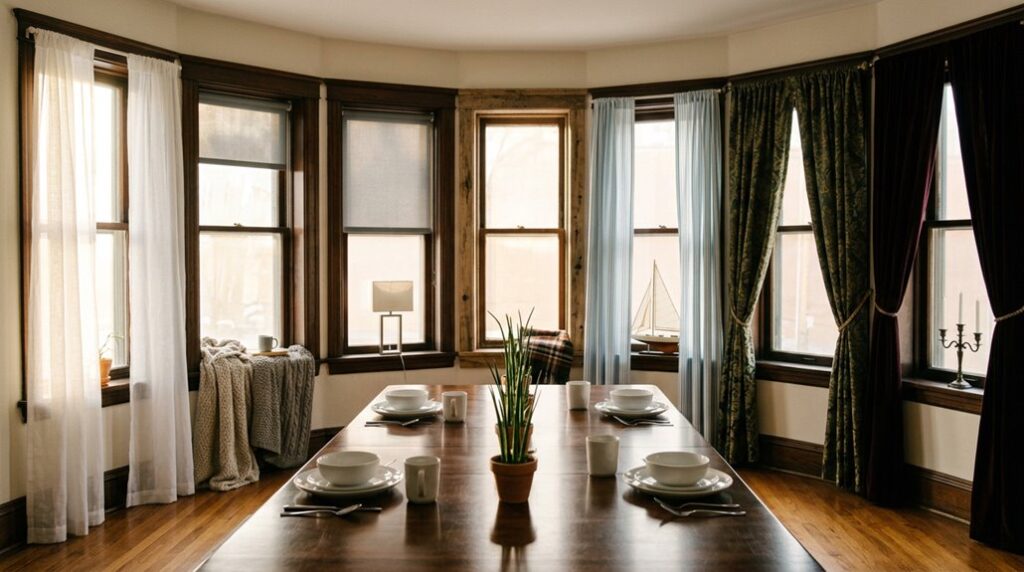
Imagine sunlight streaming across your dining table, casting warm patterns on elegant place settings while conversation flows naturally around you. If your bay window feels like an underutilized corner, it’s actually prime real estate waiting for redesign.
The right design choices, from table shape to lighting, can turn this architectural feature into your dining room’s focal point. Here’s how to make the most of its potential.
Measure Your Bay Window and Plan the Layout
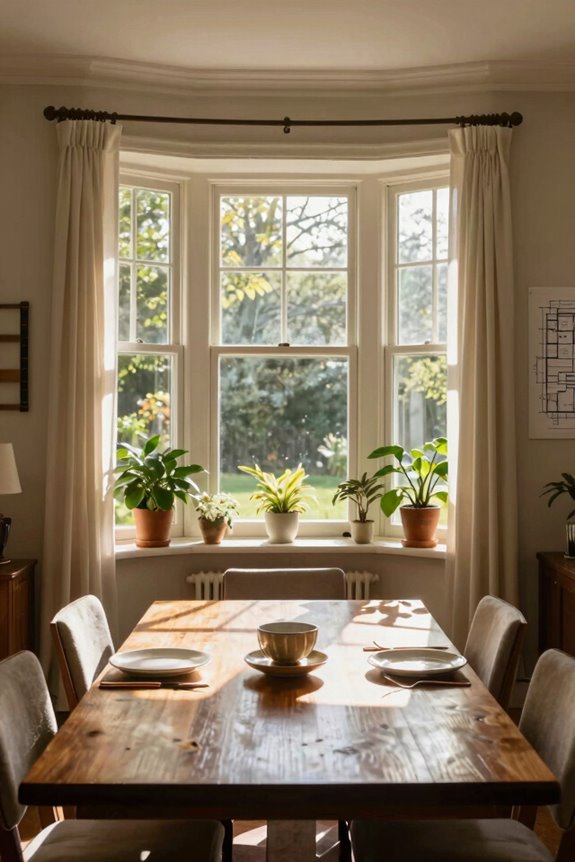
Before you fall in love with that elegant dining set, you’ll want to grab a measuring tape and really understand your bay window’s dimensions. I recommend measuring the width, depth, and corner angles of your bay window area to determine how much seating you can fit comfortably. You’ll want to maintain at least 36 inches of walking space around your table, keeping your dining room functional and welcoming.
I suggest creating a scale drawing or using a digital planner to map out your space. This visualization helps you see exactly where your built-in benches, storage, and table belong. If your bay has curved edges, aligning your dining table with that natural curve maximizes seating efficiency. This thoughtful planning creates an inviting gathering spot in your bay window area that feels carefully considered and luxurious.
Choose a Table Shape That Fits Your Dining Space
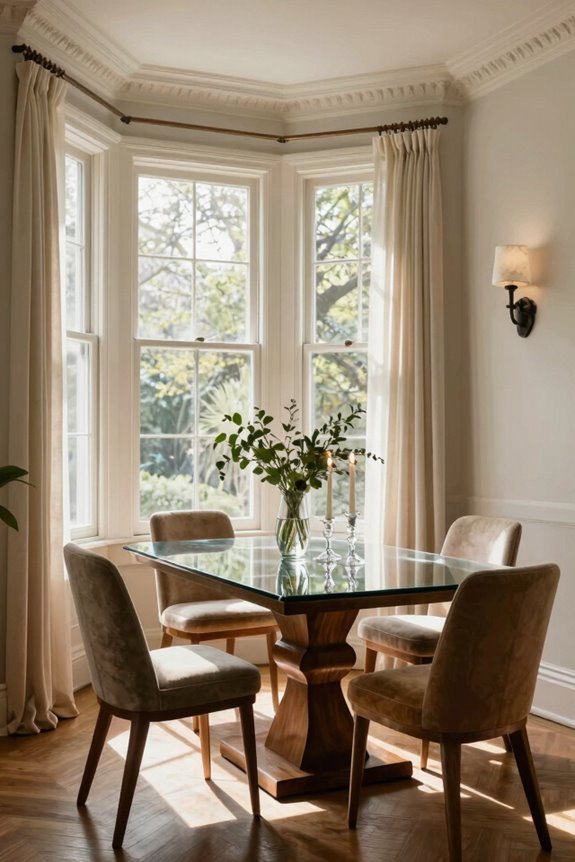
When selecting a dining table for your bay window nook, you’ll want to weigh two popular options: round tables and rectangular tables. Round tables create a harmonious flow in curved bay windows, encouraging conversation and allowing you to maximize seating in tight spaces, while rectangular tables offer flexibility for different room layouts and can accommodate more guests when you need them.
I’d recommend measuring your bay window carefully and considering how you’ll use the space most often, whether for intimate family dinners or frequent entertaining, to guide your choice.
Round Tables for Harmony
Why not consider a round table for your bay window dining space? Round tables naturally align with curved bay layouts, creating an elegant harmony between furniture and architecture. I find that their shape encourages conversation, since everyone sits equidistant from the center, so no one feels left out at dinner.
You’ll appreciate how round tables maximize your bay’s views and daylight without blocking sightlines. They’re also practical space-savers; chairs tuck neatly underneath when you’re not dining, giving you flexibility in tight areas.
For comfort and balance, I recommend choosing a diameter that leaves 36–42 inches of clearance around chairs for easy movement. Pair your round table with light-colored, airy décor to enhance brightness and create an open, spacious atmosphere that makes your bay window dining area feel welcoming and inviting.
Rectangular Tables for Flexibility
How does your bay window layout actually function—is it narrow and intimate, or does it stretch across a generous wall space? Rectangular tables offer the flexibility you need to maximize your dining area while maintaining an elegant aesthetic.
| Table Length | Seating Capacity |
|---|---|
| 60 inches | 4–5 people |
| 72 inches | 5–6 people |
| 90 inches | 8 people |
| 36–42 inch width | Compact passages |
| Light materials | Reflects natural light |
Rectangular shapes pair beautifully with built-in benches, creating clean sightlines toward your view. When space feels tight, a narrow 36–42 inch width keeps traffic flowing smoothly.
Choose light-colored, lightweight tabletops that catch natural light, maintaining that airy feeling. Chairs tuck completely underneath, freeing up floor space for movement. This versatile shape creates a functional, inviting dining sanctuary in your bay window.
Maximize Natural Light in Your Bay Window Dining Room
I’ll help you maximize the natural light in your bay window dining room by focusing on three key strategies: sheer curtains that let you maintain privacy while sunshine floods through, light-toned furniture like pale wood tables and cream-colored chairs that reflect and amplify brightness, and thoughtful seating arrangements that position you and your guests where daylight travels deepest into the space.
You’ll notice how sheer fabrics diffuse harsh rays into a soft, even glow, while avoiding heavy drapes keeps your view unobstructed and your room luminous throughout the day. When you arrange your dining setup this way with the table positioned front and center in the bay, you’re not just eating; you’re bathing your meals in natural warmth and creating an elegant, sun-kissed dining experience.
Sheer Curtains Preserve Privacy
When you’re seeking that perfect balance between openness and privacy in your dining room, sheer curtains emerge as an elegant solution that doesn’t compromise on natural light. I find that light-toned or white sheer fabrics maximize brightness while creating that soft, diffused glow we all crave in bay windows.
| Material | Privacy Level | Light Transmission | Best For |
|---|---|---|---|
| Voile | Moderate | High | Airy spaces |
| Chiffon | Moderate | High | Elegant dining |
| Linen blend | High | Medium | Layered looks |
| Cotton voile | Moderate | High | Versatile schemes |
Lightweight fabrics like voile and chiffon prevent heavy shading or glare, keeping your space feeling open. Pair these curtains with minimal hardware to reduce visual weight.
When you draw them back during daylight hours, your bay window floods with natural illumination, creating an inviting dining atmosphere that welcomes everyone to gather.
Light-Toned Furniture Enhances Brightness
Your choice of furniture plays just as important a role as window treatments in capturing and amplifying the natural light flooding through your bay window. I’ve found that light-toned pieces create an elegant atmosphere while making your dining space feel more expansive and welcoming.
- Select a light wood or pale dining table to reflect daylight and brighten your entire room
- Choose chairs upholstered in cream, beige, or soft gray fabrics that maintain visual continuity
- Avoid dark, heavy furniture that absorbs light and makes spaces feel cramped
- Pair your dining table with pale accessories to preserve an airy, unified aesthetic
When you position your dining table directly in front of the bay window, you’ll notice how the luminous surfaces bounce natural light throughout the space. This thoughtful approach creates a bright, inviting sanctuary where meals become special occasions.
Strategic Seating Embraces Views
Positioning your dining table directly in front of the bay window changes both your seating arrangement and your entire dining experience. I’ve found that this placement captures morning sunlight, flooding your dining area with natural brightness that makes the space feel genuinely larger and more welcoming.
To maximize this luminous effect, I recommend using sheer curtains that filter light without blocking your view. Pull them back during daylight hours, letting sunshine pour across your table and food. This creates an elegant, airy atmosphere where you’ll actually want to linger over meals.
A curved or round table aligns beautifully with the bay window’s shape, giving everyone better sightlines and legroom. You’re not just eating here; you’re connecting with nature and each other. That’s the luxury of strategic seating.
Add Built-In Seating: A Bay Window Dining Room Essential
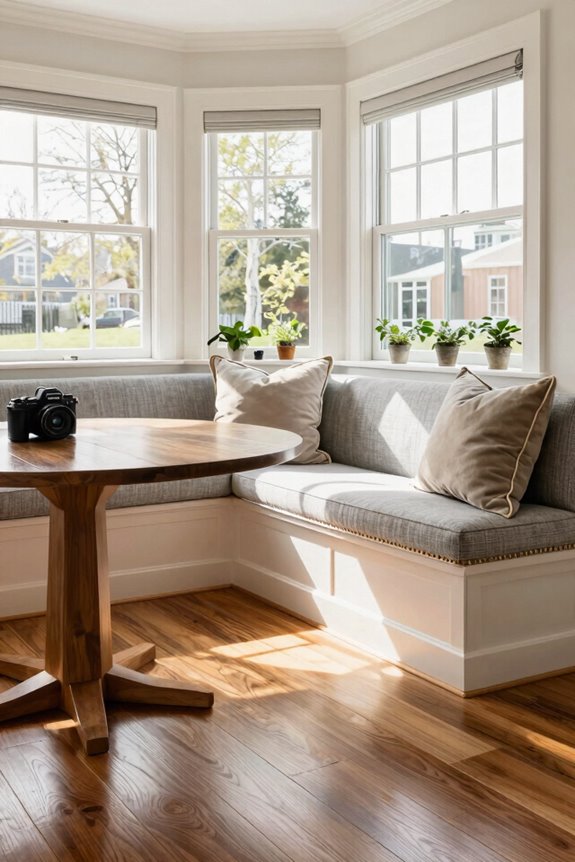
How can you transform wasted corner space into a functional design feature? Built-in bay window seating does exactly that, replacing bulky chairs with an elegant, continuous bench that fits perfectly into your window recess.
Consider these four practical benefits:
- Maximized floor space – The bench eliminates separate furniture, keeping your dining area open and inviting
- Hidden storage – Drawers or lift-top compartments conceal seasonal items, linens, and books for a neater room
- Custom comfort – Tailored cushions in weather-resistant fabrics adapt to your bay’s shape while enhancing usability
- Open sightlines – A low-back or backless design maintains visibility, making your space feel larger
You’ll create a sophisticated spot where family and friends naturally gather. This seating solution combines style with practicality, making your dining room a welcoming haven that belongs to you alone.
Use Plants to Soften Your Dining Area and Enhance the View
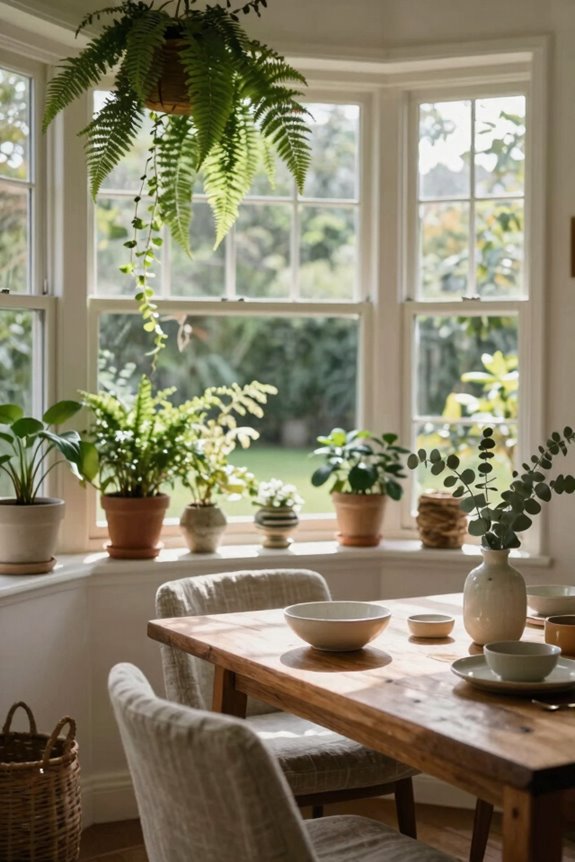
A bay window creates a natural greenhouse when you fill it with living plants, and this simple addition completely changes how a dining room feels. By grouping plants of different heights—floor specimens, tabletop varieties, and hanging planters—you’ll create visual depth that draws the eye. I recommend mixing foliage and flowering plants to add color and texture without blocking your view.
The greenhouse-like microclimate bay windows create supports sun-loving plants beautifully. Use lightweight, breathable pots that prevent crowding and allow airflow. Rotate your plants periodically so each receives even light exposure and stays healthy.
This thoughtful approach softens your dining space while creating an elegant, welcoming atmosphere where you and your guests feel connected to nature during meals.
Choose Overhead Lighting That Complements Your Dining Table
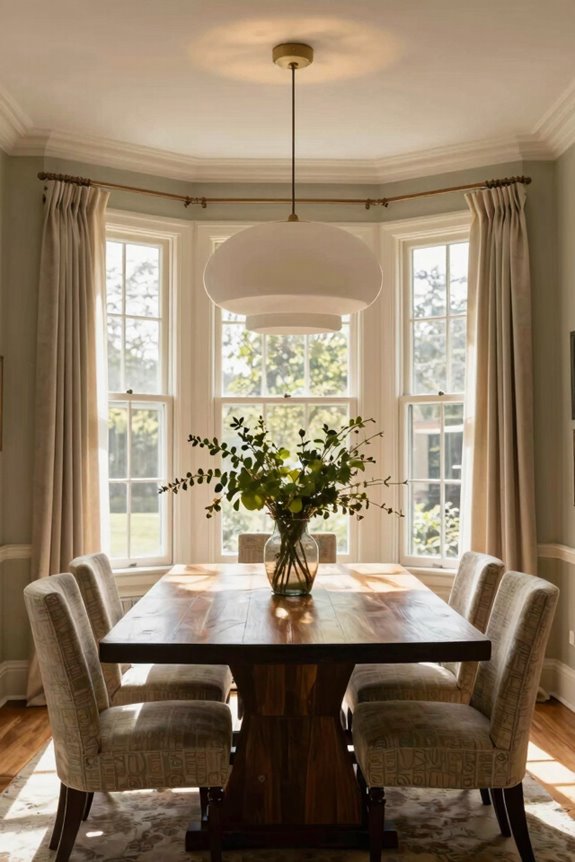
Your dining room’s overhead lighting does more than brighten the space; it creates a welcoming atmosphere from sunrise to starlight. I’d recommend selecting a bold pendant or chandelier that stands out as a key visual element, especially when natural light fades. Here’s how to choose wisely:
Your dining room’s overhead lighting creates a welcoming atmosphere, transforming the space from sunrise to starlight with the right bold fixture.
- Scale your fixture 12–24 inches narrower than your table width
- Consider ceiling height to avoid overwhelming the room
- Layer lighting with ambient, task, and accent sources
- Install dimmable controls for adjusting brightness throughout the day
An elegant fixture above your table complements an accent wall beautifully, creating visual balance. The right overhead lighting works alongside your bay window’s natural glow, establishing atmosphere for every meal. This approach keeps your dining area feeling welcoming, whether you’re enjoying morning coffee or evening gatherings with loved ones.
Paint an Accent Wall and Add Display Shelves
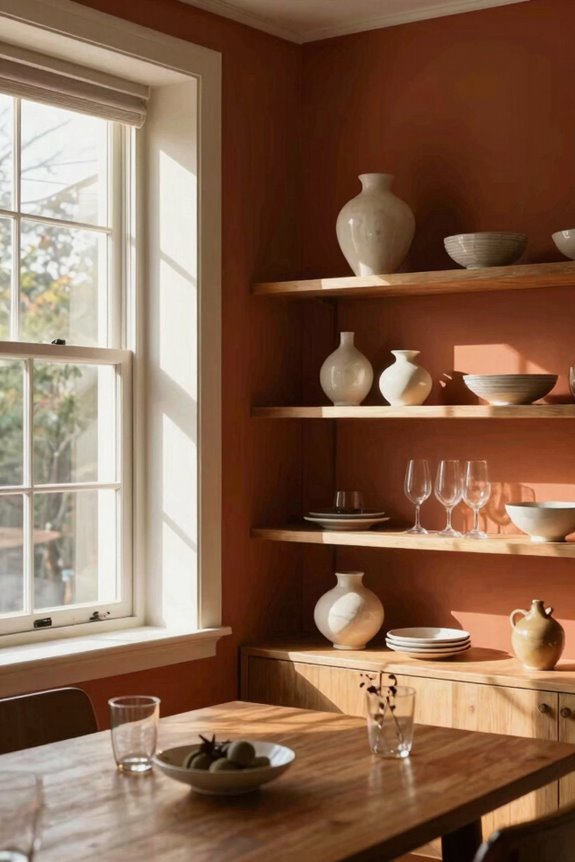
When you’re ready to make your bay window a true focal point, painting an accent wall paired with display shelves creates beautiful visual impact without requiring major renovations. I recommend choosing a slightly deeper tone than adjacent walls; this defines your nook beautifully without overwhelming the space.
Install slim floating shelves that fit your bay’s recess, maximizing vertical storage while keeping the window uncluttered. Display pieces reflecting your room’s color palette—books, ceramics, or glassware—become a unified design element that invites admiration.
Position artwork parallel to your bay window, letting natural light highlight frames without causing glare. Keep accessories light and airy, avoiding overloading shelves. This approach maintains the open, inviting atmosphere your dining zone deserves, creating an elegant gathering space you’ll love.