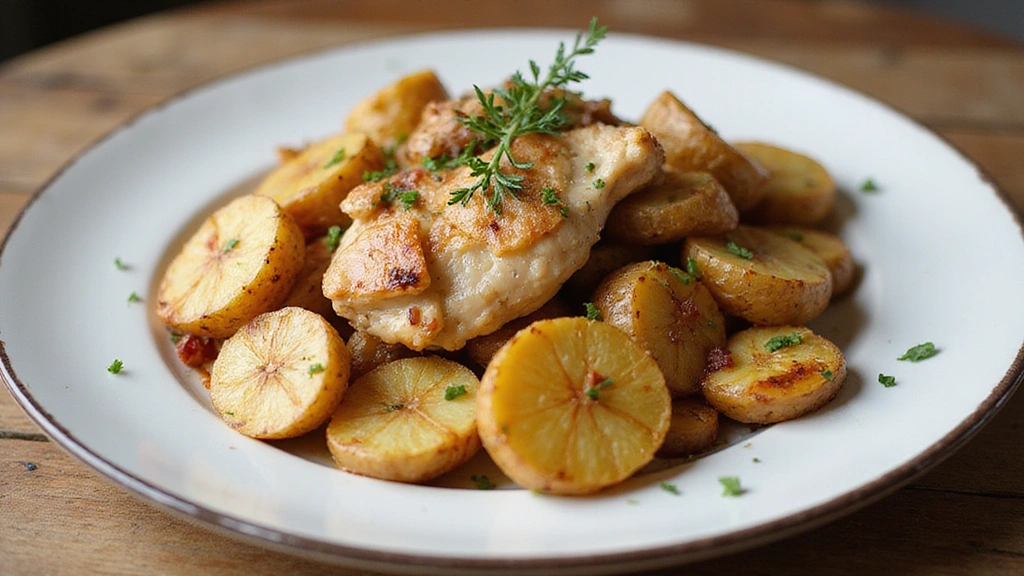
This classic Chicken and Potatoes recipe brings together the heartiness of tender chicken with the comforting taste of roasted potatoes.
The harmonious balance of savory herbs and spices creates a memorable dining experience that will delight even the pickiest eaters.
I discovered this recipe during a family gathering, where everyone enjoyed the simple yet satisfying flavors that made it a staple dish.
Whether you’re preparing a casual weeknight dinner or a special weekend meal, this dairy-free Chicken and Potatoes recipe delivers impressive results with straightforward preparation.
The History and Cultural Significance
• Chicken and Potatoes recipes trace their origins to various cultures around the world, often symbolizing home-cooked comfort food.
• The dish evolved over decades as cooking techniques and available ingredients changed, leading to regional variations in preparation methods.
• In many cultures, this dish traditionally appears at family gatherings, symbolizing unity and celebration.
• While many variations exist, the authentic version maintains the use of simple, wholesome ingredients that highlight the natural flavors of chicken and potatoes.
Recipe Overview
Nutritional Information (per serving)
Ingredients
Essential Equipment Guide
Cast Iron Skillet: This versatile skillet is essential for achieving a perfect sear on the chicken while allowing for even cooking. Look for one that has a solid handle for easy maneuvering.
Sharp Chef’s Knife: A good quality knife is crucial for chopping vegetables and cutting chicken. Ensure it has a comfortable grip and a balanced weight for ease of use.
Meat Thermometer: This tool ensures that your chicken is cooked to the proper internal temperature, avoiding dryness. A digital version with quick read capabilities is recommended.
Preparation Methods
Brining: This technique involves soaking the chicken in a saltwater solution before cooking. It helps to enhance moisture retention, leading to juicier meat. Brine for at least 30 minutes for best results.
Roasting: Roasting in the oven allows the chicken skin to become crispy while keeping the meat tender. Make sure to preheat the oven for even cooking.
Deglazing: After browning the chicken, deglazing the pan with a bit of broth or wine lifts the flavorful bits stuck to the bottom. This technique adds depth to your dish.
Step 1: Prepare Ingredients
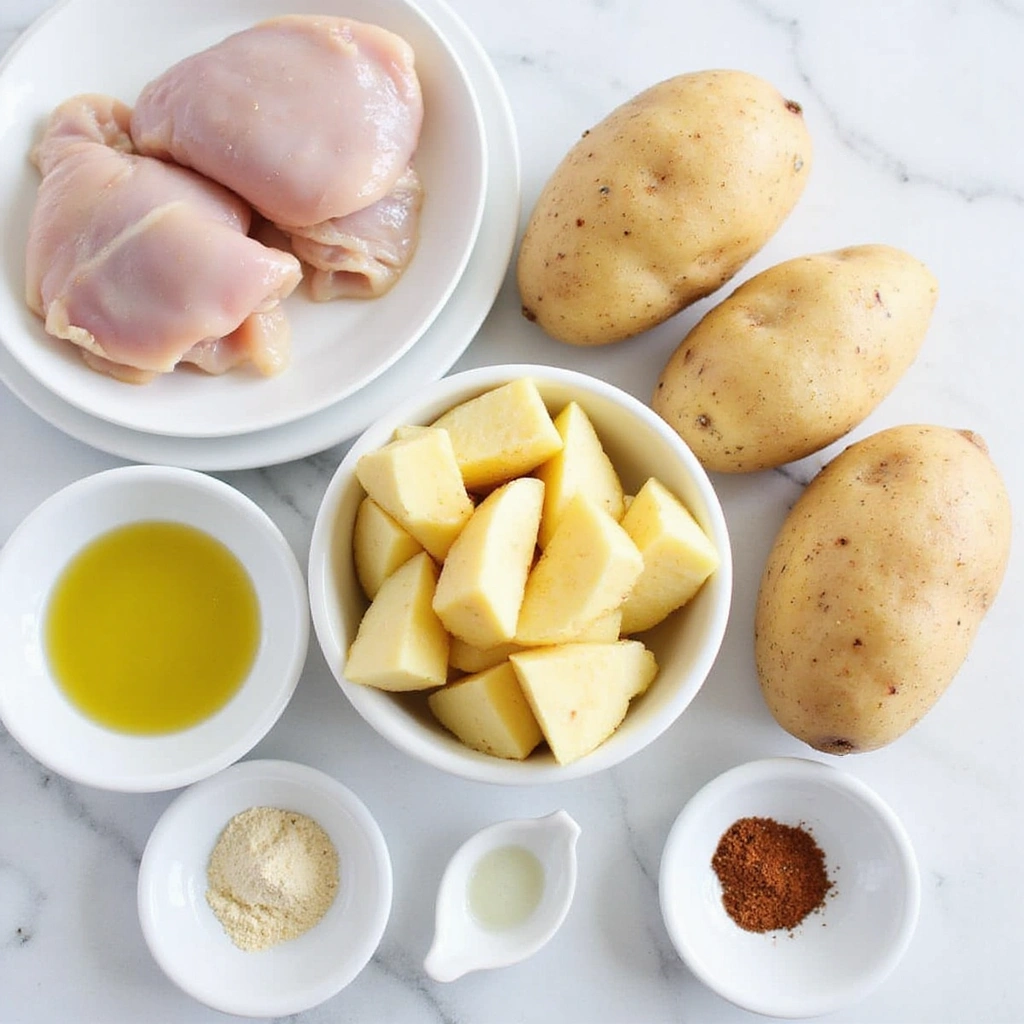
Gather all your ingredients on a clean countertop.
Make sure the chicken is thawed and the potatoes are washed thoroughly.
Cut the potatoes into wedges and pat the chicken dry with paper towels.
This step ensures even cooking and enhances flavor absorption.
Step 2: Season the Chicken
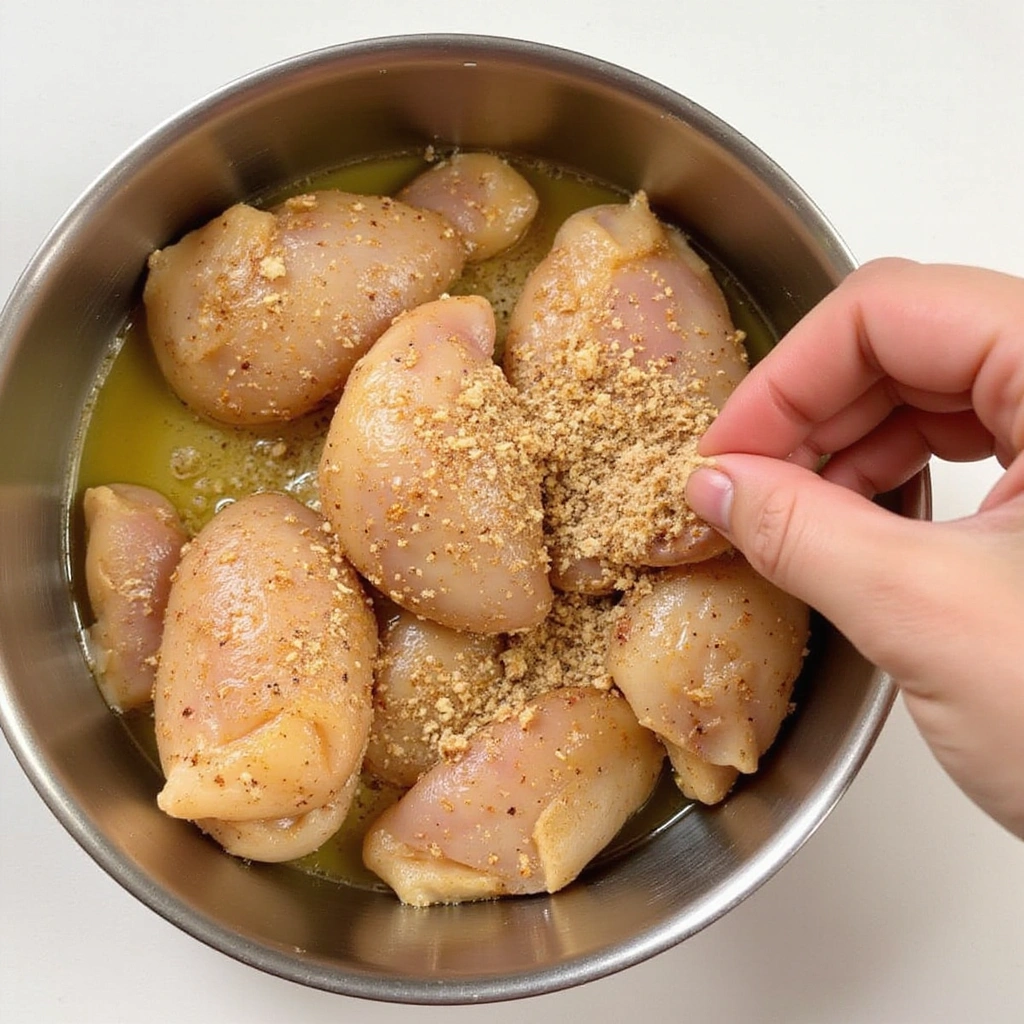
In a bowl, combine olive oil, salt, and black pepper.
Rub this mixture all over the chicken thighs, ensuring even coverage.
This step is crucial for infusing flavor into the meat.
Set aside to allow the seasoning to penetrate.
Step 3: Prepare the Potatoes
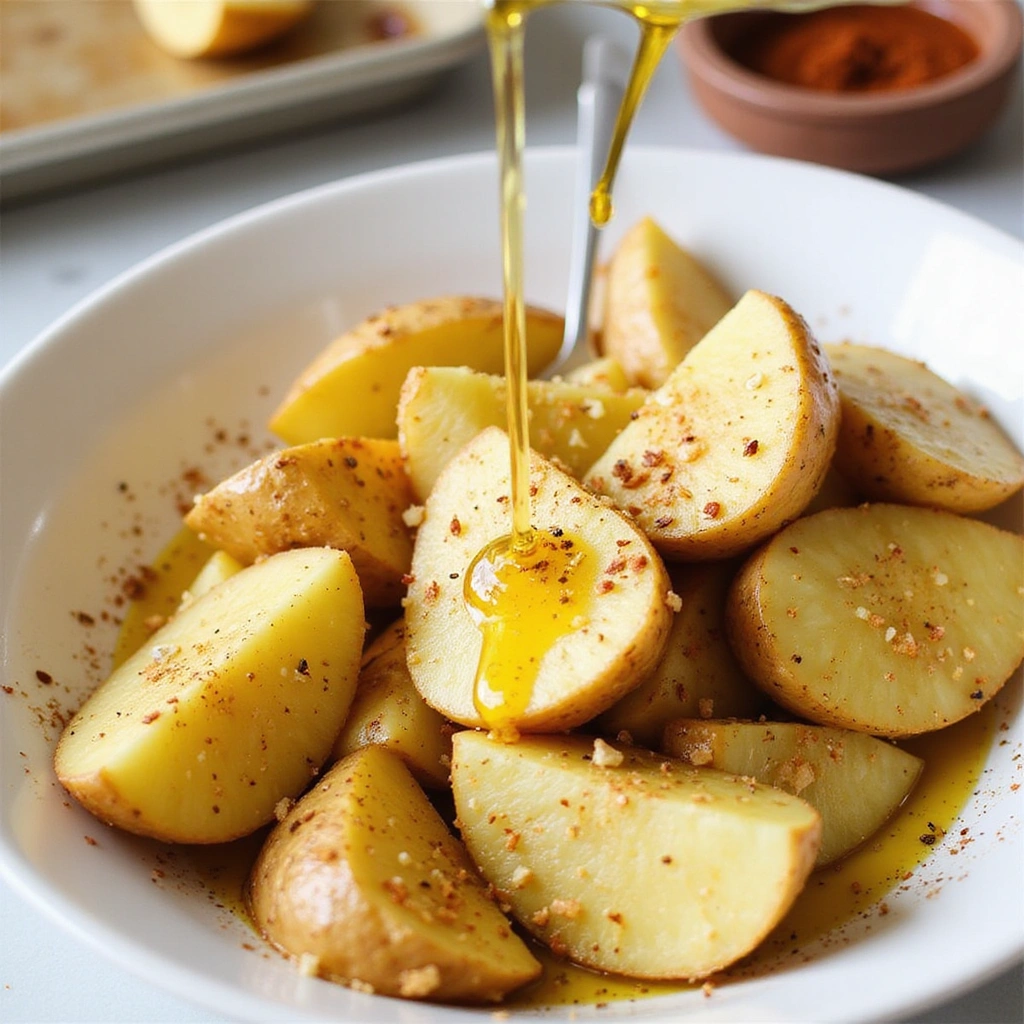
In another bowl, toss the potato wedges with olive oil, garlic powder, and rosemary.
Make sure each piece is evenly coated to enhance flavor.
This step ensures the potatoes roast perfectly, becoming golden and crispy.
Spread them out on a baking sheet to avoid crowding.
Step 4: Preheat the Oven
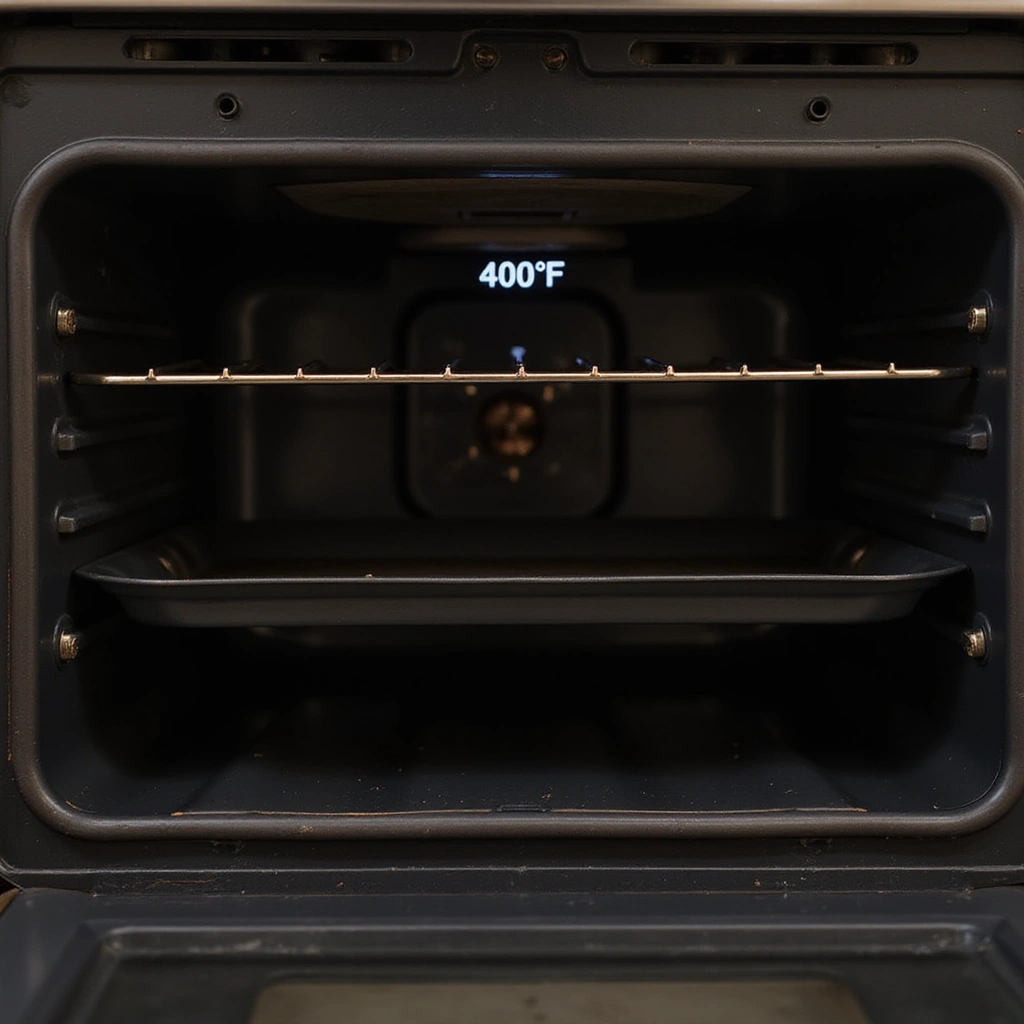
Preheat your oven to 400°F (200°C).
This temperature is ideal for roasting both the chicken and potatoes simultaneously.
Make sure the oven is fully heated before placing the dish inside.
This ensures even cooking and proper browning.
Step 5: Sear the Chicken
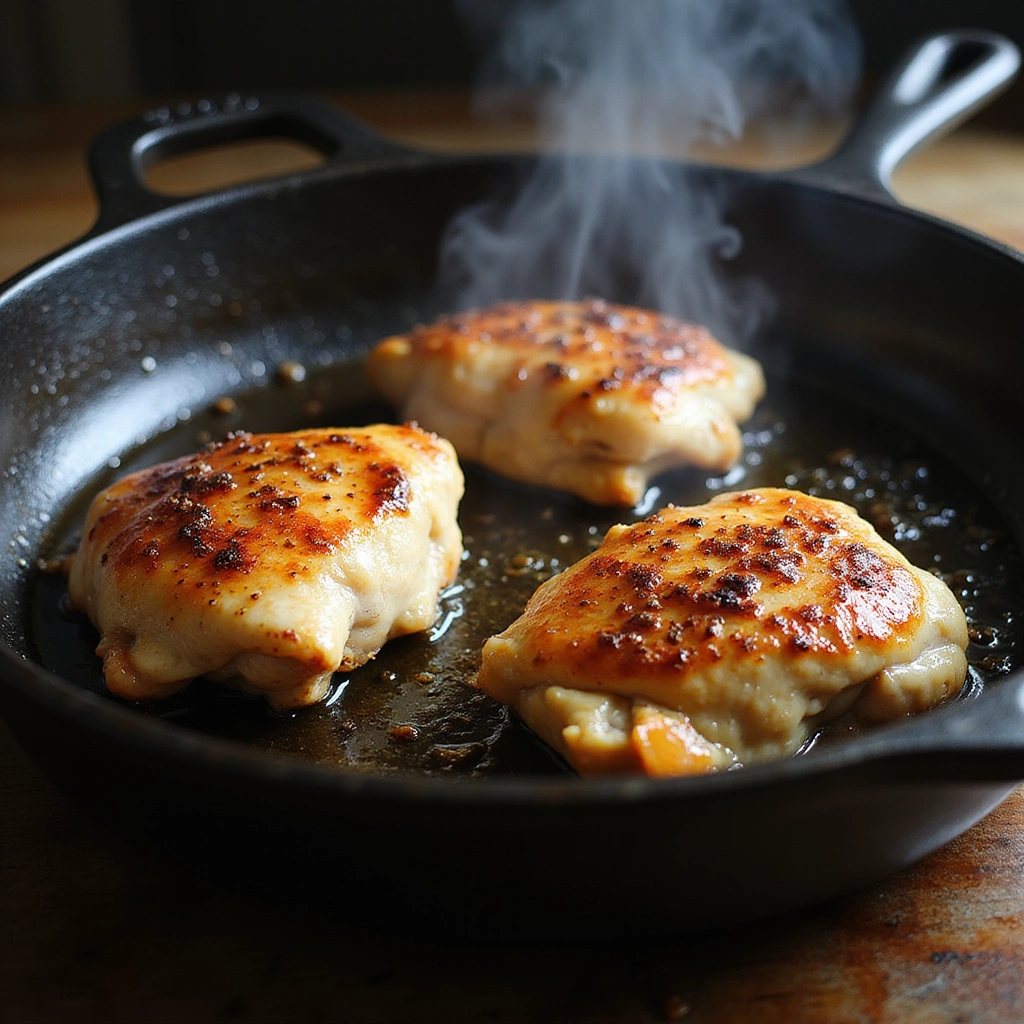
Heat a cast iron skillet over medium-high heat.
Add the chicken thighs skin-side down and sear for about 5 minutes.
Look for a golden-brown crust before flipping.
This step locks in the juices and adds flavor to the final dish.
Step 6: Bake the Chicken and Potatoes
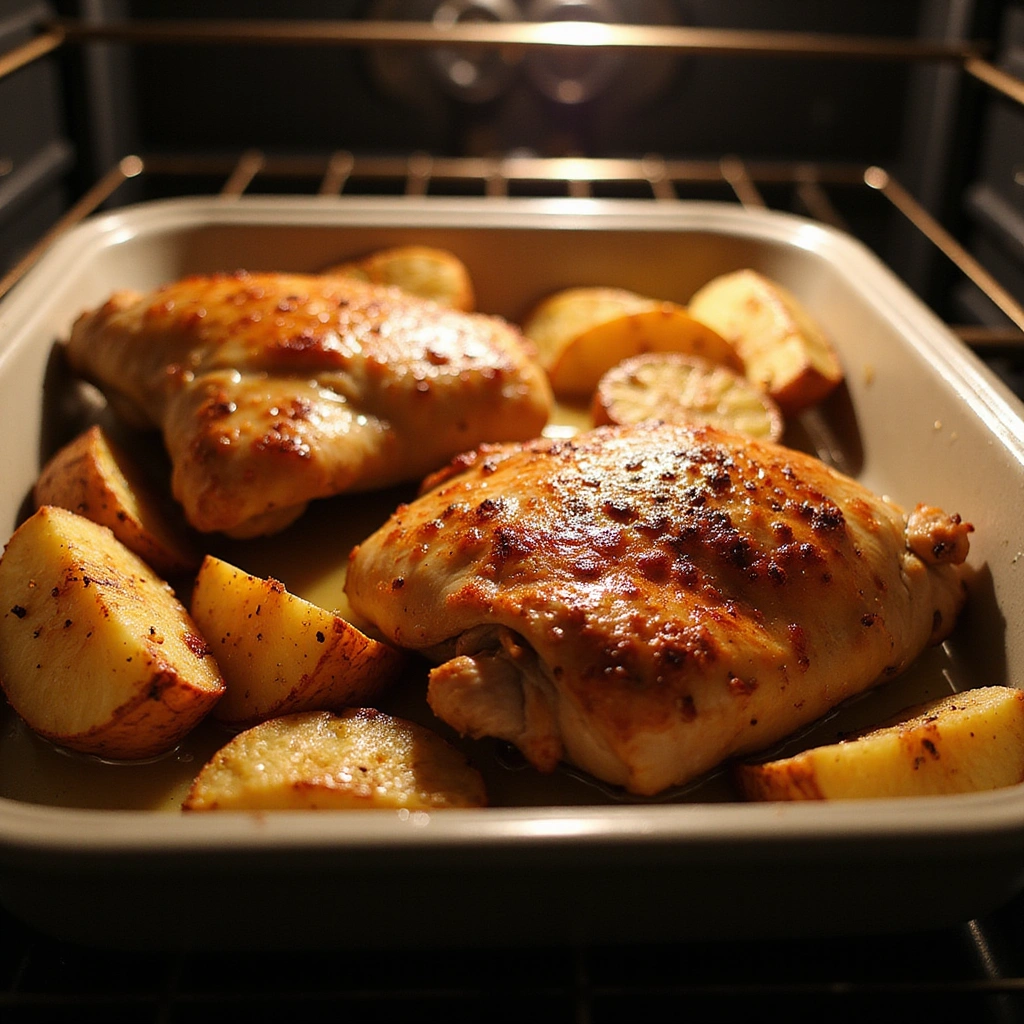
Once the chicken is seared, transfer it to a baking dish along with the prepared potatoes.
Bake in the preheated oven for 30-35 minutes or until the chicken reaches an internal temperature of 165°F (75°C).
Monitor the chicken and potatoes to ensure they cook evenly.
This step allows the flavors to meld together beautifully.
Step 7: Rest the Chicken
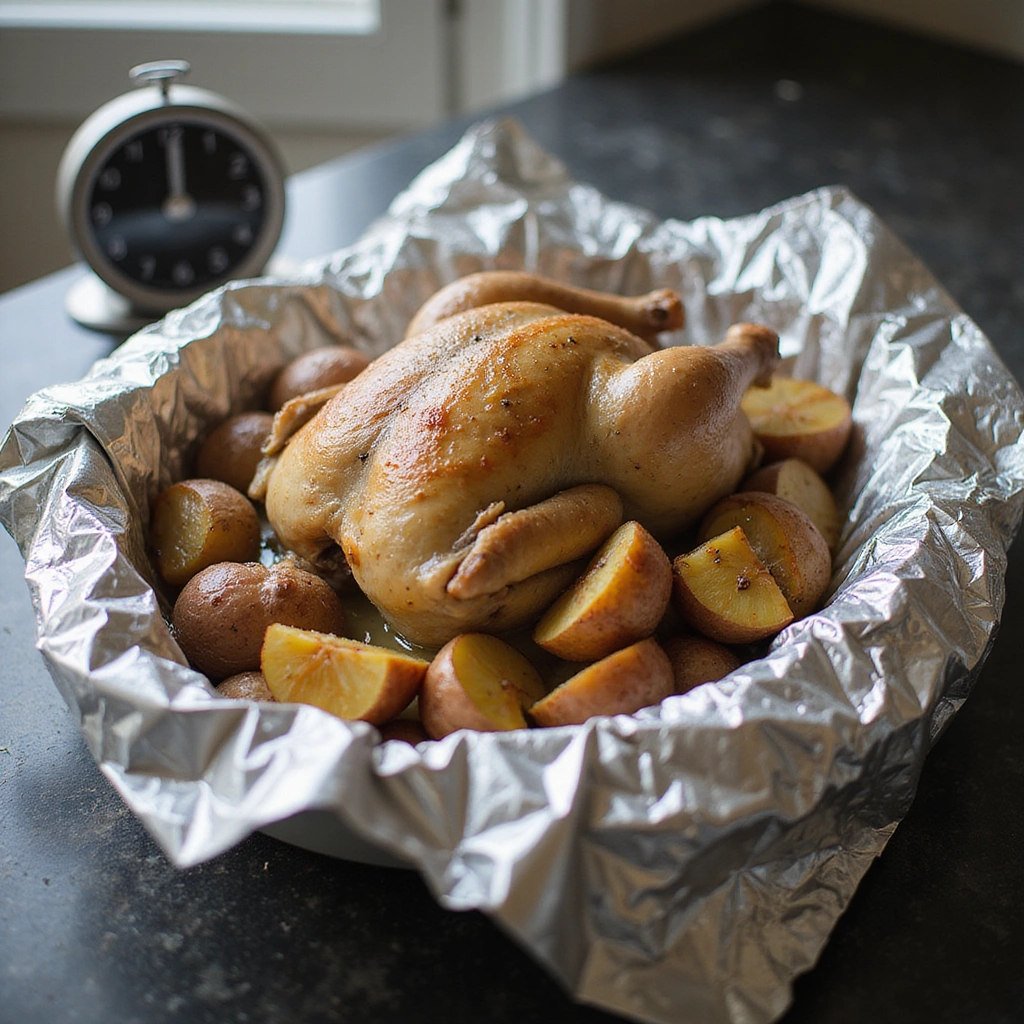
Remove the dish from the oven and let the chicken rest for 5-10 minutes.
This resting period allows the juices to redistribute, ensuring moist meat.
Cover with foil to keep warm while resting.
This step is crucial for achieving the best texture in your chicken.
Step 8: Serve and Enjoy
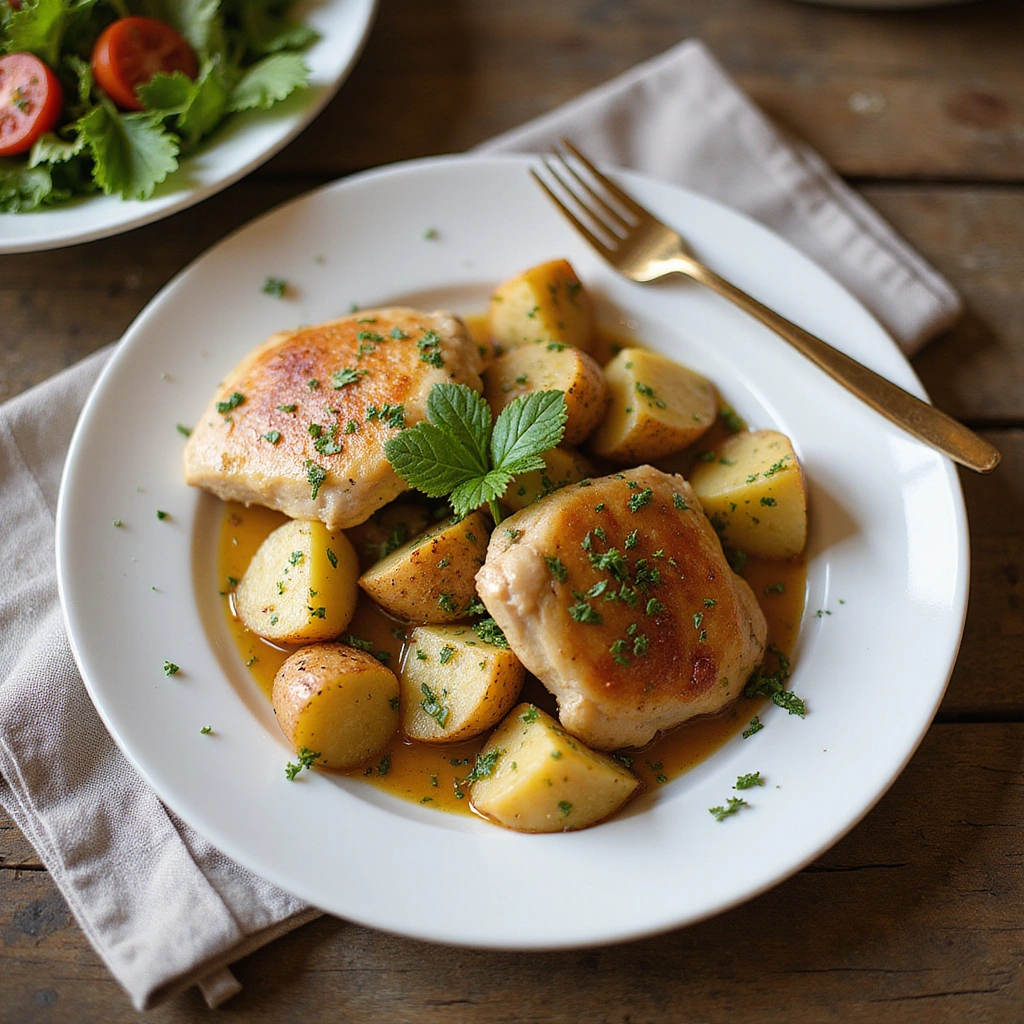
Plate the chicken and potatoes, garnishing with fresh herbs if desired.
Serve warm with a side salad or your favorite vegetables.
This final step enhances the visual appeal of the dish.
Enjoy the comforting flavors of your homemade Chicken and Potatoes.
Critical Timing and Temperature Guide
Searing Chicken: Sear for about 5 minutes on medium-high heat until golden brown. Look for a crispy skin and avoid moving the chicken too much to allow for proper browning.
Baking: Bake at 400°F (200°C) for 30-35 minutes. The chicken should reach an internal temperature of 165°F (75°C) for optimal safety and flavor.
Resting: Allow the chicken to rest for 5-10 minutes before serving. This helps the juices settle, resulting in a more flavorful and juicy dish.
Pro Tips for Chicken And Potatoes Recipes Dairy Free Easy Dinner Idea
• Ingredient Selection: Choosing high-quality chicken thighs will enhance the overall flavor and tenderness of the dish. Fresh, organic potatoes will also provide better taste.
• Preparation Secret: Consider brining the chicken for a short time before cooking to maximize juiciness. Even a quick 30-minute soak can make a significant difference.
• Temperature Management: Ensure your oven is preheated properly to avoid uneven cooking. Using an oven thermometer can help confirm accuracy.
• Texture Enhancement: Aim for a crispy skin on the chicken by not overcrowding the pan during searing. This allows for optimal browning.
• Flavor Layering: Adding fresh herbs both in the cooking process and as a garnish will enhance the dish’s aroma and taste.
• Make-Ahead Strategies: You can cut and season the potatoes a few hours in advance, storing them in water to prevent browning. This saves time on the day of cooking.
• Restaurant-Quality Finishing Touches: Drizzle a balsamic reduction over the dish before serving for a touch of elegance and added flavor.
• Equipment Optimization: Use a heavy-bottomed skillet for searing to ensure even heat distribution, which prevents burning.
Troubleshooting Common Issues
• Chicken Too Dry: This can occur if the chicken is overcooked. Always use a meat thermometer to check for doneness and avoid cooking beyond 165°F (75°C).
• Potatoes Not Crispy: Potatoes may become soggy if overcrowded on the baking sheet. Spread them out in a single layer for optimal roasting.
• Seasoning Lacking: If the dish tastes bland, consider adjusting the seasoning levels before cooking. Taste as you go to find the right balance.
• Uneven Cooking: This can happen if the oven temperature is inconsistent. Regularly checking the oven’s calibration can help prevent this.
• Chicken Skin Not Crispy: Ensure the chicken skin is dry before searing, as moisture can hinder crisping. Pat it down with paper towels if needed.
Variations and Regional Differences
• Italian Herb Chicken and Potatoes: This version includes Italian herbs like basil and oregano, with the addition of cherry tomatoes for a Mediterranean twist.
• Spicy Cajun Chicken: Incorporating Cajun spices adds a kick to the dish. Use smoked paprika, cayenne, and thyme to create a deeper flavor.
• Asian-Inspired Chicken: Marinate the chicken in soy sauce, ginger, and garlic for an Asian flavor profile. Serve with sesame seeds and green onions.
• Modern Interpretations: Consider adding sweet potatoes for a unique twist, or use an air fryer for a healthier, quicker cooking method.
Food Science Behind the Recipe
• Maillard Reaction: This chemical reaction occurs when the chicken is seared at high heat, creating a rich flavor and crispy texture. Understanding this can help you achieve the perfect crust.
• Caramelization: The sugars in the potatoes caramelize during roasting, adding sweetness and depth to the flavor. This is key for achieving that delicious golden-brown hue.
• Emulsification: When you mix olive oil with seasonings, you create an emulsion that coats the chicken and potatoes, allowing for better flavor absorption.
Frequently Asked Questions
What’s the most common mistake people make when preparing Chicken and Potatoes? Overcooking the chicken is the top mistake. Always use a meat thermometer to check for doneness and avoid dryness.
Can I prepare components of this dish in advance? Yes, you can chop the potatoes and season the chicken ahead of time. Store them separately in the refrigerator for up to 24 hours.
How do I adapt this recipe for dietary restrictions? For gluten-free needs, ensure that any seasonings used are certified gluten-free. You can also substitute olive oil for other oils if needed.
What’s the best way to store and reheat leftovers? Store leftovers in an airtight container in the fridge for up to 3 days. Reheat in the oven at 350°F (175°C) until warmed through.
Can I freeze this dish? Yes, you can freeze cooked chicken and potatoes. Allow cooling completely, then transfer to freezer-safe containers. Thaw in the fridge before reheating.
What wine or beverages pair best with this dish? A Chardonnay or a light red wine like Pinot Noir pairs well, balancing the richness of the chicken and potatoes.
How can I scale this recipe up for a crowd? Simply multiply the ingredient quantities by the number of servings needed. Ensure to use larger baking sheets and cooking vessels as necessary.
What side dishes complement this recipe best? A fresh green salad or steamed vegetables complement the dish well, providing a light contrast to the hearty chicken and potatoes.
How do professional chefs elevate this dish for restaurant service? Chefs often add gourmet finishing touches like truffle oil or a sprinkle of microgreens for a refined look.
Serving and Presentation Guide
• Traditional Presentation: Serve the chicken on a large platter with potatoes arranged around it. Garnish with fresh herbs and a sprinkle of sea salt for a rustic look.
• Modern Plating Ideas: Use individual plates for a more upscale presentation. Arrange chicken and potatoes artfully, drizzling with a balsamic reduction for added flair.
• Accompaniment Suggestions: A light cucumber salad or roasted vegetables would complement the dish beautifully, balancing the flavors.
• Special Occasion Presentation: For celebrations, consider serving this dish on elegant dinnerware, with additional garnishes like edible flowers or a citrus zest sprinkle for color.
Conclusion
This Chicken and Potatoes recipe is not only easy to prepare but also deeply satisfying and flavorful.
I encourage you to try this dish for your next family dinner or gathering.
It’s a wonderful way to bring everyone together around the table and enjoy a comforting meal.