
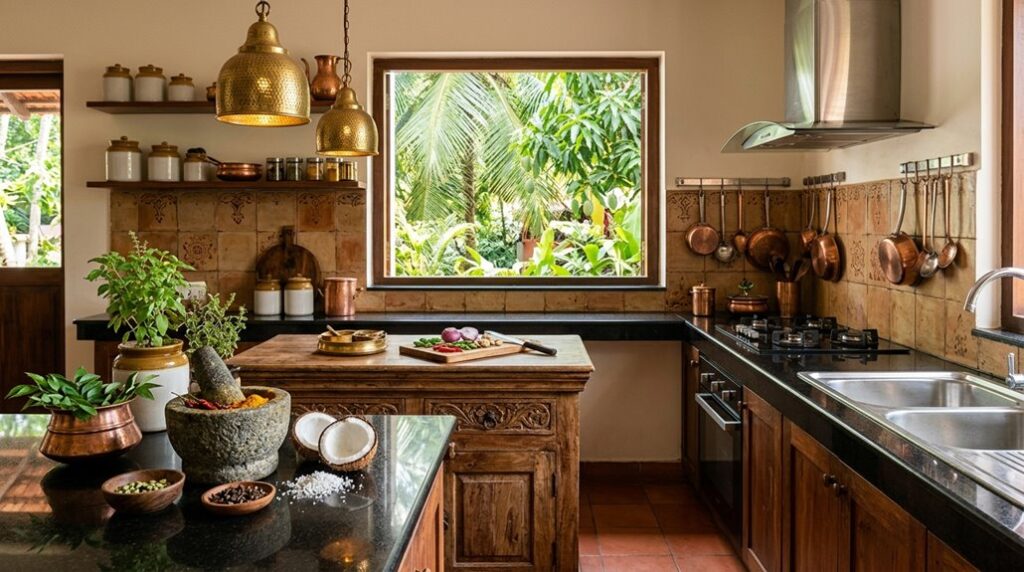
I’m going to show you how I’d redesign a Kerala kitchen into a functional, beautiful space that actually withstands monsoon seasons. The key? Start with ventilation placement, as it shapes everything else. When you anchor your layout around exterior walls and chimneys, you’re setting up efficient smoke removal that keeps your cooking area fresh.
But here’s what most people miss: moisture-smart materials and a strategic wet-dry zone system that protects your investment while handling Kerala’s spice-heavy cooking demands. Let me walk you through the specifics.
Why Ventilation Placement Shapes Your Entire Kerala Kitchen Layout
Why does your kitchen’s ventilation setup matter more than you’d think?
Your ventilation placement actually shapes your entire layout. When I design a Kerala kitchen, I start by positioning the chimney or exhaust near an exterior wall. This becomes the anchor for everything else. Why? Because oil and spice-heavy cooking generates serious smoke and odors that need to escape efficiently.
A well-placed ventilation system lets me arrange your work zones naturally. The hob aligns with doorways, traffic flows smoothly, and you’re not constantly navigating around hot steam. If an exterior wall isn’t available, I pair the chimney with a ceiling fan and louvered window for backup support.
This ventilation-first thinking prevents costly redesigns later. You’ll experience better indoor air quality and a kitchen that feels spacious, elegant, and truly functional for your family’s cooking style.
Moisture-Resistant Cabinetry: Marine Plywood and Finishes That Survive Monsoons
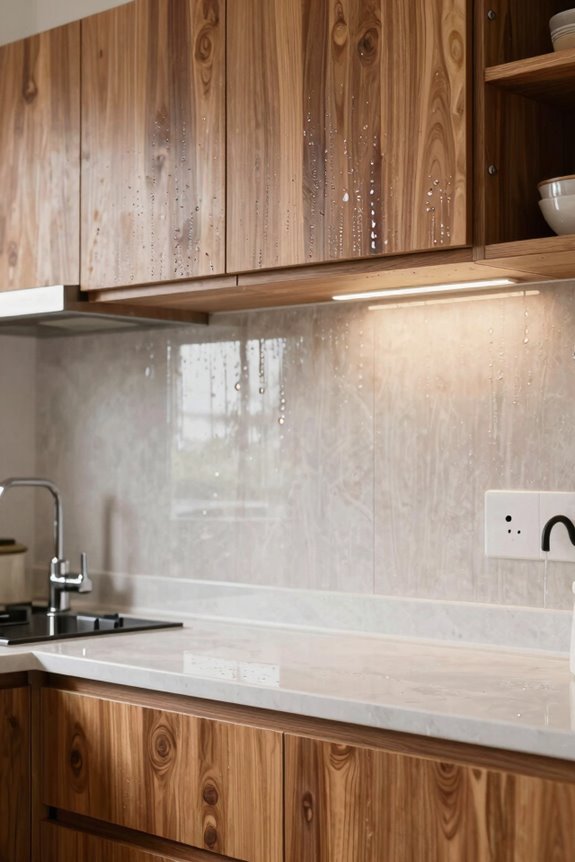
When you’re planning a Kerala kitchen, I’d recommend starting with marine plywood for your sink and hob zones. It’s engineered to handle moisture better than standard wood, resisting the swelling and warping that monsoon humidity causes.
You’ll then want to pair this sturdy base with HPL (high-pressure laminate) finishes or UV-coated veneers on your cabinet doors, which create a protective shield against dampness while giving you that warm, elegant wood-look aesthetic without the maintenance headaches. These two choices work together to keep your cabinets stable and beautiful through Kerala’s wet seasons, so your kitchen stays functional and lovely for years to come.
Marine Plywood Durability Standards
How’d you like cabinetry that actually survives Kerala’s monsoons without warping, swelling, or falling apart? I’m talking about marine plywood, the real deal for kitchens where humidity’s relentless. This material’s built tough, with a moisture-resistant laminate that keeps cabinet doors stable and wipe-clean when moisture creeps in.
| Standard | Rating | Best For |
|---|---|---|
| Marine Grade | Highest | Sink zones |
| HPL Coating | High | All cabinet areas |
| UV Coating | High | Display areas |
| Commercial Plywood | Medium | Dry zones |
You’ll want marine plywood anchoring your sink and hob areas, where water’s most aggressive. Pair it with HPL or UV coatings for maximum protection. Your cabinets stay beautiful, functional, and reliable through every monsoon season. That’s the standard we’re building toward together.
HPL Finishes For Humidity
If you’ve ever watched moisture creep into kitchen cabinets, leaving them bloated and discolored, you’ll understand why HPL (High-Pressure Laminate) finishes matter so much in Kerala homes. HPL finishes provide exceptional moisture resistance, protecting your cabinetry from the relentless monsoon humidity that warps and swells untreated wood.
I’ve found that HPL surfaces offer a luxurious, elegant appearance while delivering practical durability. They resist water damage, prevent warping, and reduce the swelling that makes cabinet doors stick or misalign. Unlike bare plywood, HPL finishes create a protective barrier that stands up to moisture challenges.
You’ll appreciate their maintenance too; simply wipe them clean with a damp cloth. HPL finishes come in countless colors and textures, letting you design kitchens that stay beautiful and functional for years, even through intense monsoon seasons.
Designing a Wet-and-Dry Counter System for Spice-Heavy Cooking
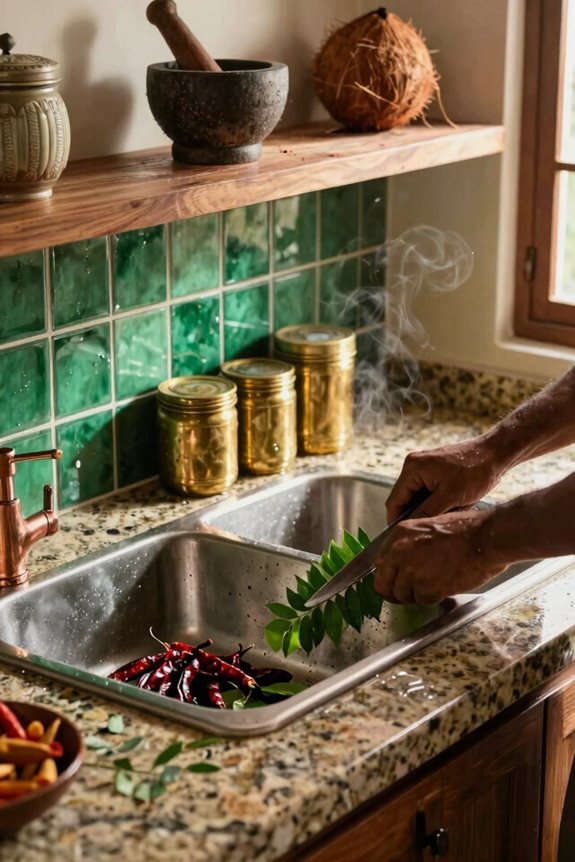
The key to managing Kerala’s spice-heavy cooking lies in separating your prep work into two distinct zones: one for wet tasks and one for dry ones. I recommend creating a dedicated wet zone with a counter that’s 10–15 mm lower than your main counter, topped with elegant granite and a drip edge to contain splashes naturally.
This lower counter height, paired with a raised lip, keeps moisture away from your spice storage and dry ingredients. Install stainless steel under-sink pullouts to resist rust from constant water exposure. Above your cook zone, mount a wall-mounted rod with perforated baskets for drying utensils. This thoughtful separation protects your kitchen’s longevity while streamlining your spice-grinding routine, honoring Kerala’s culinary traditions.
Glass Backsplashes: Seamless Cleaning and Monsoon-Proof Brightness
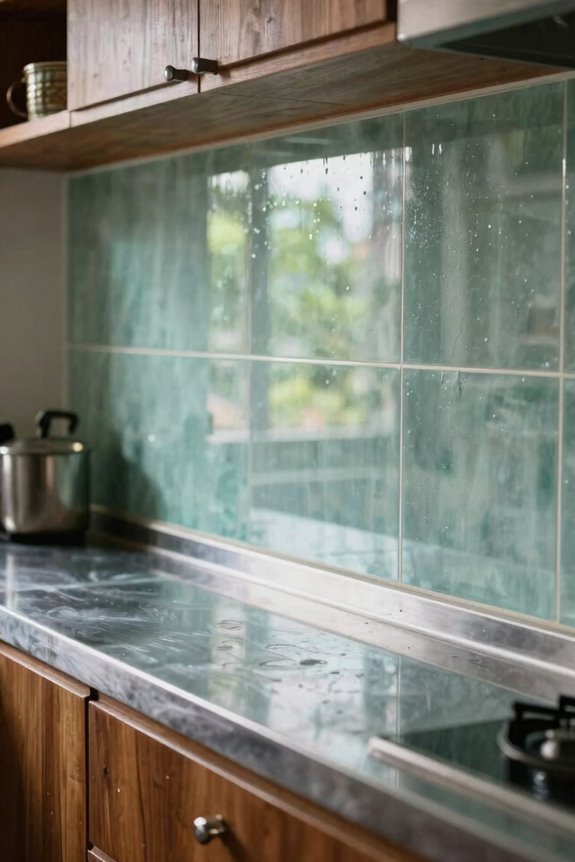
Because Kerala’s humidity and spice-heavy cooking create unique cleaning challenges, I’d recommend considering tempered glass backsplashes as a smart solution for your kitchen’s work zone. This moisture-resistant glass backsplash eliminates grout lines where dirt and turmeric stains accumulate, making cleanup faster and easier. The tempered glass near your hob resists heat while minimizing stubborn spice marks that plague traditional surfaces.
During monsoon’s cloudy days, a reflective glass backsplash brightens your compact kitchen, creating an elegant illusion of more light and space. You’ll notice how it creates better visibility on gloomy afternoons, making cooking environments more workable.
While upfront costs run higher than alternatives, this investment balances lasting beauty with practical durability. When installing, plan for a 2–3 mm silicone gap at your counter junction to keep proper sealing and long-term cleanliness intact. Your modern Kerala kitchen deserves this refined, functional upgrade.
The Work Triangle Principle: Reducing Cross-Traffic in Compact Spaces
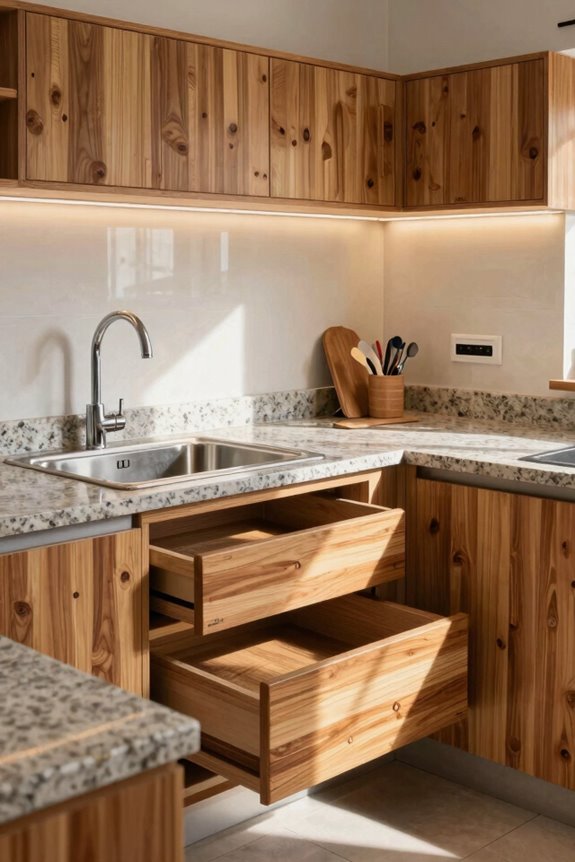
I’ll show you how arranging your sink, stove, and refrigerator in a smart triangle layout helps your Kerala kitchen run efficiently, without bumping into family members or doubling back for forgotten items. By creating zoned work areas—prep zone near the sink, cooking zone at the stove, storage zone at the fridge—you’ll reduce unnecessary steps and keep clutter from accumulating in high-traffic spots.
This principle works especially well in compact homes, where every square foot counts and a thoughtful layout means the difference between a cramped, frustrating kitchen and one that feels peaceful and calm.
Sink, Stove, Refrigerator Placement
Efficient kitchen-workflow design hinges on positioning your sink, stove, and refrigerator strategically so you’re not constantly zigzagging across the space. This work triangle forms the foundation of your kitchen’s functionality, and I’ll show you how to make it work brilliantly in your Kerala home.
Consider these three placement essentials:
- Sink placement – Position it near your prep area for seamless wet work and vegetable washing
- Stove alignment – Place your hob on an exterior wall when possible for direct ventilation ducting
- Refrigerator positioning – Keep it accessible yet separate from cooking heat
A ventilation-first layout pairs naturally with this triangle, letting you move fluidly between zones. Maintain at least 450 mm landing space beside your hob for safe, comfortable cooking.
When you optimize these three anchors, you’re creating an efficient kitchen that truly serves your daily cooking rhythm.
Zoned Work Triangle Layout
Now that you’ve positioned your sink, stove, and refrigerator strategically, you can shape these three points into a zoned work triangle. This layout organizes your kitchen into distinct, separate areas so you’re not constantly weaving between tasks. This work triangle principle reduces cross-traffic by creating clearly defined pathways between each zone.
When you separate your sink area, cooking zone, and refrigerator station, you’re building invisible lanes that guide your movement naturally. Think of it like having your own personal traffic flow, with no bumping into family members while you’re chopping vegetables or grabbing ingredients. L-shaped and galley kitchen layouts both support this zoned approach beautifully.
The result is a kitchen where you’ll feel more in control, more organized, and right at home in your space.
Minimizing Movement And Clutter
Why do kitchens feel cramped even when they’re not? Poor traffic flow turns spacious modular kitchens into obstacle courses. I’ve discovered that the work triangle, connecting sink, hob, and refrigerator, becomes truly functional when you eliminate unnecessary movement.
Here’s how to minimize clutter and streamline your kitchen:
- Position your hob on exterior walls for direct ventilation, avoiding detours between zones
- Maintain 450 mm landing spaces beside the hob and sink, preventing crowding and creating breathing room
- Arrange zones distinctly rather than in a single line, reducing cross-traffic and daily frustration
When these elements align properly, your Kerala kitchen changes from chaotic to elegant. You’ll move purposefully, not frantically.
This intentional spacing lets you work efficiently while entertaining, creating that luxurious kitchen experience you deserve. The work triangle isn’t just a principle; it’s your pathway to a kitchen that actually works for you.
Layered Lighting for Task Work, Ambiance, and Monsoon Days
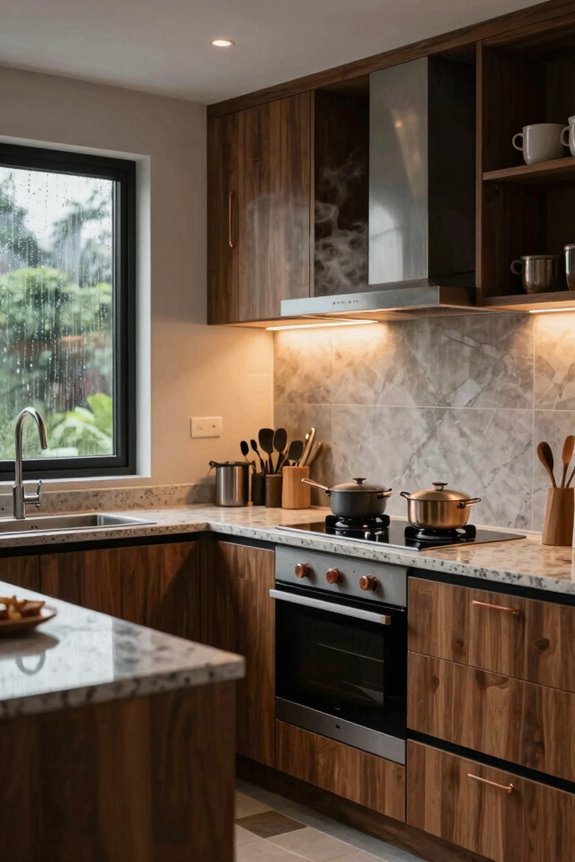
Most kitchens benefit from three distinct types of light working together: warm ambient lighting (in the 3000–3500K range, which feels cozy and natural), bright task lights for chopping and cooking, and focused pendant lights above prep zones. This combination gives you flexibility depending on what you’re doing and what the weather’s like outside.
In compact kitchen spaces, layered lighting becomes especially valuable because it eliminates dark corners where accidents happen. During Kerala’s monsoon season, reflective backsplashes (think glass or high-gloss surfaces) bounce this light around, brightening your workspace on gray days.
Before you invest in fixtures, run a quick 3D mock-up to verify how natural light flows through your kitchen and reaches your work zones. This planning step supports both functionality and comfort throughout the year.
Storage Strategies That Maximize Small Kitchens Without Crowding
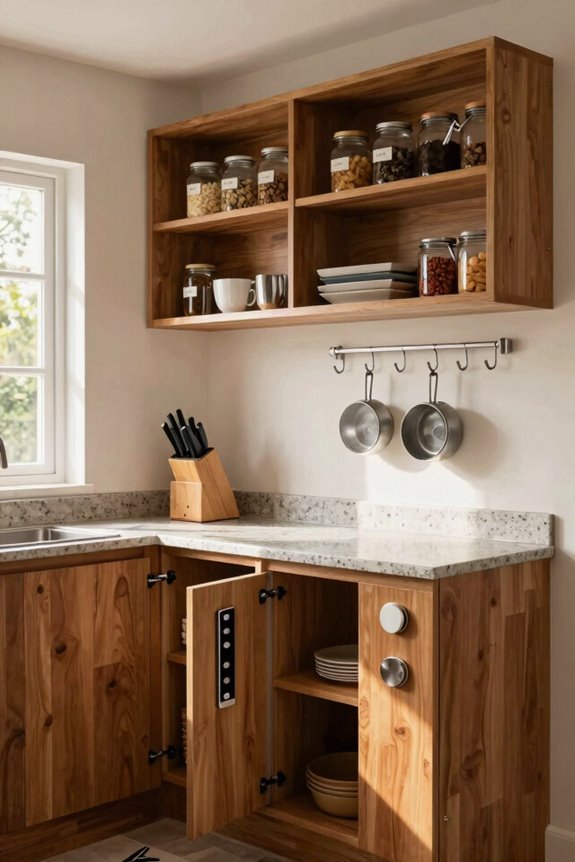
I’ve found that the key to Kerala’s compact kitchens isn’t cramming in more storage; it’s choosing the right pieces that work smarter for you. Tall tambour doors, those sleek, roll-up cabinet fronts, hide clutter beautifully while keeping everything accessible, and pairing them with moisture-resistant finishes means your storage stays elegant even during humid monsoon months.
When you select cabinets that match your kitchen’s visual weight rather than dominating it, you create breathing room that makes the whole space feel luxurious, not squeezed.
Minimalist Storage With Moisture-Smart Finishes
Smart storage solutions can help even the tiniest Kerala kitchen become a functional, uncluttered space with good airflow. I’ve found that combining smart material choices with streamlined design creates the elegant, moisture-resistant kitchen you’ll love using daily.
Here’s what works best:
- Marine plywood with moisture-resistant laminate on cabinet doors prevents warping in humid conditions, keeping your storage stable and wipe-clean for years.
- Flush-front cabinet designs eliminate grease-trapping crevices, making cleanup quick and simple in high-moisture cooking areas.
- Slim, streamlined profiles maximize perceived space while maintaining that minimalist aesthetic you’re after.
I’d recommend prioritizing marine plywood near your sink and hob zones, where moisture matters most. Pair these materials with full-height pantry pullouts and slim spice drawers positioned near cooking areas.
This approach gives you abundant, organized storage without cramping your workspace or feeling cluttered.
Tall Tambour Doors Hide Clutter
When you’re working with a compact Kerala kitchen, those everyday appliances and cooking supplies can quickly pile up and make your space feel cramped. Tall tambour doors offer an elegant solution that creates an organized, clutter-free look. These curved-slat systems hide bulkier items, mixers, storage containers, and small appliances while preserving your sightlines.
You’ll appreciate how they maximize vertical space without blocking views through your kitchen. The movable slats glide smoothly, making everything accessible whenever you need it.
I recommend choosing wood-look tambour materials that coordinate with your existing laminate or veneer cabinetry for a cohesive design. In Kerala’s humid climate, occasional slat cleaning prevents dust buildup, requiring minimal maintenance. This approach delivers that luxurious, uncluttered aesthetic while keeping everything within arm’s reach.
Wood Accents and Warm Tones That Resist Warping and Staining
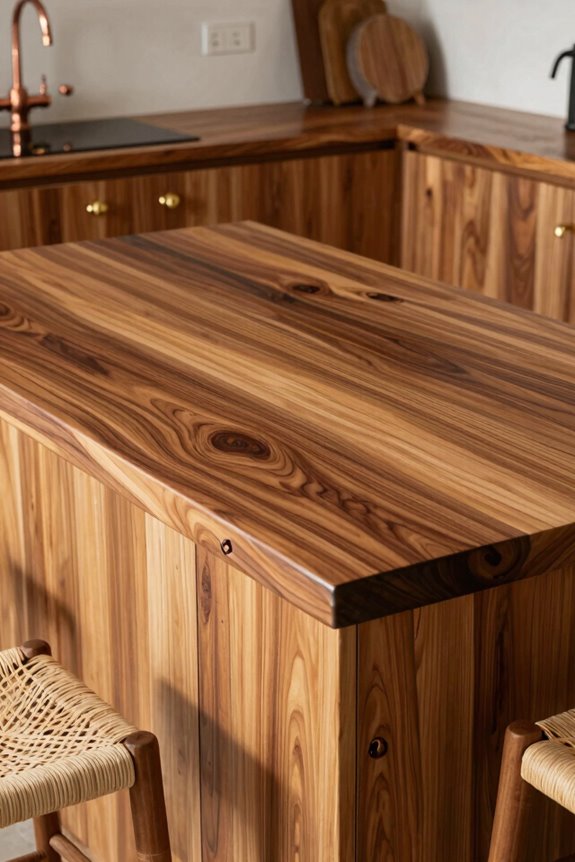
How can you bring warm, natural wood tones into your Kerala kitchen without worrying about humidity damage? I’d recommend these smart solutions:
- Wood-look HPL or UV-coated veneer – These materials mimic authentic wood’s warmth while resisting warping from Kerala’s moisture-heavy climate
- Proper sealing and maintenance – Real hardwood needs protective coatings to prevent staining from coconut oil splatters and spills
- Balanced design approach – Pair wood accents with white or sage glass backsplashes to soften the visual weight
This combination creates an elegant, inviting kitchen that feels connected to nature. You’ll get that luxurious wood aesthetic without the maintenance headaches.
The lighter elements prevent your compact space from feeling cramped or dark, while durable materials keep your wood accents looking beautiful for years.
Quick 3D Planning: Testing Sightlines and Ventilation Before Renovation
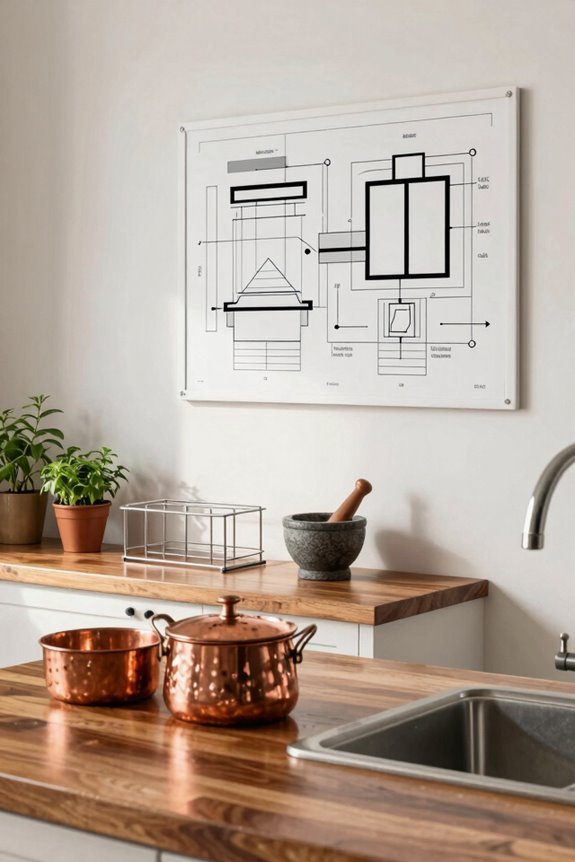
Why wait until cabinets arrive to discover your chimney blocks your sightline or your work zones feel cramped? I’d recommend creating a quick 3D planning mock-up before ordering anything. This simple step lets you test your triangle distances between the hob, sink, and refrigerator, ensuring comfortable workflow. You’ll verify that your chimney placement won’t obstruct views or pathways, and you can confirm whether exterior-wall ducting works or you’ll need a ceiling fan with louvered window instead.
Simulate daylight exposure to catch glare issues early. Check that your ventilation routing clears all obstacles. Adjust cabinet heights and test those luxurious 450 mm landing spaces on both sides of your work zones. This thoughtful preparation creates a well-designed Kerala kitchen that is elegant, functional, and truly fits your home.
Materials Checklist: Granite, Stainless Steel, and HPL for Kerala’s Climate
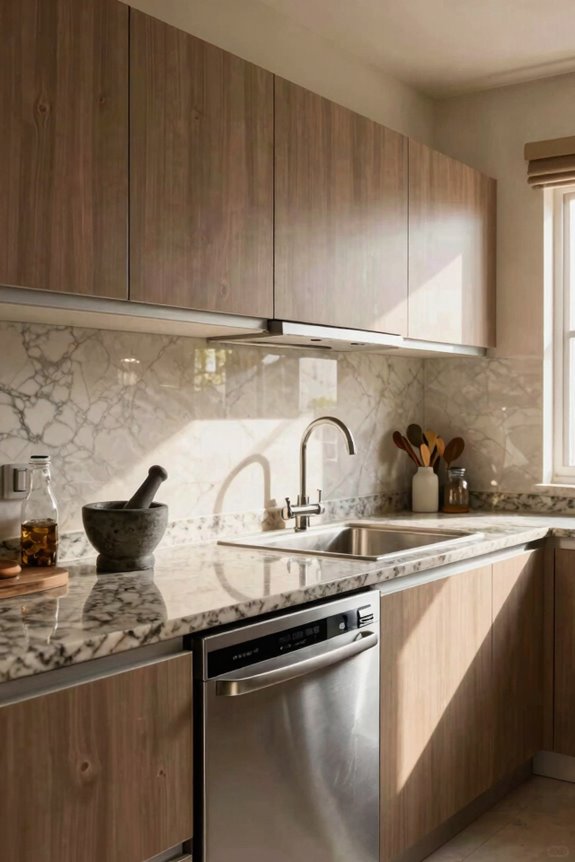
Your Kerala kitchen’s materials must work harder than kitchens in drier climates. The humidity, splashing water, and constant moisture demand surfaces that won’t warp, rust, or harbor mold. I’ve chosen three champions for Kerala kitchens:
- Granite offers heat resistance and robust performance in wet prep areas, standing up to daily splashing without damage
- Stainless steel under-sink pullouts resist dampness and rust, keeping your hygiene standards strong through humid seasons
- HPL on quality substrates provides moisture resistance with elegant finishes while keeping your budget reasonable
Marine plywood with HPL or UV coating stabilizes cabinets in moisture-prone zones, giving you wipe-clean surfaces that last. These materials work together, creating a kitchen that performs well in Kerala’s climate while delivering the durability and elegance you deserve.