
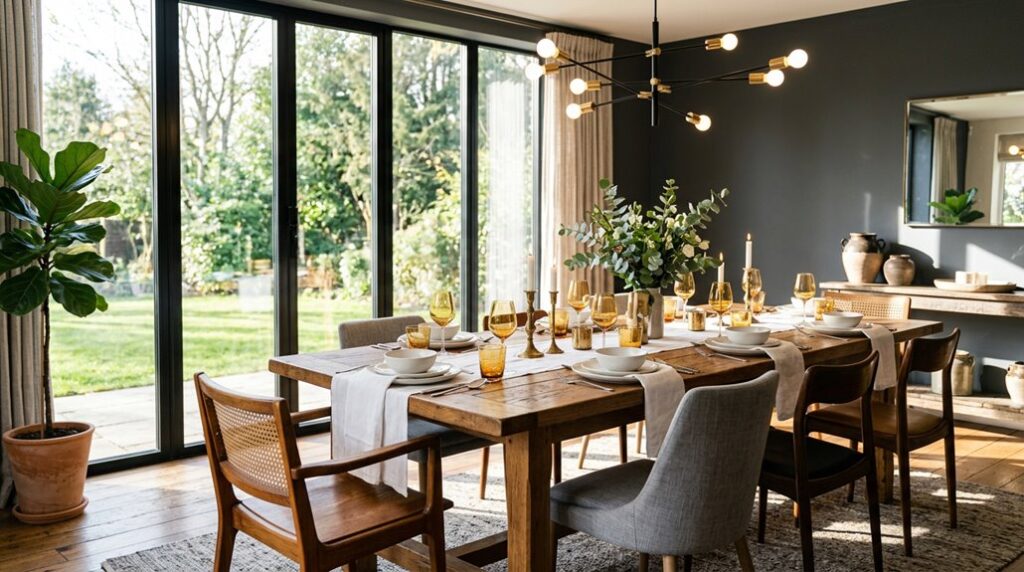
Most people don’t realize that your dining room table shape actually changes how you entertain; rectangular tables host larger groups, while round ones create intimate conversations. I’m here to show you how simple choices in furniture, lighting, and textiles can completely change this space without starting from scratch.
The key is working with what you have and adding layers strategically. Let me share the seven ideas that’ll make your dining room feel like the elegant, functional heart of your home.
Choose a Dining Table for Your Real Life
How often do you actually gather around your dining table? That’s the question that should guide your space planning decisions. I’ve found that the best dining tables match your real life, not some imaginary version of it.
If you’re hosting weekly dinners, a rectangular table’s generous proportions work well in the room. For tighter spaces where you move around daily, round or oval tables feel more welcoming and improve circulation. Consider an extendable table; it offers weekday modesty while expanding for special gatherings.
Think about legroom, chair clearance, and how your table relates to surrounding furniture and rugs. Your dining table choice should balance everyday comfort with occasional entertaining needs, creating a space where you’ll actually want to gather.
Mix Chair Styles for a Collected, Comfortable Look
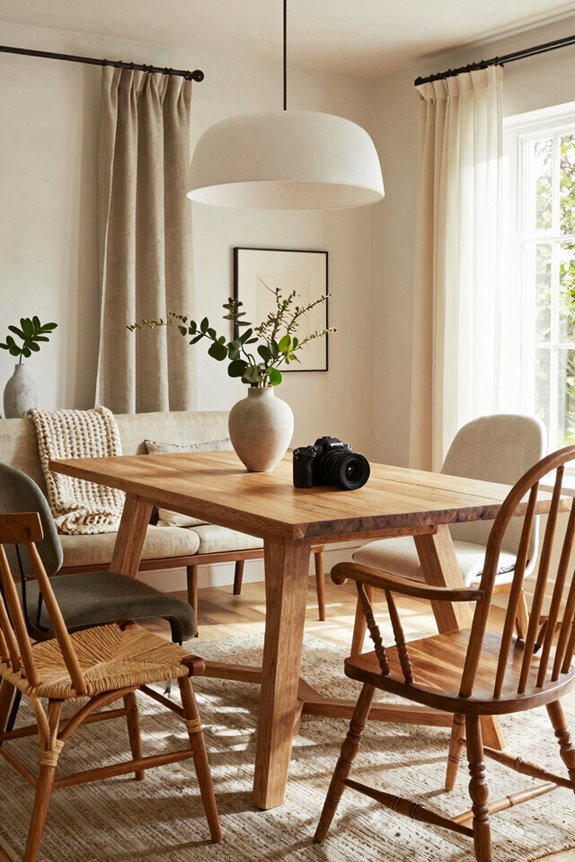
Why stick with matching chairs when you can create something far more interesting? Mixing chairs lets you blend formality with everyday comfort in ways that feel personally meaningful. I’ve found that pairing gilt armchairs with slipcovered Parsons chairs creates an elegant collected look that welcomes both fancy dinners and casual family meals.
When mixing dining chairs, consider pairing wooden chairs with upholstered ones to add texture and visual interest. Combine antique or vintage styles with contemporary pieces for a varied yet balanced ensemble. The key is balancing scale and proportion so no single chair overwhelms the others in height or silhouette.
Performance fabrics on upholstered chairs help tremendously with spills and maintenance, supporting your real dining life. This approach makes your dining room both sophisticated and genuinely livable.
Add a Sideboard to Display and Stage Your Style
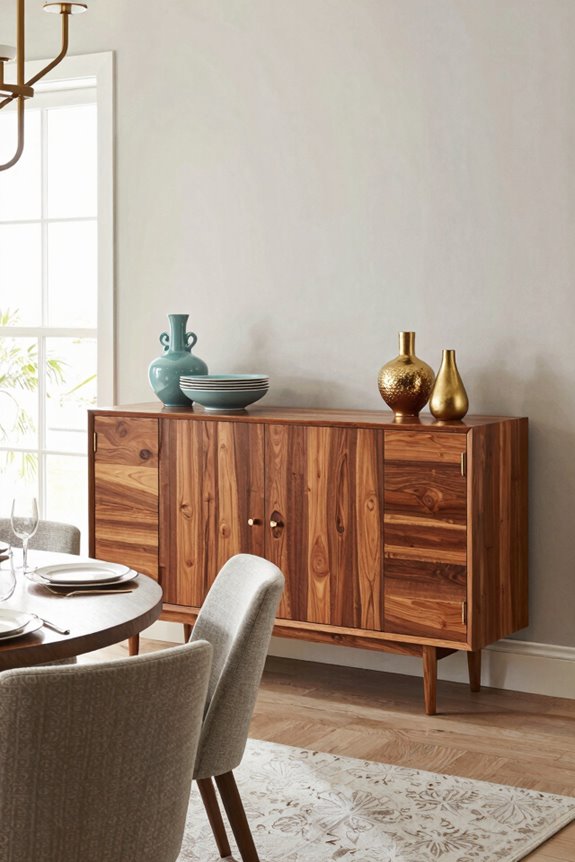
Every dining room needs a hardworking sideboard, an elegant piece of furniture that hides the chaos while putting your best style on display. I’ve found that a well-chosen sideboard, like the Bradley or the Crescent 6-Drawer Dresser, anchors your dining room while providing essential staging space for drinks and serving pieces during gatherings.
The key is restraint. I recommend keeping your sideboard purposeful rather than cluttered, letting neutral tableware and accessories create a calm backdrop. This approach works especially well in open-plan areas, where a dedicated staging surface helps balance the room’s flow.
Layer Lighting in Your Dining Room to Set Mood
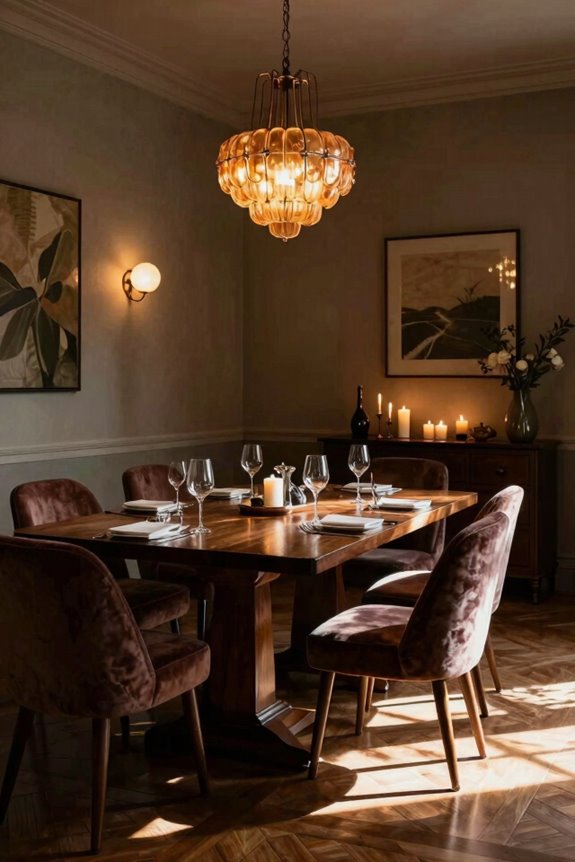
I’ve found that layering your dining room lighting by combining a central chandelier or pendant with wall sconces and softer accent sources creates a focal point while building the intimate atmosphere that makes dining special. You’ll notice how this approach lets you shift the mood effortlessly: bright and energizing for casual family breakfasts, warm and elegant for formal dinners, simply by adjusting dimmer switches and varying your light sources.
Strategic placement and warm color temperatures, around 2700–3000K, give your dining zone depth and visual hierarchy instead of the flat, harshly lit appearance it might otherwise have.
Central Fixture Creates Focus
A chandelier, pendant light, or other eye-catching fixture serves as your dining room’s anchor—the element that intuitively draws your gaze when you enter the space. This central fixture creates focus, grounding your lighting layers and establishing the room’s elegant atmosphere. When you choose a statement piece, you’re investing in both function and style.
The chandelier anchors attention while wall sconces and table lamps provide supporting light, preventing any single source from overwhelming the space. Together, these lighting layers work in harmony, softening shadows and creating depth. Dimmer controls amplify this effect, letting you shift from bright conversation-friendly settings to intimate dining moments.
Layered Lighting Builds Intimacy
While that central chandelier anchors your room’s visual identity, it shouldn’t work alone. Layering additional light sources lets you shift the mood in your dining space whenever you want.
Layered lighting in your dining room creates depth and intimacy that a single overhead fixture can’t achieve. I recommend incorporating these three elements:
- Wall sconces flanking your table frame the seating area and reduce harsh shadows at eye level
- Table lamps on sideboards or consoles add warm, directional light for elegant ambiance
- Dimmer switches on all fixtures let you transition from bright task lighting to soft, welcoming glow
Warm color temperatures around 2700–3000K across every fixture yield a cohesive, inviting atmosphere. When you highlight textures like drapery and reflect light off mirrors, your space feels larger and more luxurious.
Layered lighting makes dining an experience where everyone feels welcomed and comfortable.
Mood Shifts Without Effort
Ever notice how the same dining room feels completely different depending on the lighting? That’s the power of adjustable brightness. I’ve discovered that dimmed ambient lighting changes my space instantly, creating cozy vibes for casual breakfasts, then shifting to elegant atmospheres for formal dinners. You don’t need multiple rooms; you just need control.
Install dimmer switches on your central fixture and layer in table lamps for flexibility. This approach lets you dial the mood up or down without rearranging furniture.
| Occasion | Lighting Level | Mood Created |
|---|---|---|
| Casual breakfast | Bright, 75% | Energizing, welcoming |
| Family dinner | Medium, 50% | Warm, intimate |
| Formal gathering | Dim, 25% | Luxurious, sophisticated |
When you’ve got this control, your dining room becomes the perfect gathering space for any moment.
Ground Your Dining Room With the Right Rug Size
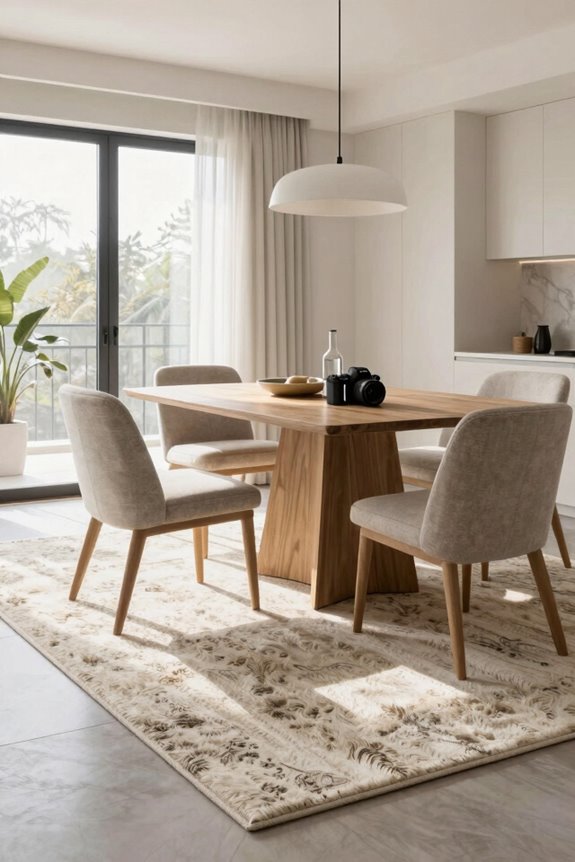
How often do you notice that your dining space feels disconnected from the rest of your room? A thoughtfully sized rug creates intentional boundaries in open-plan spaces. I’ve found that the right rug anchors your table and chairs, preventing that awkward floating sensation.
A thoughtfully sized rug anchors your dining table, creating intentional boundaries and preventing that awkward floating sensation in open-plan spaces.
Consider these essential sizing guidelines:
- Extend the rug beyond chair backs when pulled out, keeping all four legs on the surface during meals
- Choose rectangular rugs for longer spaces to mirror your table’s proportions and enhance visual flow
- Select smaller, rounder rugs in tighter layouts to maintain comfortable circulation pathways
Beyond aesthetics, your rug investment improves acoustics by softening footsteps and reducing edge noise. I recommend durable, neutral patterns that unify your furniture while concealing spills. This simple choice grounds your dining experience, inviting everyone to gather comfortably.
Pick a Neutral Color Scheme You’ll Live With
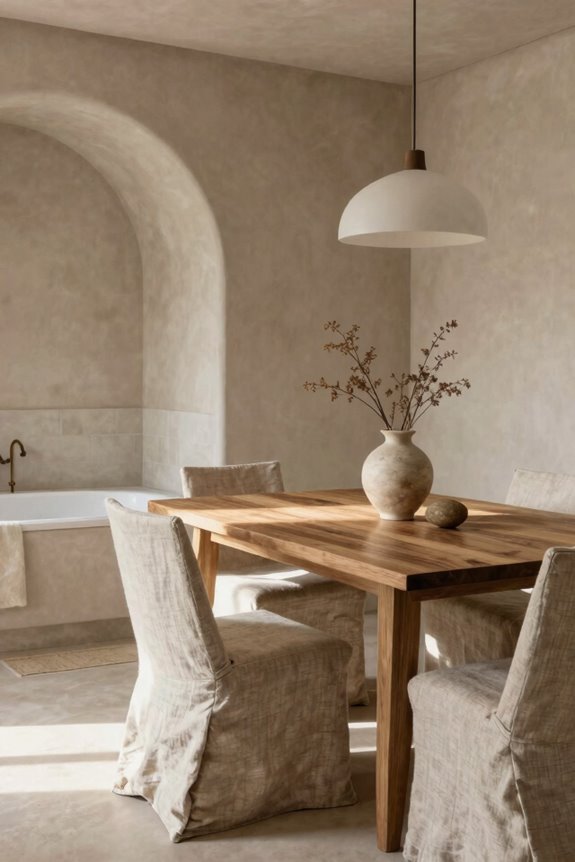
Since neutral colors create the foundation for a beautiful dining room, I’d encourage you to think of them as your blank canvas rather than your final answer. A neutral palette grounds your space, making it feel open and airy while giving you freedom to add personality later.
Before committing to paint, test samples on your walls. Whites can look unexpectedly yellow in south-facing rooms, and lighting shifts colors throughout the day. Once you’ve found your perfect shade, this consistent backdrop works beautifully in open-plan layouts, creating smooth transitions between spaces.
Your neutral foundation anchors accent pieces like chandeliers or gilt furniture, letting them shine without clashing. You’ll enjoy rotating textiles, drapery, and accessories seasonally without repainting anything; this kind of flexibility keeps your dining room feeling fresh and elegant.
Evolve Your Space Without Replacing Furniture
You don’t need to buy new furniture to completely change your dining room; you just need a smart plan. I’ve discovered that strategic styling updates can give existing pieces new purpose, creating an elegant space that feels carefully arranged.
Here’s how I evolved my dining room design through phased changes:
- Update textiles and accessories – I added white slipcovers to chairs, replaced busy floral drapes with bisque-washed linen panels, and introduced vintage brass tiebacks for sophistication.
- Refine your backdrop – Neutralizing wall colors allows accent pieces to stand out, making your space feel harmonious and welcoming.
- Layer in meaningful details – I incorporated an antique dough bowl, crystal chandelier, and a heraldic-inspired rug that unified everything.
This approach lets you belong to a thoughtfully curated home without the expense of replacements.