
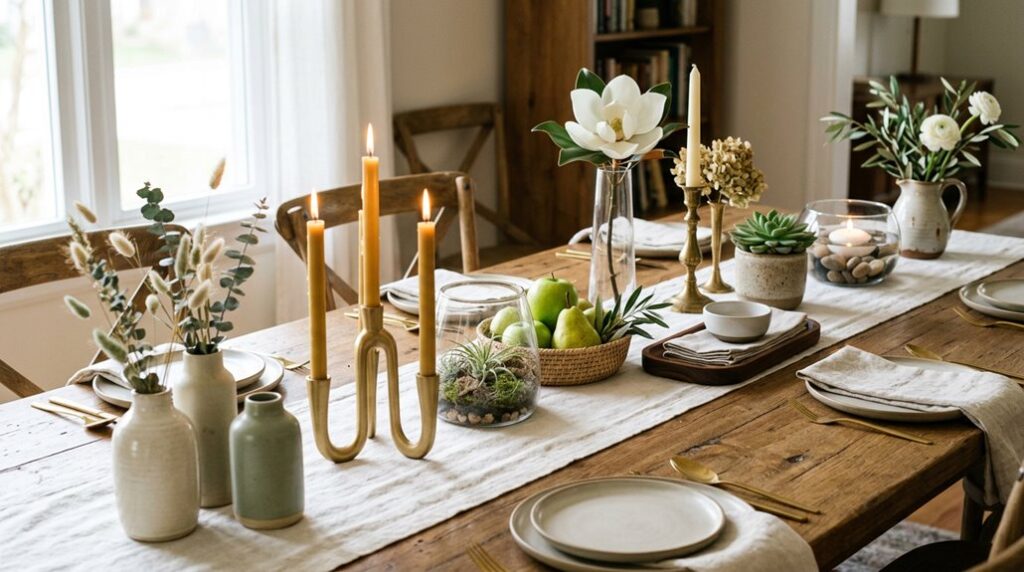
I’ve found that a well-designed dining room table centerpiece makes an ordinary meal memorable. Whether you’re hosting a dinner party or enjoying a quiet family breakfast, the right arrangement combining fresh flowers, candles, and thoughtful layering creates an elegant focal point that draws everyone’s attention.
But here’s what most people miss: there are strategic design rules that separate a beautiful centerpiece from one that truly improves your entire space.
Start With One Beautiful Floral Bouquet and Candles
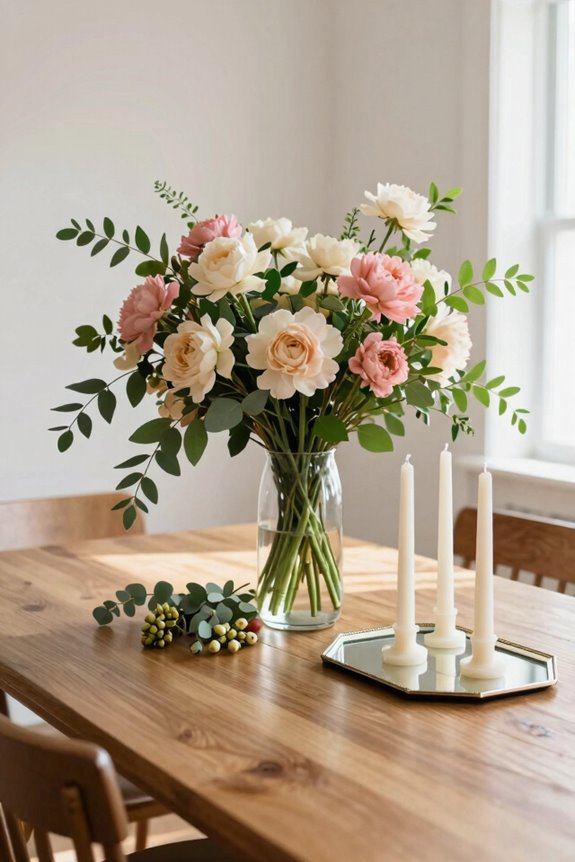
The simplest way to create an elegant dining room centerpiece is to begin with one striking floral bouquet as your focal point. I recommend selecting tulips, roses, or hydrangeas in fresh or high-quality faux varieties; they’ll maintain their luxurious appearance without constant replacement. Position your vase at the table’s center, then frame it with candles or lanterns on either side.
This arrangement creates warm, ambient lighting that makes your dining space feel inviting and sophisticated. To keep your centerpiece ideas cohesive, match your candle colors and accessories to your bouquet’s palette. Ground everything with a low runner or tablecloth underneath, keeping the arrangement from obstructing guests’ sightlines during meals. This balanced approach delivers elegant results while remaining practical for actual dining.
Build Dimension: Use Three Containers for Longer Tables
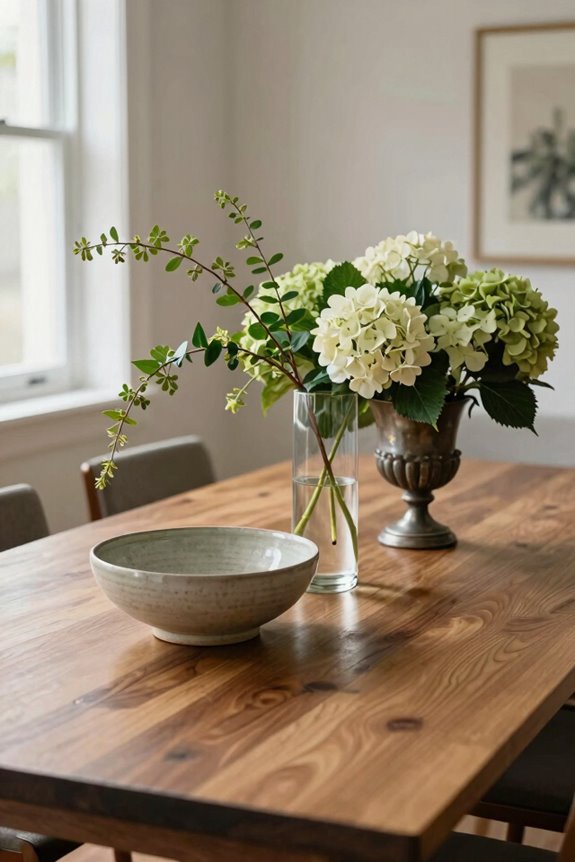
I’ve found that using three containers across your table’s center creates a natural rhythm that guides the eye beautifully from one end to the other. You’ll want to vary their heights, perhaps pairing a tall vase with two shorter vessels, to add depth and interest.
The key to making this arrangement feel unified rather than random is connecting your three containers through shared elements like color, material, or the same types of flowers and greenery throughout. This approach lets you fill each vessel with seasonal elements while keeping plenty of open space, so your table doesn’t feel overcrowded and your guests can actually see and talk to each other across the arrangement.
Creating Balanced Visual Rhythm
When you’re arranging a longer dining table, a trio of containers works like a visual anchor; it guides your eye across the space without making things feel crowded or cluttered. I’ve found that varying heights creates depth, while keeping colors or materials cohesive connects everything together beautifully.
| Height | Container Type | Best For |
|---|---|---|
| Tall | Cylindrical vase | Branches, greenery |
| Medium | Urn or pitcher | Mixed flowers |
| Short | Bowl or compote | Seasonal blooms |
Start with three simple vessels, then layer in seasonal elements that anchor your centerpiece ideas. This approach feels purposeful yet relaxed.
Your trio should suit your table’s proportions, not too large and not too small. When balanced properly, you’ll create an elegant rhythm that invites conversation and makes everyone feel welcomed at your table.
Varying Heights And Containers
By arranging three containers at different heights across your table, you’ll create a visual journey that pulls the eye naturally from one end to the other. This is where dimension truly comes alive in your centerpiece.
I recommend starting with three simple vases that share the same flowers or coordinate in color and form, which unifies your dining table centerpiece ideas beautifully. Vary the heights intentionally: perhaps a tall vase on one end, a medium vessel in the center, and a shorter container on the other side. This staggered approach builds visual interest and prevents monotony.
On longer tables, increase spacing between vessels to avoid crowding. Tie everything together with repeated greenery, a common color, or matching materials. This cohesive strategy creates an elegant, intentional display on your table.
Connecting Through Color And Shape
What makes a three-container arrangement truly cohesive? The answer lies in connecting your vessels through intentional color and shape choices. I’ve found that selecting containers sharing a unifying theme, whether matching materials, complementary colors, or similar silhouettes, creates an elegant centerpiece that feels well-planned rather than random.
Consider pairing a tall cylinder with a rounded bowl and a tapered vase, all in coordinating whites or earth tones. This visual connection guides your eye naturally across the table’s length. When you repeat specific flowers or greenery throughout each container, you strengthen that bond further. The result is an arrangement that feels well-designed, purposeful, and perfectly balanced for your dining space.
Layer Your Centerpiece With a Basket or Tray Base
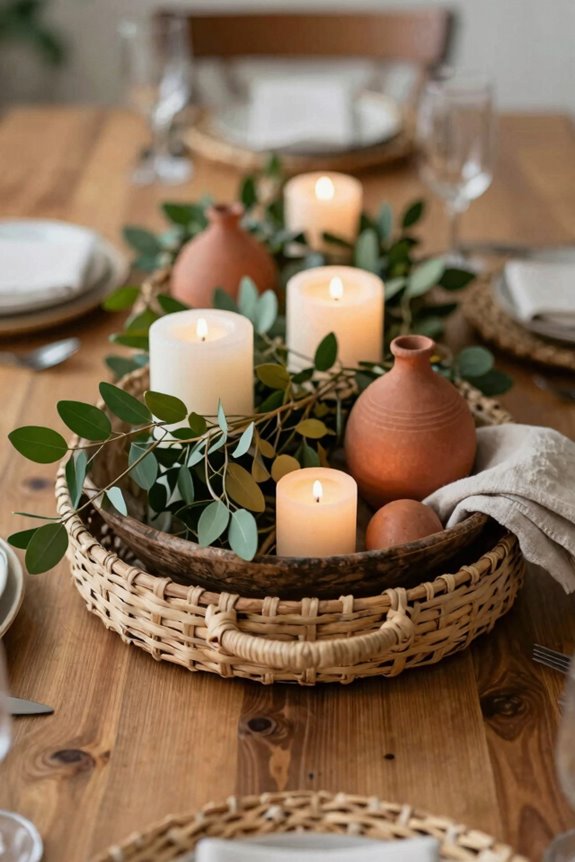
I’ll create a layered centerpiece by selecting a basket or tray that matches my table’s size, then building from there. You’ll want to choose a few larger focal pieces, like a tall vase, flowering plant, or decorative bowl, to create visual interest and anchor your design.
The key is leaving breathing room inside your base, so I’m not cramming in too many items. This open space keeps the look calm, refined, and thoughtfully arranged rather than cluttered.
Choosing Your Base Foundation
Every beautiful centerpiece starts with a solid foundation, and that’s where a basket or tray becomes your hidden tool. I’ve discovered that choosing the right base helps your centerpiece ideas come together.
Here’s what makes a strong foundation:
- Match your table size – Pick a base that fits proportionally, avoiding crowding or awkward gaps
- Anchor with larger items – Use candles, floral arrangements, or decorative objects as focal points
- Maintain breathing room – Leave open space around and on the base for calm, balanced aesthetics
- Plan for seasonal updates – Swap contents easily without replacing the entire base
When you select the right basket or tray, you’re investing in flexibility. You’ll create elegant centerpiece ideas that feel carefully planned and polished, while enjoying the freedom to refresh your table throughout the year.
Styling Items Within Tray
Once you’ve chosen your base, the real creation begins when you layer items inside it. This is where your centerpiece moves from ordinary to elegant. I recommend combining one larger focal piece, like a vase or candle, with two or three supporting accents for balanced centerpiece ideas. Try pairing a potted plant with pillar candles, or positioning candlesticks alongside a decorative bowl. This layering creates visual interest and draws the eye naturally across your table.
The benefit of this approach? You’ll find it incredibly easy to refresh seasonally. Swap out items for holidays or whenever your decor needs updating, keeping everything feeling current and deliberate. This strategy keeps your centerpiece luxurious yet uncluttered, giving you and your guests that sense of belonging around a thoughtfully styled table.
Add Warmth With Candlesticks and Lanterns
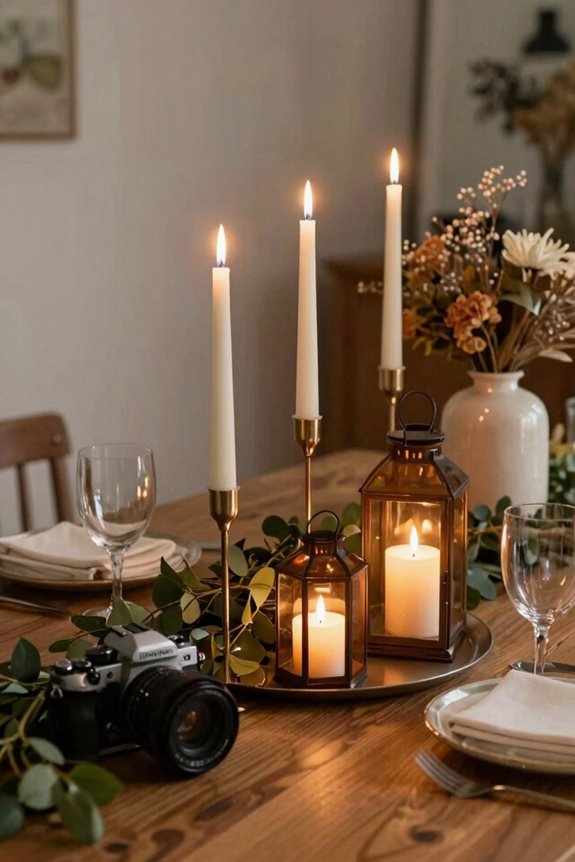
Because candlelight creates an instantly elegant atmosphere, it’s one of the most effective ways to bring visual interest to your dining room table. I’ve found that candlesticks and lanterns work together beautifully to add warmth and depth to your centerpiece.
Here’s how to layer these lighting elements effectively:
- Use candlesticks for height variation that draws the eye upward and across your table
- Position candles on both sides of your arrangement to frame the centerpiece with a finishing glow
- Choose lanterns for softened, diffused light that creates a relaxed, inviting mood
- Mix materials like metal, glass, and wood to add texture without needing matching sets
Pair your candles with greenery or florals to anchor the glow and prevent it from feeling isolated. This combination creates the luxurious, welcoming ambiance you’re seeking for memorable dinners.
Decide: Fresh Flowers or High-Quality Faux Florals
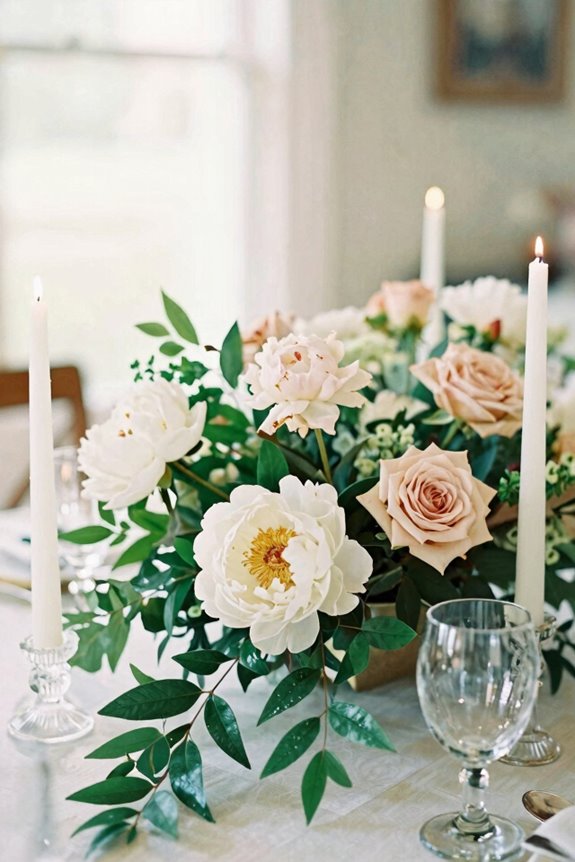
When you’re planning your dining room centerpiece, you’ll face a choice between fresh flowers that bring natural beauty and elegance to your table, and high-quality faux florals that offer longevity and practicality for busy households. I’ve found that fresh blooms create an undeniable charm with their delicate petals and subtle fragrance, though they require regular maintenance and replacement.
The smart approach is to blend both options by pairing realistic faux flowers with fresh greenery like eucalyptus, giving you the best of both worlds. A luxurious, lasting arrangement looks vibrant without constant upkeep.
Fresh Flowers: Natural Beauty
How do you create a centerpiece that feels both elegant and effortlessly alive? Fresh flowers are your answer. I’ve found that fresh flowers bring natural fragrance and seasonal color that enhance your dining experience.
Here’s how I make them shine:
- Select a single flower type in a coordinated vase for a clean, uncluttered look
- Pair blooms with greenery like eucalyptus to add fullness and texture
- Place candles on either side to enhance the flowers’ appearance and create warmth
- Trim stems at an angle to maintain a low height so guests see each other
To keep your arrangement looking luxurious, I change the water daily and use floral preservative solution. This simple maintenance keeps your fresh flowers vibrant throughout the week, creating an inviting atmosphere your guests will appreciate.
Faux Florals: Longevity and Practicality
What if you could enjoy an impressive centerpiece without the daily maintenance? High-quality faux florals deliver exactly that. I’ve found that realistic petals and textured blooms convincingly mimic real flowers, lasting indefinitely without wilting or browning.
Here’s my strategy: I choose one flower type and color, then tuck in fresh eucalyptus for authenticity. This simple approach creates an elegant arrangement without overwhelming clutter.
I shop for faux florals during sales or season’s end, stretching my budget while maintaining that fresh appearance. The beauty lies in consistency. I select containers that complement my home’s aesthetic, creating cohesive displays. By varying textures and heights across limited color palettes, I achieve arrangements that rival fresh blooms, minus the constant watering and replacement costs. Faux florals mean longevity meets luxury.
Blending Both for Impact
You don’t have to choose between the freshness of real blooms and the convenience of faux flowers; combining them creates a centerpiece that’s both beautiful and practical.
I’ve discovered that blending both creates an elegant dining table centerpiece that lasts longer while maintaining that luxurious, fresh-flower appeal. Here’s how I make it work:
- Position high-quality faux florals in the background as supporting layers
- Choose one bloom type in a cohesive color family for visual harmony
- Mix realistic greens throughout to add depth and natural texture
- Refresh fresh elements weekly while keeping faux components constant
This blending approach gives you the best of everything. Your dining table centerpiece stays lovely without demanding constant replacement, and guests won’t notice you’ve combined materials. You get longevity, beauty, and practicality all at once.
Group Small Items and Leave Room to Breathe
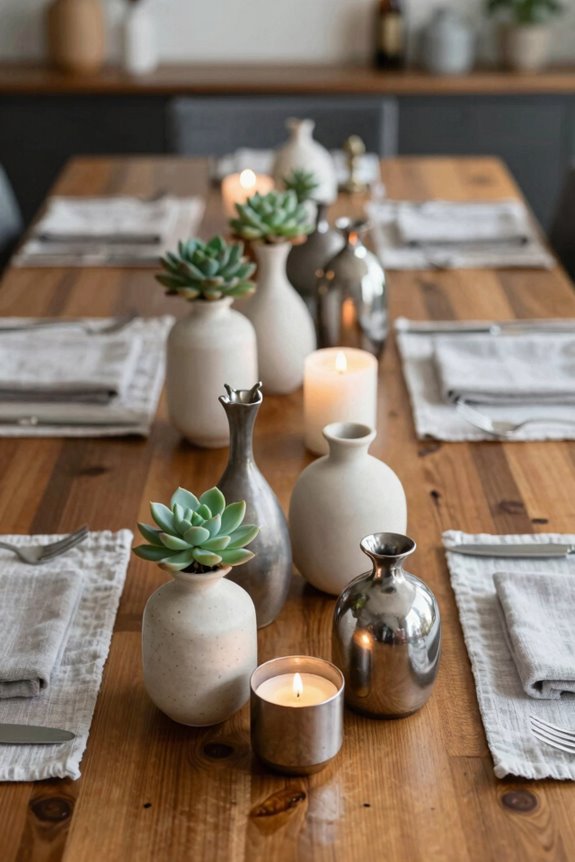
Sometimes the most elegant centerpiece ideas aren’t the biggest ones—they’re the ones that know when to stop. I’ve found that grouping three to five small items creates a luxurious focal point without overwhelming your table. By varying heights with candles, vessels, and decorative objects, you’ll add visual interest while maintaining breathing space around the cluster.
Choose a limited color palette to keep everything harmonious with your existing décor. Position your vignette toward the center or slightly off-center, leaving plenty of room for place settings and serving dishes. The key is regularly refreshing your components; swap seasonal elements or rotate objects to keep things feeling current. This approach creates a dining experience where guests feel welcomed by a well-considered, elegant design.
Mix Tableware Into Your Centerpiece for Charm
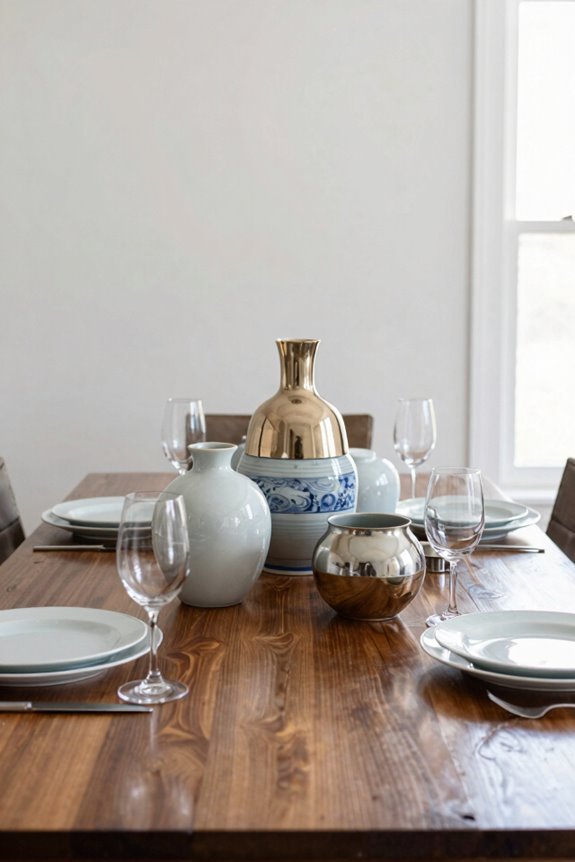
Why keep your best dishes hidden in the cabinet when they can become part of your table’s story? I’ve discovered that mixing tableware into your centerpiece creates an elegant, lived-in charm that feels inviting.
Instead of centering everything in one spot, I let plates, bowls, and glassware flow naturally across the table. This deconstructed approach makes your centerpiece feel purposeful yet relaxed.
Here’s what I include:
- Stacked chargers and plates in coordinating colors
- Glassware positioned at varying heights
- Cloth napkins that echo your color scheme
- Small bowls or jars filled with fresh herbs
Anchor Your Centerpiece With Linens and Runners
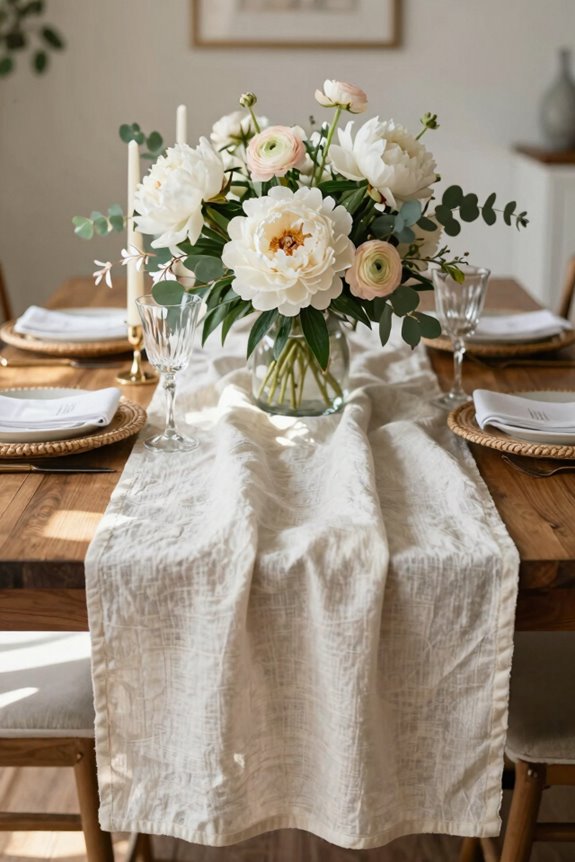
Now that your tableware’s flowing across the table, it’s time to give it all a solid foundation. I’ve found that a neutral table runner or linen brings together your whole look by combining colors, textures, and distances. Open-weave burlap or natural fiber runners add beautiful texture while supporting bowls, candles, and vases without crowding your space.
The key to successful centerpiece ideas? Start with linens first. Choosing a calm foundation lets you swap seasonal elements easily. A simple runner creates negative space around your arrangements, preventing that cluttered feeling on long tables.
I recommend pairing your linens with a coordinated color palette: think whites, creams, and soft greens. This approach anchors both faux and fresh floral arrangements, creating an elegant, unified tablescape that welcomes everyone to gather.
Three Design Rules Every Dining Table Centerpiece Needs
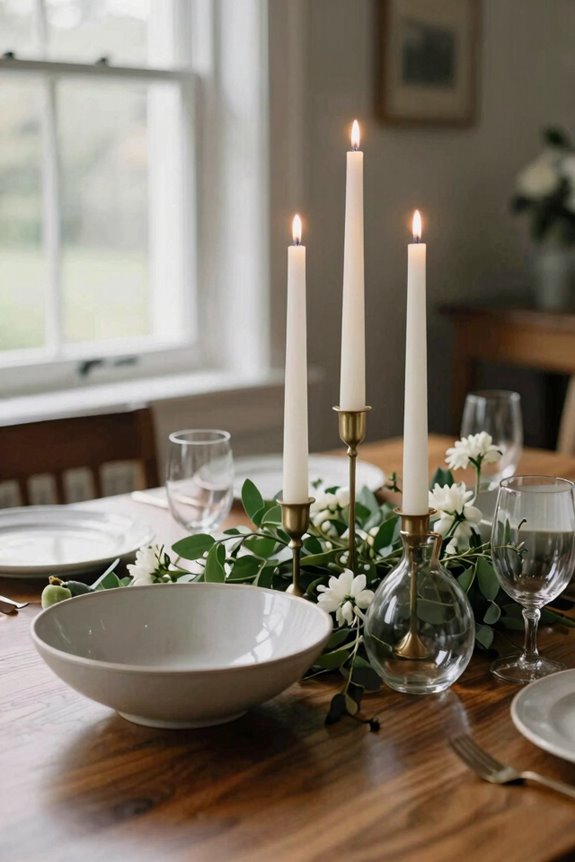
Once you’ve laid down your foundation with linens and runners, it’s time to think about the actual arrangement itself. Following three key design rules will help you create a dining room that feels polished and put-together.
Here’s what works:
- Create rhythm with a trio – Place three containers across the table’s center, which balances the space beautifully, especially on longer tables
- Vary the heights – Mixing tall, medium, and short pieces keeps your eye moving and adds appealing depth
- Connect through cohesion – Tie everything together using matching colors, materials, or repeating flowers and greenery
- Maintain proportion and breathing room – Keep the arrangement sized appropriately so guests enjoy comfortable place settings without feeling crowded
These straightforward guidelines help you craft a sophisticated centerpiece that welcomes everyone to the table.
Update Your Centerpiece Seasonally Without Starting Over
How many times have you completely redesigned your dining table only to realize you’ve wasted money and effort? I’ve learned a smarter approach: swap seasonal elements instead.
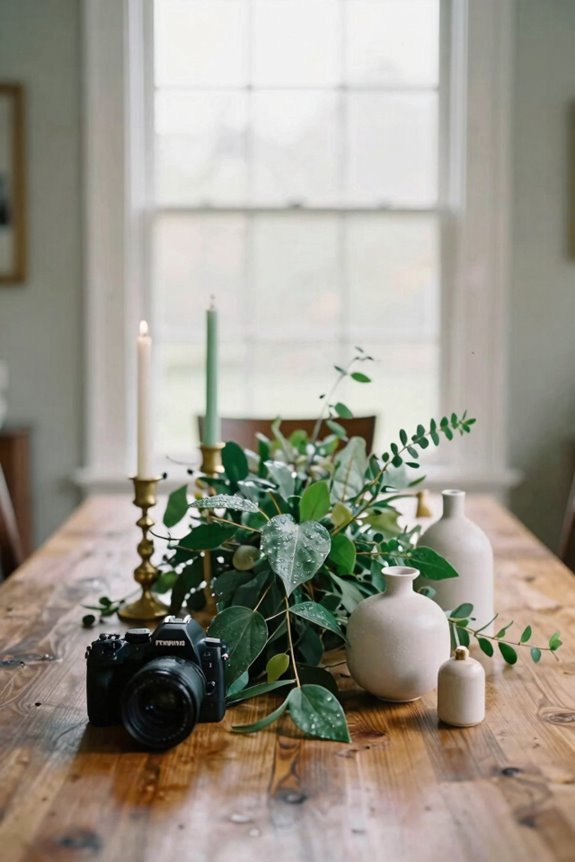
Start with a neutral linen runner as your foundation—it stays put year-round. Then I rotate what sits on top. I use three matching containers and simply replace the flowers, greenery, and branches to match each season. Spring brings fresh blooms; fall adds rustic berries and branches.
I also layer different textures together. I mix glass vases, metal accents, and natural elements within the same color family for an elegant, unified look. Pairing low arrangements with taller candles keeps sightlines open while maintaining visual interest.
This method lets you refresh your centerpiece without starting from scratch, saving both money and effort while keeping your dining space feeling purposefully designed.