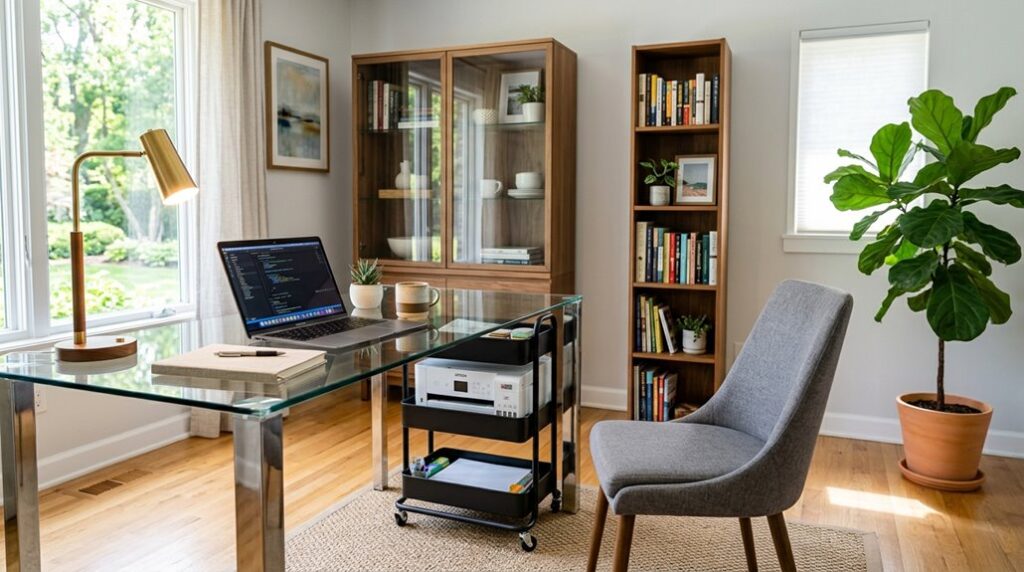
Did you know that most dining rooms sit unused for nearly 20 hours a day? That’s prime real estate for a home office. I’ll show you how to redesign your dining space into a dual-purpose room where you can tackle spreadsheets by day and host dinner by night.
The key is not choosing between work and meals, but rather designing a space that handles both with style and function.
Measure Your Space and Plan Your Layout First
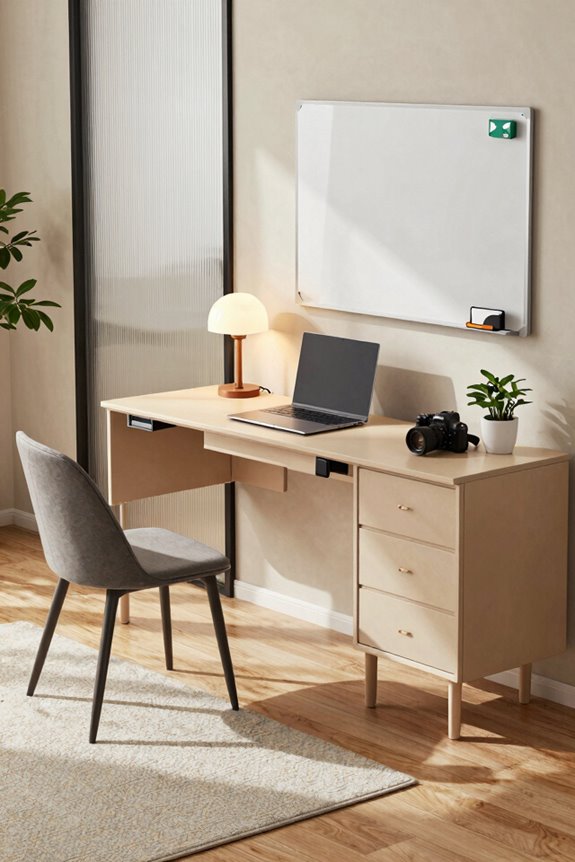
How do you fit two completely different functions into one room without creating chaos? Start by measuring your dining room dimensions: length, width, and height, including any alcoves or doorways. I recommend using room planning software or creating a to-scale layout on paper to test different configurations before moving anything. This saves you time and frustration.
Next, identify your walking clearance needs. Plan for at least 3 feet of space around your work zone and dining area so you’re not constantly squeezing past furniture. Note where electrical outlets and data ports are located, since your desk needs convenient access to power and charging stations.
Finally, spot fixed features like windows, radiators, and built-ins. These limitations actually help you decide where modular furniture works best, creating clear boundaries between your professional and dining spaces.
Use Lighting to Separate Work From Dining Zones
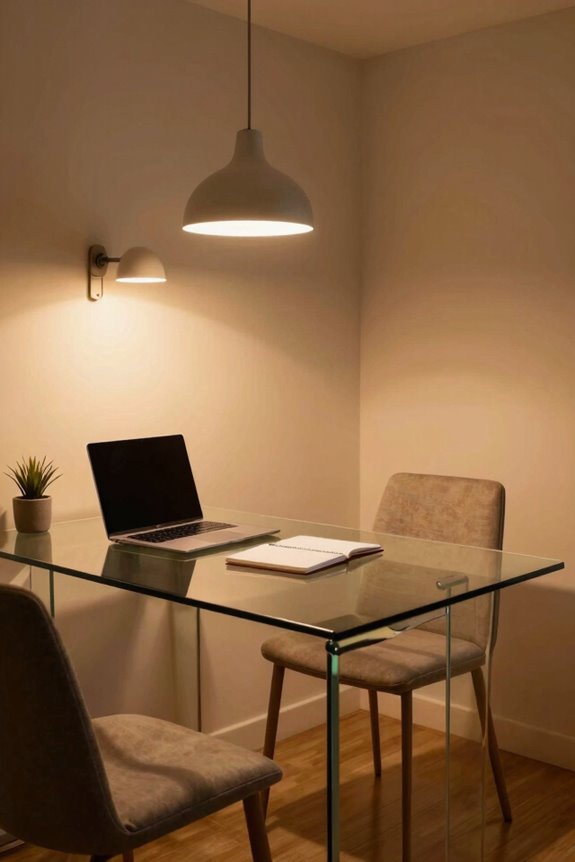
What’s the key to making two spaces feel distinct in one room? Thoughtful lighting design.
Thoughtful lighting design is the key to making two spaces feel distinct within one room.
I’ve discovered that layered lighting helps your dining room work for multiple purposes. Task lighting, like a small desk lamp positioned near your workspace, eliminates eye strain and creates clear workspace definition. This focused illumination prevents glare on your screen, keeping you comfortable during work sessions.
To maintain an elegant atmosphere, I balance task lighting with ambient lighting. This combination reduces visual distractions while keeping both zones cohesive:
- Position dimmable overhead fixtures to soften the dining area’s glow
- Use adjustable lamps that transition smoothly between work and meals
- Place lights strategically near storage or banquettes to highlight your home office zone
This layered approach gives you visual separation without sacrificing the dining room’s elegant feel, making the space work beautifully for both purposes.
Pick Furniture That Works for Work and Meals
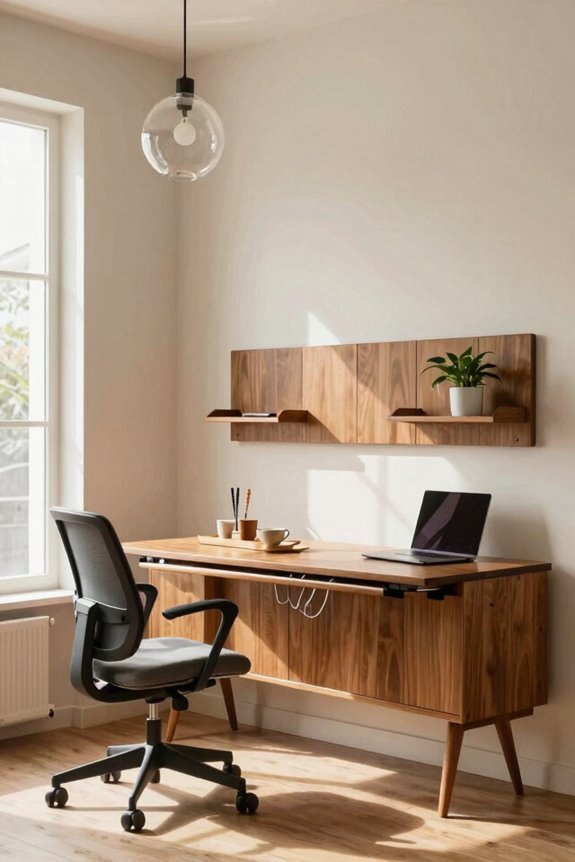
Once you’ve set the mood with layered lighting, your furniture choices become the backbone of a truly functional dual-use workspace. I’d recommend selecting an extendable dining table with built-in drawers; this lets you store office supplies while keeping meals elegant and uncluttered. Pair it with slim-profile chairs that don’t consume much space, so you’ll feel comfortable whether you’re eating dinner or tackling work tasks.
Add storage solutions like a wall file system or sideboard to organize documents and keep your workspace tidy. Consider a hideaway cart or stowable desk that you can quickly move aside, changing your dining room table from office to mealtime in seconds. This flexibility means your space truly works for everything you need, without compromise or awkward transitions.